
Thanksgiving Food Waste in Miami: A Simple Plan
Thanksgiving is the biggest food waste day of the year. Here's a simple plan for Miami restaurants, hotels and caterers to plan, donate and compost.
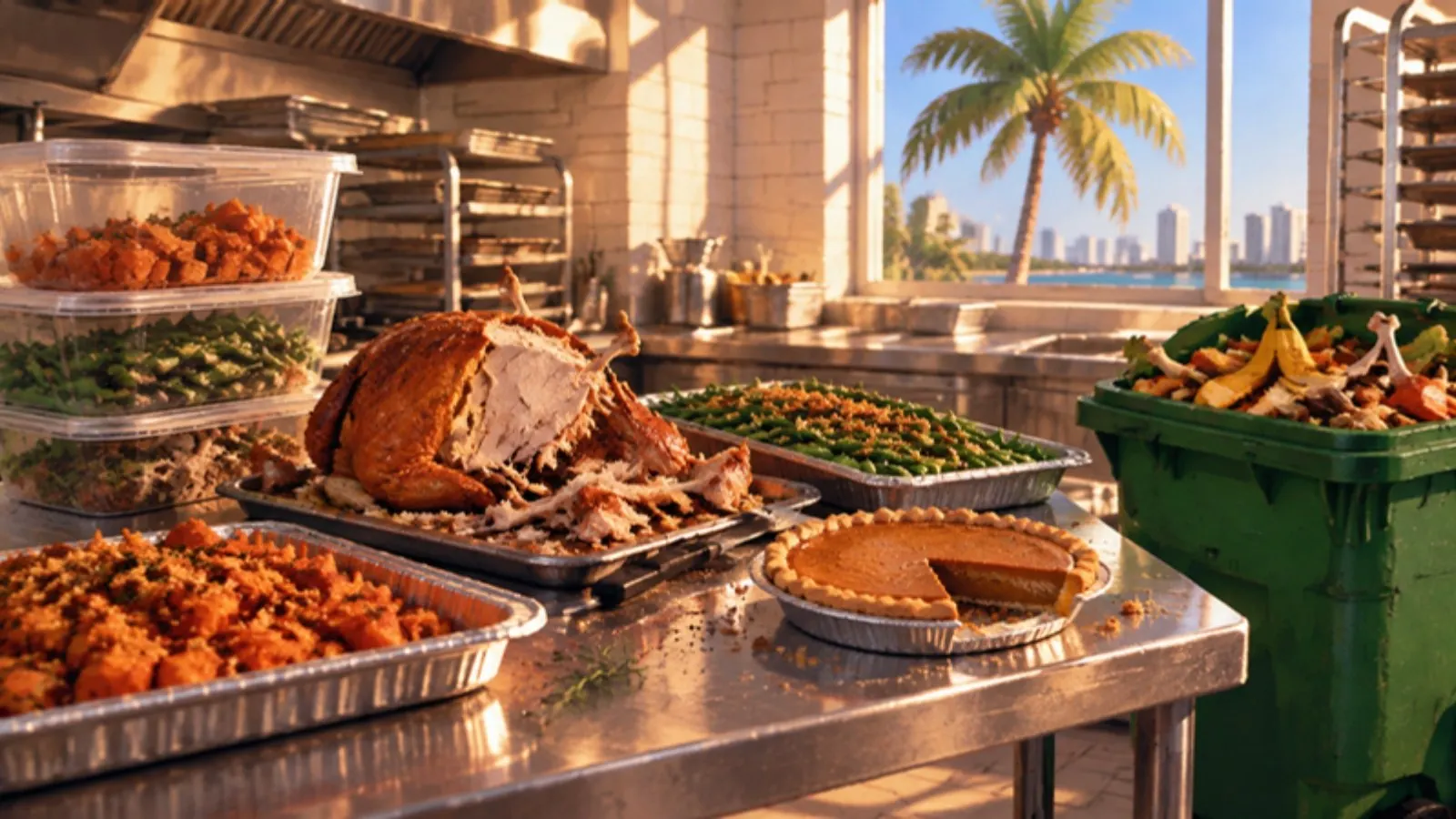
Thanksgiving is the one day a year when almost every kitchen in Miami cooks too much on purpose. That is part of the fun. It is also why the holiday is a food waste story, and why a little planning in the next two weeks can make a big difference.
Thanksgiving falls on Thursday, November 26 this year. If you run a restaurant, hotel, catering company or grocery store in Miami, your holiday menu is probably locked in by now. Here is a simple plan for the food that doesn't get eaten.
How much food gets wasted on Thanksgiving?
A lot. ReFED, a national nonprofit that tracks food waste, estimated that about 320 million pounds of food would be thrown away on Thanksgiving 2025. That is about 267 million meals. Turkey alone made up about 40% of the food tossed.
The reason is not a mystery. In a ReFED survey of holiday hosts, more than 90% said they make more food than they need on purpose. Nobody wants to run out of stuffing.
Restaurants and hotels feel the same pressure. A holiday buffet has to look full until the last guest walks through. A prix fixe menu needs backup trays. Catering orders get padded "just in case." That extra food has to go somewhere on Friday morning.
Why Thanksgiving leftovers are a Miami problem
When food goes to a landfill, it gets buried and cut off from air. It rots the wrong way and releases methane, a gas that traps far more heat than carbon dioxide. The EPA estimates that food is about 24% of what goes into U.S. landfills, and that 58% of the methane escaping from those landfills comes from food. We explain the science in why food in landfills creates methane.
In Miami-Dade, there is a second problem: space. The county's incinerator was destroyed by a fire in 2023. Since then, more trash has had to go to landfills or be hauled away. Early this year, county legislation projected that the North Dade landfill would reach capacity in 2026 and the South Dade landfill in 2030.
Food scraps and yard trimmings make up close to 30% of the county's trash. That is the part of the pile that does not need to be there at all.
Step 1: Plan for less waste before the holiday
The EPA ranks ways to handle food from best to worst. Preventing waste sits at the very top. Landfilling and burning sit at the bottom. So the cheapest bin is the one you never have to fill.
A few kitchen habits that help:
- Look back at last year. How many covers did you do? Which sides came back to the kitchen untouched? Plan this year's prep around those numbers, not around a guess.
- Batch the buffet. Refill trays in smaller rounds near the end of service instead of putting out full trays for the last hour.
- Build Friday into the menu. Turkey bones become stock. Roasted vegetables become soup or a staff meal. Plan the second use before the first one is served.
- Talk to your team. The people closest to the food know where the waste happens. Our guide to training kitchen staff to compost works for planning too.
Step 2: Donate what is still good to eat
Good food that was never served should feed people first. The EPA ranks donation right after prevention.
Many owners worry about liability. Federal law helps here. The Bill Emerson Good Samaritan Food Donation Act protects businesses that donate food in good faith to nonprofits. A 2022 update, the Food Donation Improvement Act, also lets restaurants, caterers, grocers and some other businesses donate directly to people in need, as long as the food is given free of charge. Check the details with your own advisor, but the law is on your side.
In South Florida, Feeding South Florida works with partner agencies in Miami-Dade, Broward, Palm Beach and Monroe counties, and rescues food from stores, farms and companies. Call them, or a local food pantry, this week. Holiday pickup slots fill up fast.
Step 3: Compost the scraps that are left
Some food can't be eaten or donated. Turkey bones after the stock is made. Peels, ends and trimmings from prep. Plate scrapings. That is what compost is for.
A commercial compost program can take things a backyard pile can't, like meat, bones and dairy. If you aren't sure what goes in, our guide to what goes in a commercial compost bin has the full list.
Miami is also getting more practice. The City of Miami's free food scrap drop-off pilot, run with Compost for Life, has been extended through the end of 2026. The city reports about 15,000 pounds of food scraps kept out of the landfill so far, with contamination under 1%. Miami residents are showing they can sort clean. Miami kitchens can too.
Where Melly's fits in
Melly's picks up food scraps from businesses across Miami-Dade and southern Broward. This Thanksgiving, use the steps above and the options already out there. For the holidays ahead, and every regular week in between, here is how the loop works.
Your kitchen fills a 55-gallon bin with food scraps. We pick it up one to three times a week. The scraps become compost for local farms, nurseries and landscapers around South Florida. Next year's sweet potatoes could grow in soil made from this year's peels. Hotels, restaurants, caterers and grocers are a natural fit. We wrote more about that in commercial composting in Miami for restaurants.
Frequently asked questions
How much food is wasted on Thanksgiving?
ReFED estimated that about 320 million pounds of food would be wasted on Thanksgiving 2025, or about 267 million meals. Turkey was about 40% of the food thrown away.
Can restaurants donate Thanksgiving leftovers?
Yes. The Bill Emerson Good Samaritan Food Donation Act protects businesses that donate food in good faith. Since the 2022 Food Donation Improvement Act, restaurants, caterers and grocers can also donate directly to people in need, as long as the food is free.
Can you compost turkey bones and meat?
Not in most backyard piles, but commercial compost programs can usually take meat, bones and dairy. Check with your hauler for their list.
What is the best thing to do with leftover food?
The EPA's ranking puts preventing waste first and donating good food second. Composting comes well before landfilling, which is one of the least preferred options.
Where can I compost food scraps in Miami?
City of Miami residents can use the free food scrap drop-off pilot, extended through the end of 2026. For businesses, Melly's runs commercial pickups across Miami-Dade and southern Broward.
Want your kitchen in the loop before next year's holidays? Get a compost bin and we'll add you to the route.
Sources
- How much food will go to waste this Thanksgiving? ReFED (Nov 3, 2025)
- Quantifying Methane Emissions from Landfilled Food Waste, U.S. EPA
- Wasted Food Scale, U.S. EPA
- Federal Liability Protection for Food Donation, ReFED Policy Finder (updated May 14, 2026)
- How We Work, Feeding South Florida
- Miami-Dade County Launches Composting Pilot to Evaluate Organics Diversion Opportunities, BioCycle (June 16, 2026)
- As landfills near an overflow, waste advisory board sought, Miami Today (Feb 18, 2026)
- Miami's Composting Pilot Program, City of Miami
Related posts
-
 For businesses
Miami Beach Food Waste Pilot: Donate First, Then Compost
Miami Beach wants its grocers and restaurants to donate good food instead of tossing it. Here is how the new pilot works, and where composting fits in.
-
 For businesses
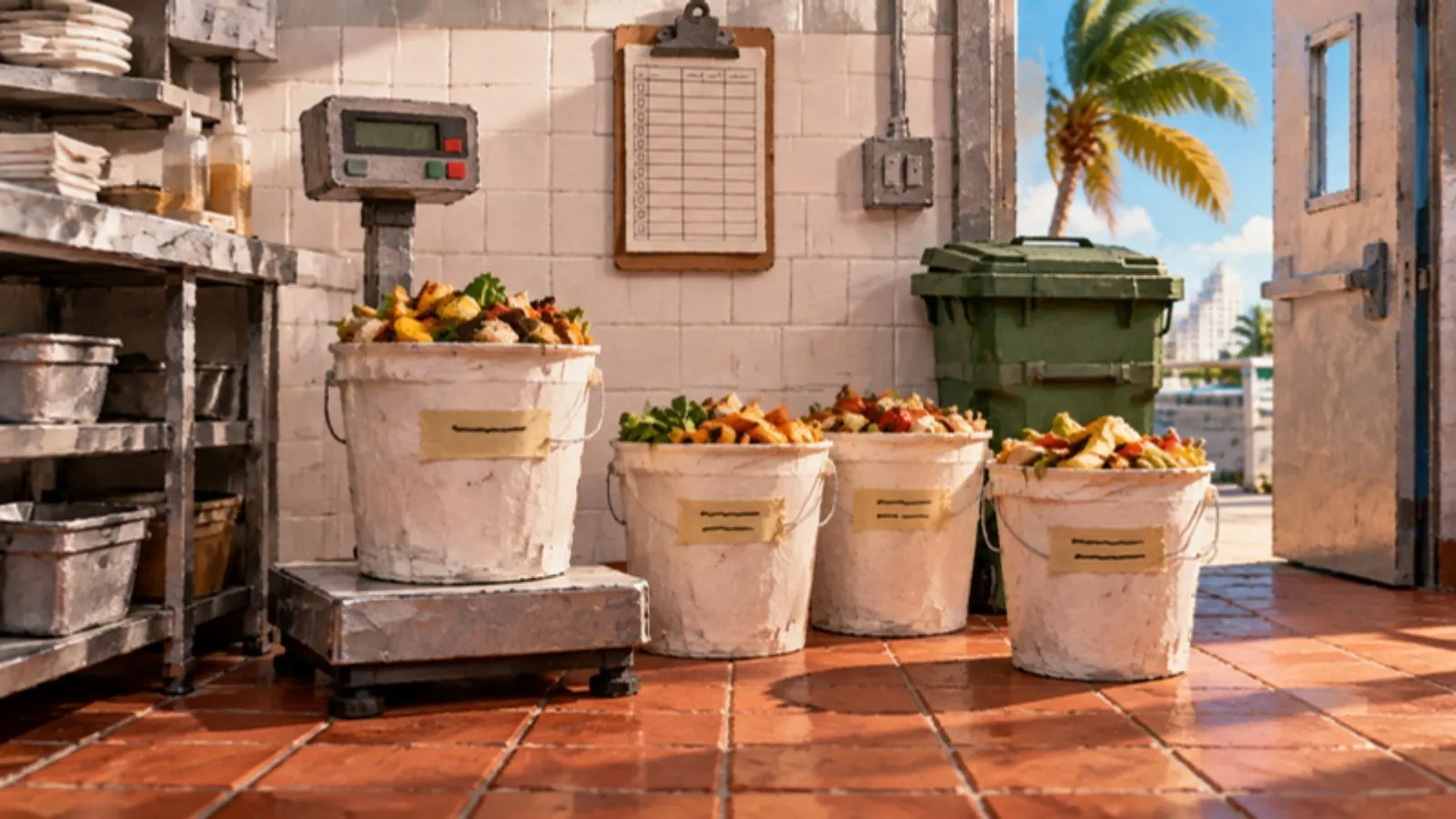
How to Run a Food Waste Audit in Your Miami Kitchen
A food waste audit shows what your kitchen throws out and why. Here's a simple one-week plan for Miami restaurants and hotels, plus how to use results.