
What Can Go in a Commercial Compost Bin?
Commercial compost takes a lot more than banana peels. Here is what goes in the red bin, what stays out, and why.
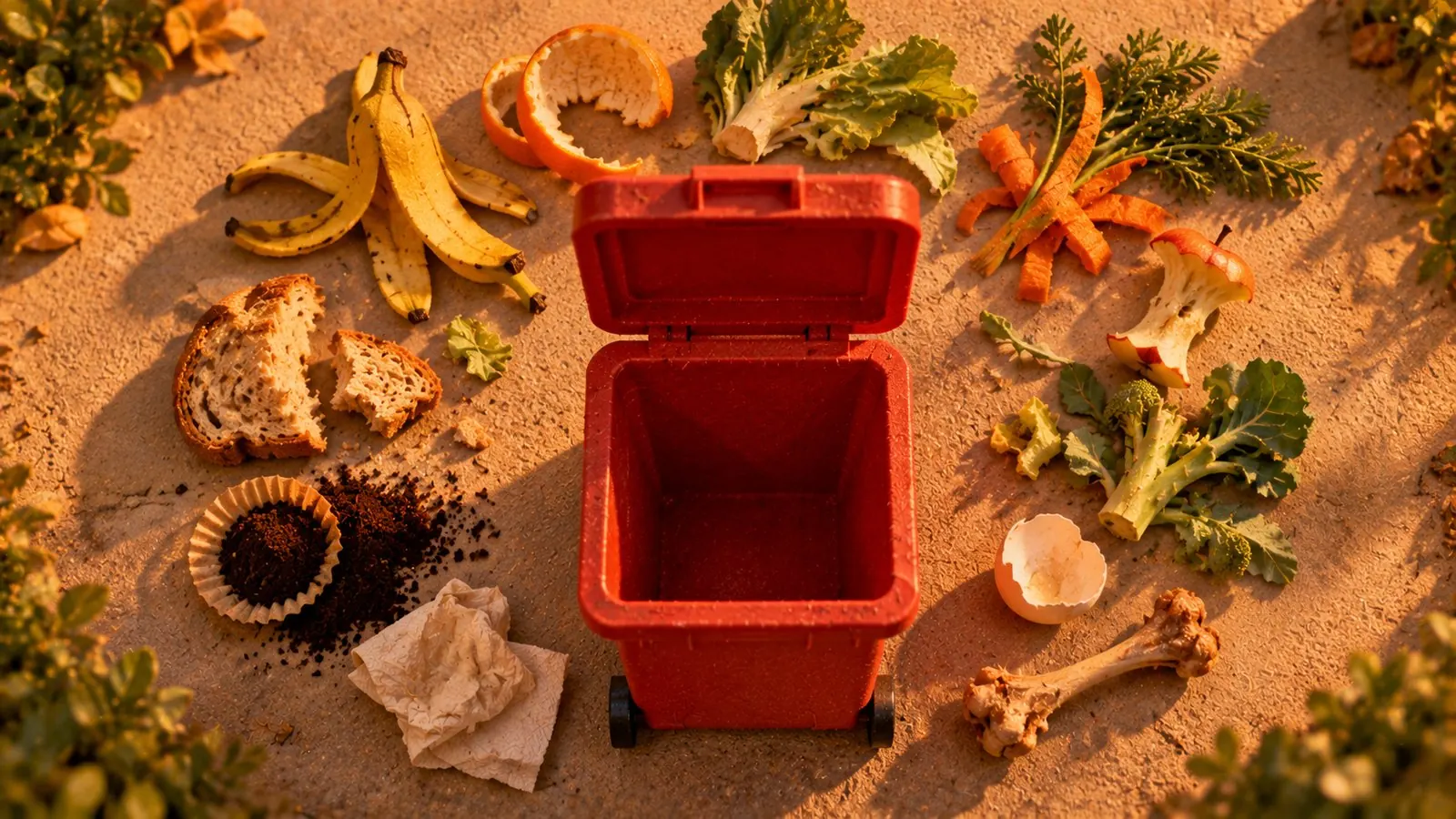
A commercial compost bin takes almost any food: fruit and vegetable scraps, bread, rice, coffee grounds, eggshells, and at Melly's also meat, bones, fish and dairy. What stays out is anything that isn't food, like plastic wrap, gloves, foil, glass and cans. Commercial composting gets hotter than a backyard pile, which is why it can handle the stuff your home bin can't.
What food scraps can be composted commercially?
Here is the short version for a Melly's bin:
- Fruit and vegetable scraps, peels, cores and trimmings
- Bread, pasta, rice, tortillas and baked goods
- Meat, poultry, fish and bones
- Dairy, cheese and eggs, including eggshells
- Coffee grounds and tea leaves
- Plate scrapings and spoiled or expired food, out of its packaging
That last point matters. A case of expired yogurt is food. The plastic cups it's in are not. Empty the food into the bin and the containers go elsewhere.
Why can commercial composting take meat and dairy when home piles can't?
Heat and control. EPA notes that in-vessel composting systems can take nearly any organic waste, including meat, and that windrow systems can handle animal byproducts such as fish and poultry waste (EPA). A backyard pile rarely gets hot enough, long enough, to safely break those down, and it draws animals.
The federal pathogen standard for compost spells out the heat. For windrows, the pile has to hold 55 C (131 F) or higher for at least 15 days and be turned at least five times. For in-vessel or static aerated piles, it is 55 C for three days (Cornell LII, 40 CFR Part 503 Appendix B). At Melly's we hot-compost to EPA standards: 131 F or higher for the required time. We go deeper on this in can you compost meat and dairy.
What should never go in a commercial compost bin?
Anything that won't turn into soil. The usual offenders in a commercial kitchen:
- Plastic wrap, plastic bags and produce stickers
- Disposable gloves
- Foil, cans, bottle caps and metal
- Glass and broken dishes
- Rubber bands, twist ties and zip ties
- Fryer oil in bulk, and anything chemical like cleaning products
Small amounts of plastic do big damage. It breaks into pieces, it shows up in finished compost, and farmers don't want it. Clean scraps make clean compost, and clean compost is what goes back to local farms.
Can napkins, paper towels and compostable plates go in?
This is where composters differ, so here's the honest answer: ask. Some facilities take food-soiled paper like napkins and paper towels. Fewer take compostable cups, plates and cutlery, because certified compostable plastics can look exactly like regular plastic on a moving pile. BPI, which certifies compostable products, has noted that look-alike packaging has pushed some composters to stop taking even certified items (BPI).
Read are compostable plates really compostable before you switch suppliers.
Why does it matter what goes in the bin?
Because food is the biggest thing in our trash. EPA data shows food was 24.1 percent of everything landfilled in the US in 2018, more than any other single material (EPA). EPA also estimates that about 58 percent of the methane escaping municipal landfills comes from landfilled food waste (EPA).
Every pound of food that goes in the compost bin instead of the dumpster is a pound that becomes soil instead of gas. But only if the load is clean.
What can be composted commercially in Miami-Dade?
Down here, the list is the same but the clock is faster. Heat and humidity mean food breaks down and smells in hours, so two things matter more than up north: lids and pickup frequency. Our bins are red, lidded 64-gallon carts, picked up 1 to 3 times a week and never less than weekly, with a clean bin swapped in every time.
Miami's kitchens also throw off a lot of the "hard" stuff: fish frames from seafood spots, bones from Cuban and Caribbean kitchens, citrus rinds from juice bars and bars. All of it goes in a Melly's bin. That matters as Miami-Dade works its Zero Waste Master Plan, where food scraps and yard trimmings make up close to 30 percent of the county's waste stream (Waste Dive).
Frequently asked questions
Can I put meat and bones in a commercial compost bin?
At Melly's, yes. We accept food scraps including meat, bones and dairy, because we hot-compost at 131 F or higher for the required time.
Do I need to bag food scraps before they go in the bin?
Regular plastic bags should never go in. Whether compostable bin liners are accepted varies by composter.
What happens if something wrong goes in the bin?
One stray item is not the end of the world, but a pattern of plastic in the load is a problem. We will flag it and help you fix the sorting setup so it doesn't keep happening.
Can liquids go in the compost bin?
Small amounts that come with food are fine. Keep big volumes of soup, drinks and dairy out of the bin and ask us how to handle them, since a bin full of liquid is heavy, messy and hard to compost.
Not sure what your kitchen actually throws away? Get a quote and we'll start with a free waste audit, then set up a bin and pickup schedule that fits. Pricing depends on volume. For the full overview, read our guide to commercial composting in Miami.
Sources
- EPA: Types of Composting and Understanding the Process
- Cornell Law School LII: 40 CFR Appendix B to Part 503, Pathogen Treatment Processes
- EPA: Food: Material-Specific Data
- EPA: Quantifying Methane Emissions from Landfilled Food Waste
- BPI: Compostable product certification presentation (2025)
- Waste Dive: Miami-Dade unveils zero waste plan
Related posts
-
 For everyone
Can You Compost Meat, Bones, and Dairy?
Backyard piles can't safely handle meat, bones and dairy. Commercial hot composting can. Here is why, and how it works in Miami-Dade.
-
 For everyone
Are "Compostable" Plates Really Compostable?
The plate says compostable. Whether it actually becomes compost depends on what it is made of, how it is certified, and who picks it up. Here is how to tell.