
How Restaurants Can Start Composting
One red bin at the prep station, a two-minute talk with the line, and a pickup day. Here is how a Miami restaurant starts composting without slowing service.
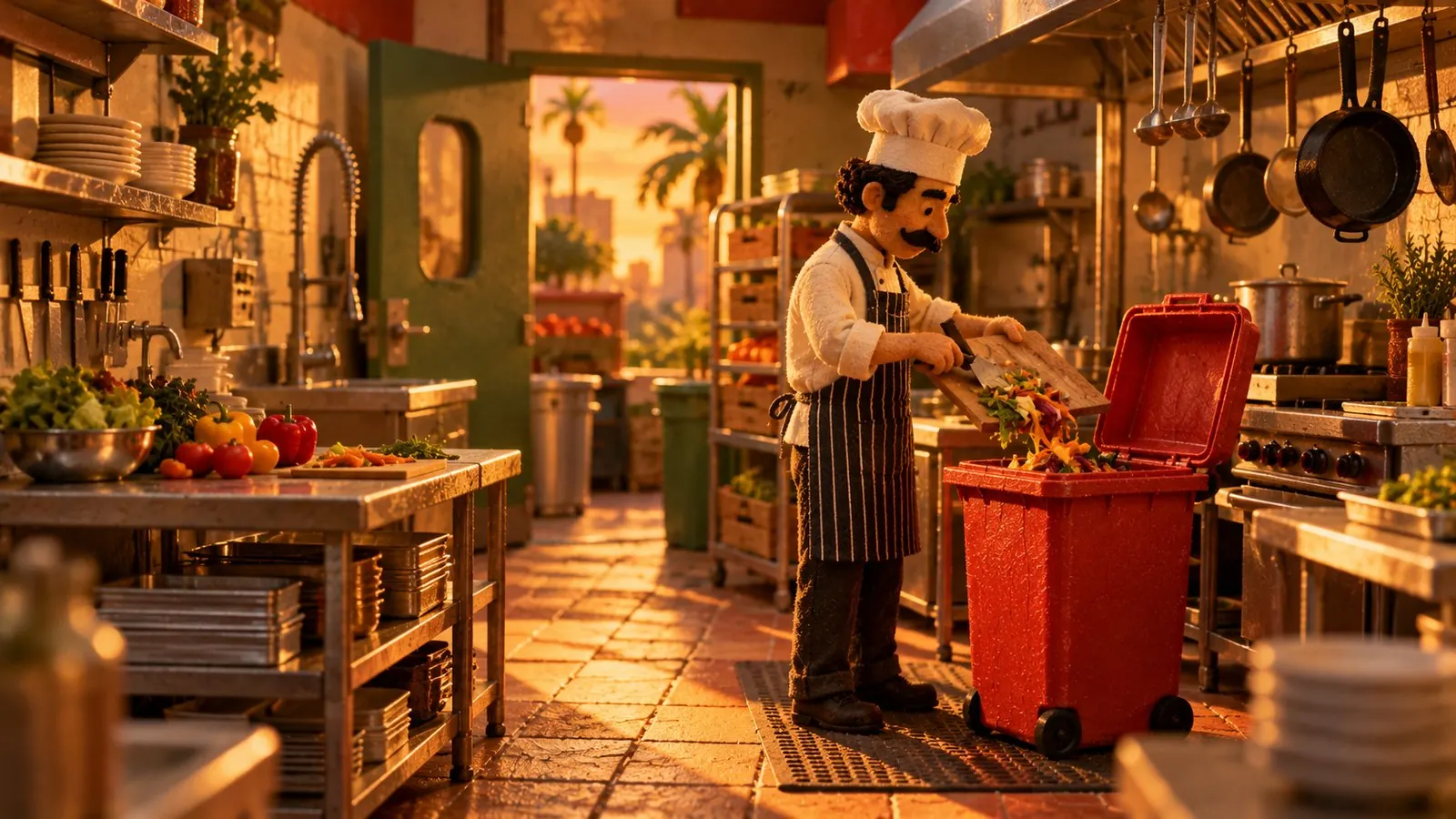
A restaurant starts composting by putting a lidded bin right where scraps come off the cutting board and the plates, telling the team one rule (food goes in the red bin), and booking a hauler to pick up and swap the bin on a set schedule. In Miami that means pickups at least weekly, and usually more for a busy kitchen. Most restaurants are fully running within a week.
Why should restaurants compost?
Because food is most of what a restaurant throws away, and it is the heaviest, wettest, smelliest part of it.
ReFED, the national food waste nonprofit, estimates the U.S. foodservice sector generated 12.5 million tons of surplus food in 2024. Close to 70 percent of that was plate waste, the food that comes back from the dining room. The rest is overproduction and the trimmings that never leave the kitchen. A city waste sort in Fort Collins, Colorado, found prep scraps alone averaged 31 percent of the waste at the quick-service restaurants they studied.
When that food goes to a landfill, it rots without air and makes methane. The EPA estimates 58 percent of the methane escaping from municipal landfills comes from food waste. Composted with air and heat, the same scraps turn into soil.
There is a practical side too. Pulling food out of your dumpster cuts down on the smell and the flies at your back door. And once scraps go in their own bin, you can see them, which is the first step to wasting less. For the bigger picture across every kind of business, read our guide to commercial composting in Miami.
What can a restaurant put in a compost bin?
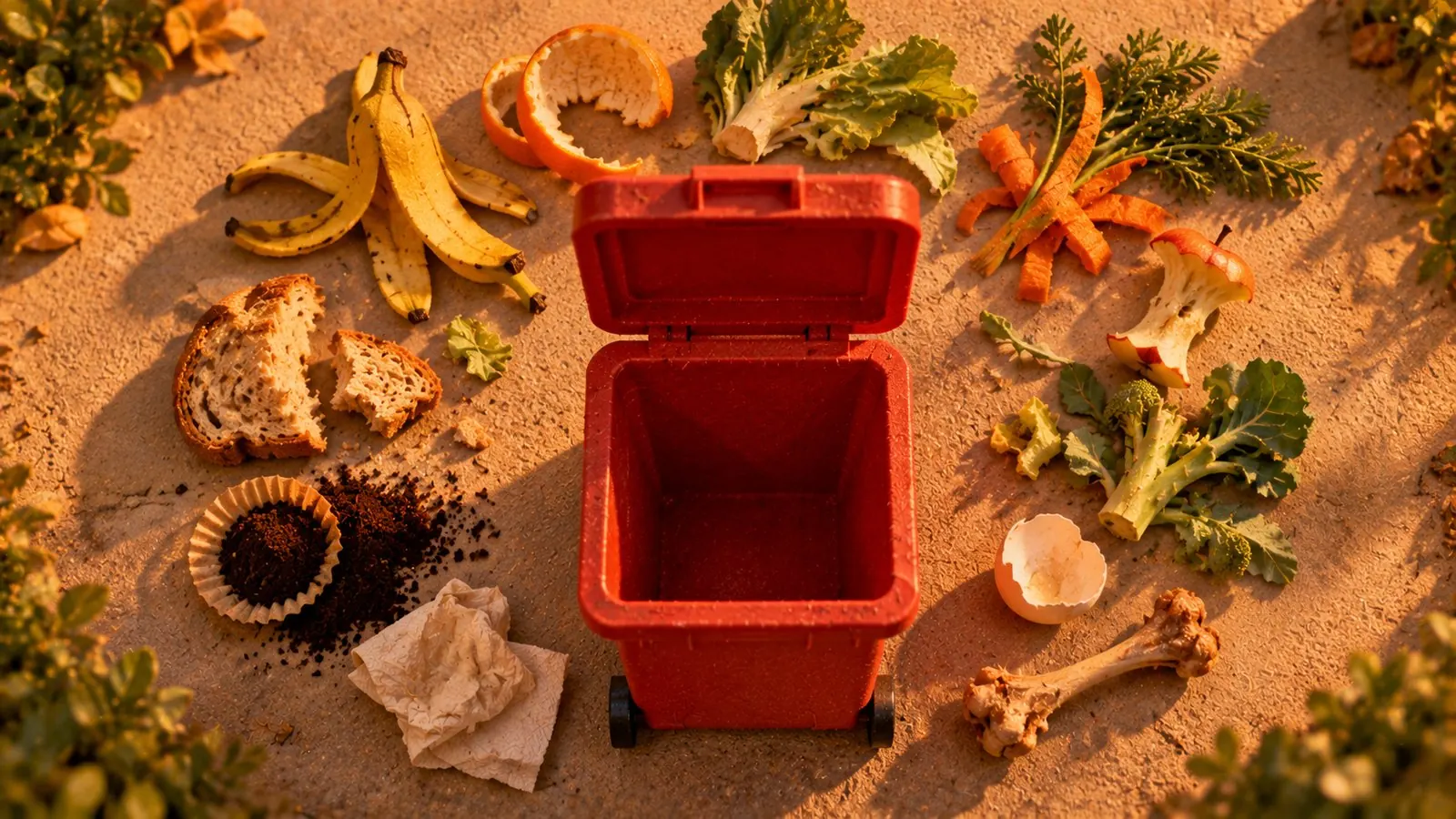
At Melly's, if it was food, it goes in:
- Vegetable and fruit trimmings, peels, cores, herb stems
- Meat, fish, poultry and bones
- Dairy, eggs and eggshells
- Bread, rice, pasta, tortillas
- Coffee grounds and tea
- Plate scrapings and spoiled product, out of the packaging
What stays out: plastic wrap, deli containers, gloves, foil, portion cups, straws, rubber bands, glass and cans. Gloves are the number one thing we pull out of restaurant bins. For the full list, including the tricky stuff like napkins and compostable packaging, see what can go in a commercial compost bin.
Where should compost bins go in a restaurant kitchen?
Where the scraps already fall. That's the whole trick.
- Prep station. This is where the trimmings happen. A bin within arm's reach of the cutting boards catches most of your volume.
- Dish pit. Plates come back, get scraped. Put a bin right at the scrape point, before the sprayer.
- Expo or pass. Optional. Useful if you toss a lot of misfires or garnish here.
If the compost bin is farther away than the trash can, the trash can wins. Every shift. Put the red bin closer.
Melly's uses one bin size: 64 gallons, red, with a lid. That fits most prep and dish areas. If space is tight, a small kitchen caddy at the station that gets dumped into the main bin works too.
How do you get the kitchen staff on board?
Keep it short. Line cooks are busy, and a long training won't stick during a Friday rush.
- One rule. Food goes in the red bin. Everything else goes where it always went.
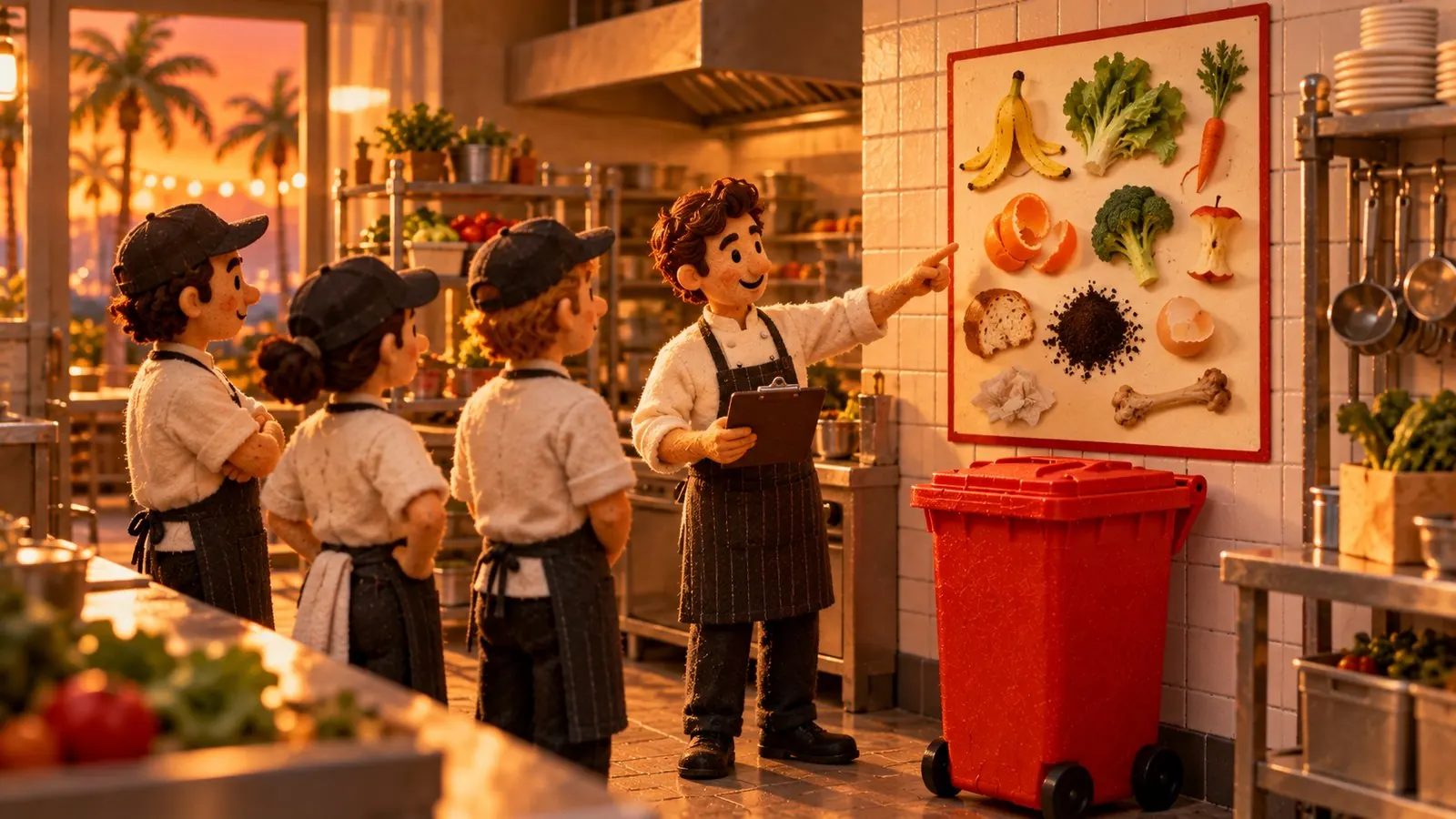
- One walkthrough. Two minutes at pre-shift. Point at the bin, show what goes in, show what doesn't.
- One owner. A sous chef or a porter who knows the pickup day and checks the bins.
- First two weeks matter. Look in the bins. If there's a glove, fix it calmly and fast.
We do a walkthrough with your team when we set you up. For a deeper playbook, read how to train kitchen staff to sort food scraps.
How often should restaurant compost be picked up?
It depends on volume, but the floor is weekly. Never less.
A small cafe that mostly throws out coffee grounds and pastry might be fine with once a week. A full-service restaurant doing dinner every night will likely want two or three pickups a week. Melly's does 1 to 3 pickups a week, and every pickup we take your full bin and leave a clean one. You never scrub a compost bin.
Service is month-to-month. If you find you need more or fewer pickups after the first month, we change it.
Composting for restaurants in Miami-Dade: what's different here?
The heat. Food turns fast here, especially in summer. A full bin sitting outside for ten days in August is not something anybody wants. That is why we never go less than weekly and why the lids stay on.
The tourists. Miami-Dade gets tens of millions of visitors a year, and the restaurant industry runs hard to feed them. Season can double a kitchen's waste overnight. Month-to-month service lets you add pickups for season and pull back after.
The county's direction. Miami-Dade has a Zero Waste Master Plan aimed at diverting far more of the county's waste from landfills by 2040, with organics and composting as part of the plan. The county's waste-to-energy plant in Doral has been offline since a 2023 fire. Restaurants that get their food scraps sorted now are ahead of where the county is heading.
Local farms want it. Our sandy and limestone soils need organic matter. The compost from your scraps goes to South Florida growers, some of whom may end up selling produce back to restaurants like yours.
Frequently asked questions
Can restaurants compost meat and bones?
Yes, with a commercial composter. Melly's hot-composts to EPA standards, holding piles at 131 F or higher for the required time, so meat, bones, fish and dairy all go in. Keep the packaging out.
Will a compost bin make my kitchen smell?
Not if it has a lid and gets picked up on time. A closed bin swapped for a clean one at every pickup usually smells less than food sitting in the dumpster. In Miami heat, weekly is the minimum.
How much does restaurant composting cost?
It depends on how much food waste you make and how often you need pickups. We start with a free waste audit and give you a quote built around your kitchen. No long contract, it's month-to-month.
Do I need special compostable bags?
Not with us. Scraps go straight into the bin. If you want liners, ask us first, because not every bag that says compostable actually breaks down in a pile.
Ready to get your kitchen composting? We'll do a free waste audit, set the bins where your team works, and walk your line through it. Get a quote and we'll take it from there.
Sources
- ReFED: Restaurants and Foodservice
- City of Fort Collins: Restaurant Sort Report
- U.S. EPA: Quantifying Methane Emissions from Landfilled Food Waste
- U.S. EPA: Approaches to Composting
- Miami-Dade County: Zero Waste Master Plan
- Greater Miami Convention and Visitors Bureau: State of the Travel and Tourism Industry, May 29, 2025
- NBC Miami: Miami-Dade releases proposals for new waste management site months after Doral fire
Related posts
-
 For businesses
How to Train Kitchen Staff to Sort Food Scraps
Your crew is slammed, multilingual and turning over. Here is how to get clean food scraps anyway.
-
 For businesses
What Can Go in a Commercial Compost Bin?
Commercial compost takes a lot more than banana peels. Here is what goes in the red bin, what stays out, and why.