
How to Train Kitchen Staff to Sort Food Scraps
Your crew is slammed, multilingual and turning over. Here is how to get clean food scraps anyway.
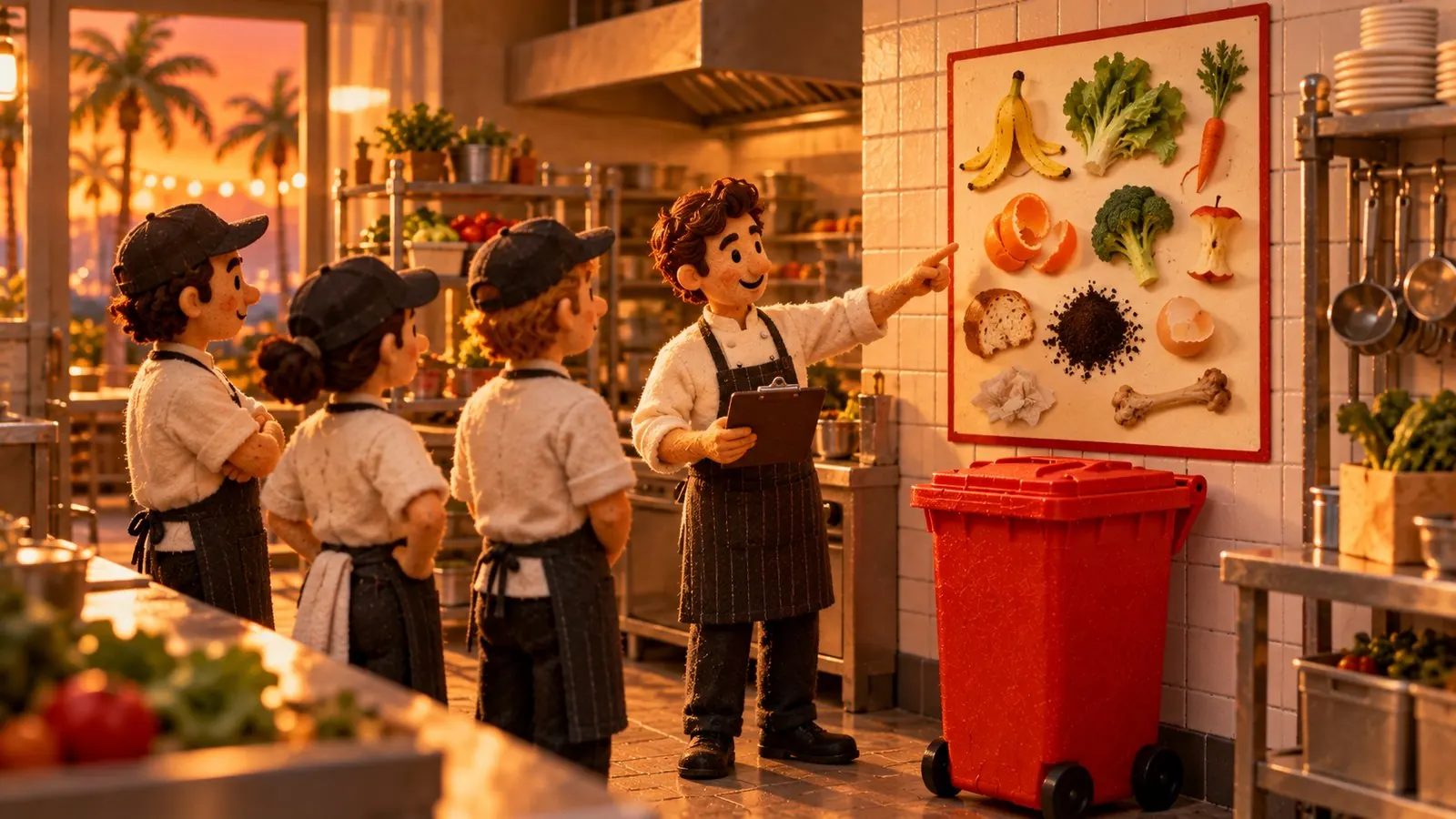
To train kitchen staff to sort food scraps, put a compost bin where the scraps happen, use picture signs instead of words, and teach the rule in a five minute pre-shift huddle: food in the compost, everything else out. Then pick one person per shift to check the bin before it goes out. In our experience, a kitchen with the right setup sorts clean within a couple of weeks.
Why is it so hard to get kitchen staff to compost?
It isn't laziness. A line cook in the middle of a Saturday rush is making a hundred small decisions a minute. If the compost bin is across the room, the scraps go in the nearest can. If the sign has twelve rules in small print, nobody reads it. Turnover is high, and new hires learn from whoever is next to them, not from a binder.
It's worth fixing because the waste is real. EPA's guide for food services and restaurants says that between 4 and 10 percent of food purchased by food service operations is thrown out before it ever reaches a plate (EPA). That's prep trim, spoiled product and overproduction, and it all lands in the back of house where your staff controls it.
How do you set up a kitchen so staff sort correctly?
Start with the floor plan, not the speech.
- Put bins where the scraps happen. A small container at every prep station, a bin by the dish pit, one near the walk-in for spoiled product.
- Pair every compost bin with a trash can. Side by side, always. People will not walk to find the right one.
- Make them look different. Our 64-gallon carts are red with lids, so nobody confuses them with the trash cans.
- Hang picture signs at eye level. Photos of real scraps from your menu, no words needed.
- Keep plastic away from the prep line. If gloves and wrap come off at the station, give them their own bin there too.
What should the training actually cover?
One rule and a short list. Here's the rule: if it was food, it goes in compost. Then show the exceptions that matter in your kitchen, usually plastic wrap, gloves, foil, produce stickers and rubber bands.
At Melly's, food scraps including meat, bones and dairy are accepted, so your crew doesn't need a separate rule for proteins. That makes training simpler. The full yes and no list is in what can go in a commercial compost bin.
Run it as a pre-shift huddle, five minutes, standing up. Hold up an onion skin, a chicken bone, a glove. Ask where each goes. Do it again the next day. Then do it once a week for a month.
How do you train a multilingual kitchen crew?
Pictures first. A lot of Miami kitchens run in Spanish, English and Haitian Creole on the same shift. A picture sign works in every language. If you add words, keep them to two or three and translate them.
Ask your strongest cook to help lead the huddle. People follow the person they respect on the line, not the poster. And show new hires the bins on day one, as part of their station walkthrough, the same way you show them where the knives go.
How do you keep it working after the first month?
Assign ownership. One person per shift, often the closing lead or dishwasher, takes a ten second look in the compost bin before it goes out. If there's a glove on top, pull it and mention it at the next huddle.
Track something. EPA's food service toolkit recommends at least two weeks of daily tracking to spot patterns in what gets thrown out and why (EPA). Even a simple log of how full the compost bin is at pickup tells you whether people are using it. When you see the trash getting lighter and the compost getting heavier, share it with the crew. People like to see their work count.
If you're just getting started, our post on how restaurants can start composting covers the steps before training.
Training kitchen staff to compost in Miami-Dade
South Florida adds two pressures. The first is heat. Scraps in an unlidded bin by the back door in August turn fast, and a smelly bin is a bin nobody wants to stand near. Lids stay closed, and pickups need to be frequent. We pick up 1 to 3 times a week, never less than weekly, and swap in a clean bin each time, so your crew never has to scrub one.
The second is turnover. Miami's restaurant and hospitality scene runs on seasonal staffing, so training can't be a one-time event. Bake it into onboarding and the weekly huddle. The county is heading the same direction: Miami-Dade's Zero Waste Master Plan puts organics and food recovery at its center (Waste Dive). Kitchens that have the habit already will have an easier time with whatever rules follow.
Frequently asked questions
How long does it take to train staff to compost?
The first huddle takes five minutes. Kitchens usually sort clean within a couple of weeks if the bins are set up right and someone checks them every day.
What's the most common sorting mistake in kitchens?
Disposable gloves and plastic wrap. They come off at the prep station and land in the nearest bin, so give them their own can right there.
Do I need separate rules for meat and dairy?
Not with Melly's. We take food scraps including meat, bones and dairy, and hot-compost them at 131 F or higher for the required time.
What if a new hire keeps getting it wrong?
Pair them with your strongest sorter for a few shifts and walk them through the picture sign. Most mistakes are about habit, not effort.
Want help setting up the bins so training is easy? Get a quote and we'll do a free waste audit of your kitchen and suggest where the bins should go. Service is month-to-month and pricing depends on volume. For the full picture, read our guide to commercial composting in Miami.
Sources
Related posts
-
 For businesses
How Restaurants Can Start Composting
One red bin at the prep station, a two-minute talk with the line, and a pickup day. Here is how a Miami restaurant starts composting without slowing service.
-
 For businesses
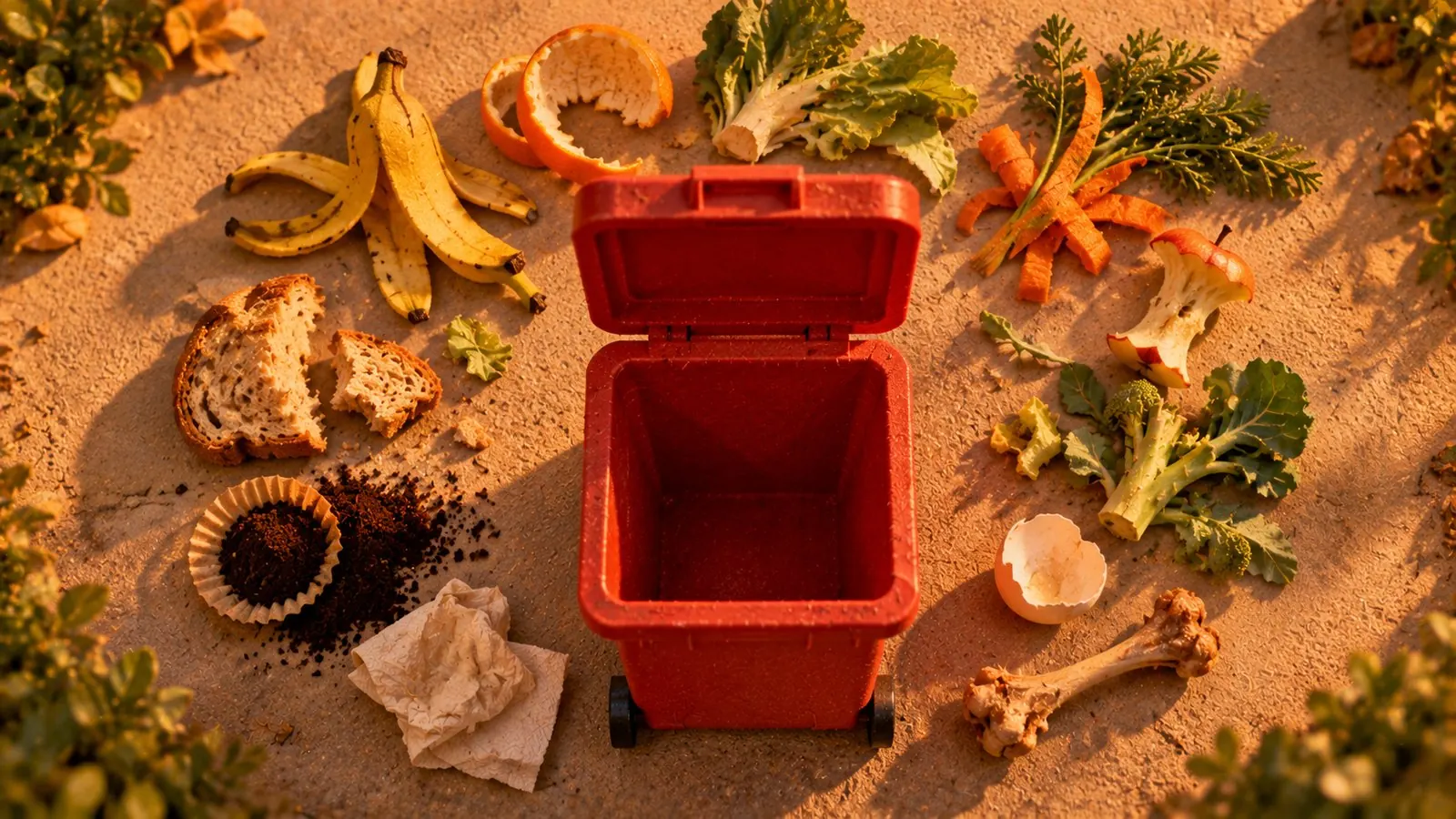
What Can Go in a Commercial Compost Bin?
Commercial compost takes a lot more than banana peels. Here is what goes in the red bin, what stays out, and why.