
Why Food in Landfills Creates Methane
Buried food rots without air, and that makes methane. Here is why landfills and food scraps are a bad mix, and what to do instead.
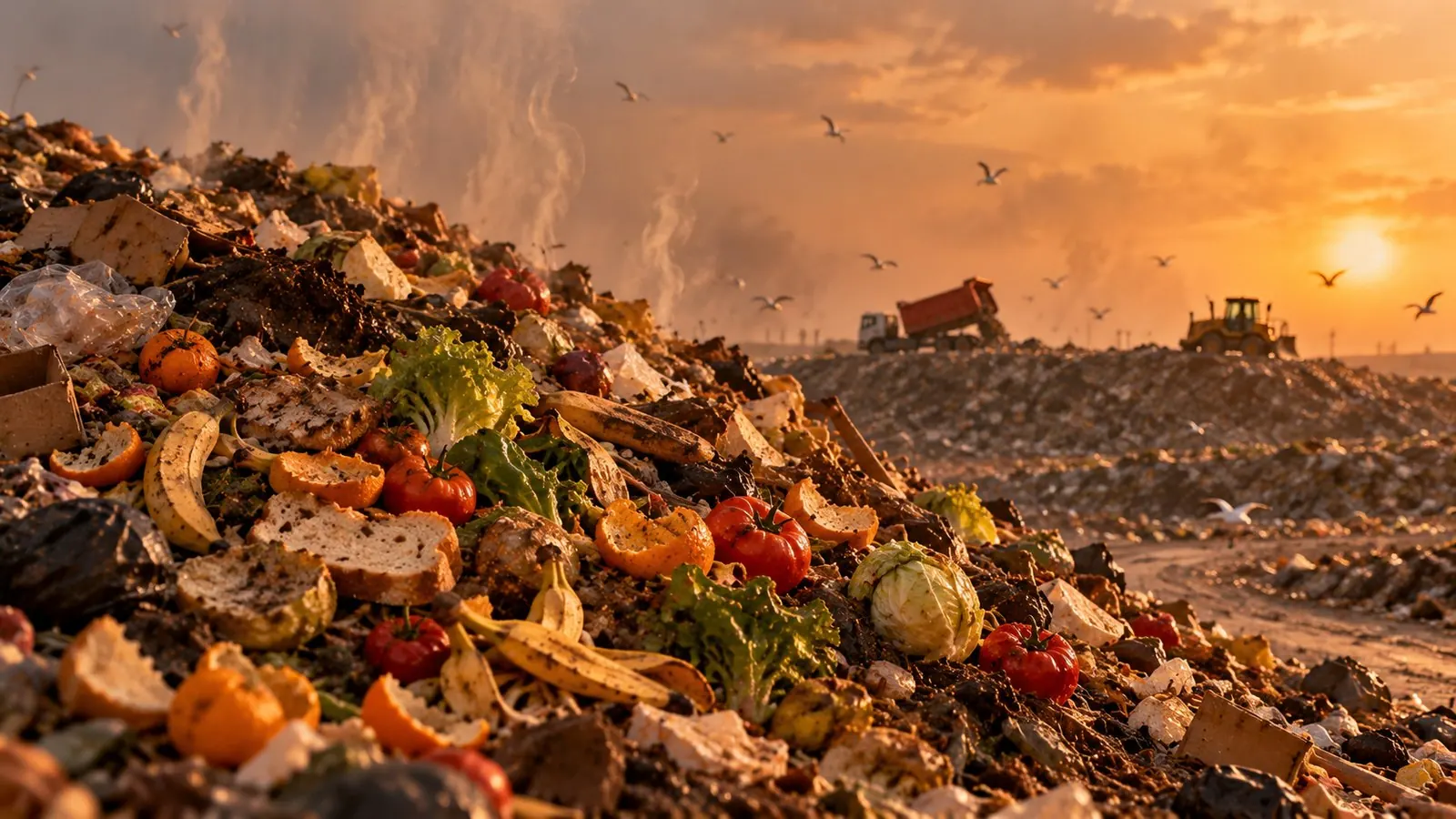
Food in a landfill gets buried under other trash and cut off from oxygen, so it rots anaerobically, and the microbes that work without air give off methane. Methane is a far stronger greenhouse gas than carbon dioxide, and food is the biggest source of it in American landfills. Composting the same scraps keeps air in the process and skips the methane.
Why does food waste make methane in a landfill?
It comes down to air.
When food breaks down with oxygen, like in a managed compost pile, aerobic microbes do the work. They turn the food into compost, carbon dioxide, water and heat.
A landfill is different. Trucks dump trash, machines pack it down, and new layers bury the old ones. The food inside gets sealed off from air. Anaerobic microbes take over, and their byproduct is landfill gas, which is roughly half methane and half carbon dioxide (EPA).
Food is the worst offender because it's wet, soft and full of easy energy for microbes. It breaks down fast. A newspaper might sit in a landfill for decades. A head of lettuce doesn't.
How bad is methane compared to carbon dioxide?
Pound for pound, much worse. The EPA puts methane's warming impact at 28 times that of carbon dioxide over 100 years (EPA). It doesn't stay in the air as long as carbon dioxide, but while it's there, it traps a lot more heat.
That's why cutting methane gets so much attention. It's one of the faster ways to slow warming, and landfills are a big, fixable source.
How much landfill methane comes from food?
A lot more than most people expect. Here's what the EPA has found:
- Food made up about 24 percent of all municipal solid waste landfilled in 2018, more than any other material (EPA).
- Municipal solid waste landfills are the third-largest source of human-related methane emissions in the United States (EPA).
- An estimated 58 percent of the methane that escapes from those landfills comes from landfilled food waste (EPA).
Put simply: the biggest material going in is also the biggest source of the gas coming out.
If you want the bigger picture on how much food never gets eaten in the first place, read how much food America wastes.
Don't landfills capture their methane?
Many large landfills have gas collection systems, and some turn that gas into energy. That's real and it helps. But it doesn't catch everything, and food is the hardest thing to catch.
The reason is timing. Food breaks down so fast that a lot of its methane gets made before gas collection is installed or expanded over that part of the landfill. EPA estimates that about 61 percent of the methane generated by landfilled food waste isn't captured and goes straight into the atmosphere (EPA).
So even a well-run landfill isn't a good home for food scraps. The better move is to keep the food out.
How does composting stop the methane?
By keeping oxygen in the picture.
In a hot compost pile, food gets mixed with dry carbon material like wood chips so air can move through. The pile gets turned or aerated so it stays aerobic. The microbes doing the work are the ones that make compost, not methane.
At Melly's, we hot-compost to EPA standards: 131 F or higher for the required time. The heat kills pathogens and weed seeds, and what comes out is finished compost that goes to local farms. That's the core of the loop: scraps become soil, soil grows food, food comes back to town.
People sometimes lump composting in with recycling. They're related but not the same thing. Here's how composting and recycling differ.
What does this mean for Miami-Dade?
A few things make this more pressing here.
Heat speeds everything up. Food in a South Florida dumpster starts breaking down fast. Food in a South Florida landfill does too. Getting scraps into a managed process quickly matters.
The county is planning around it. Miami-Dade's Zero Waste Master Plan lays out 31 strategies, and organic waste processing and composting is one of its key focus areas. The long-term target is to divert 90 percent or more of solid waste from disposal (Miami-Dade County).
The state has a goal too. Florida law sets a statewide recycling goal of 75 percent (Florida DEP). Food is heavy and makes up a big share of what we throw away, so it's a big lever.
We have the food and the farms. Restaurants, hotels and venues make a steady stream of scraps. Growers in the Redland and across the county can use the compost. The pieces are already here.
Frequently asked questions
Why doesn't food just break down harmlessly in a landfill?
Because there's no oxygen down there. Without air, the microbes that break food down produce methane instead of compost. The landfill is built to bury things, not to compost them.
Is landfill methane really a big deal?
Yes. EPA ranks municipal landfills as the third-largest source of human-related methane in the United States, and methane traps far more heat than carbon dioxide over the short term. Food waste is the biggest single source of it.
Does burning landfill gas for energy solve the problem?
It helps where it's in place, but it misses a lot of the methane food makes. EPA estimates most of the methane from landfilled food escapes before it can be captured. Keeping food out of the landfill works better.
What's the easiest way for a business to cut food waste methane?
Separate food scraps and send them to composting. With Melly's that's a 64-gallon red bin, pickups 1 to 3 times a week and a clean bin swapped in every time. Meat, bones and dairy go in too.
If your business throws away food, you can keep it out of the landfill starting this month. Get a quote and we'll start with a free waste audit, month-to-month, no long contract. Growers can get wholesale pricing on the compost those scraps become.
Sources
Related posts
-
 For everyone
How Much Food Does America Waste?
America ends up with tens of millions of tons of surplus food every year. Here is where it comes from, where it goes, and the part businesses can fix fastest.
-
 For everyone
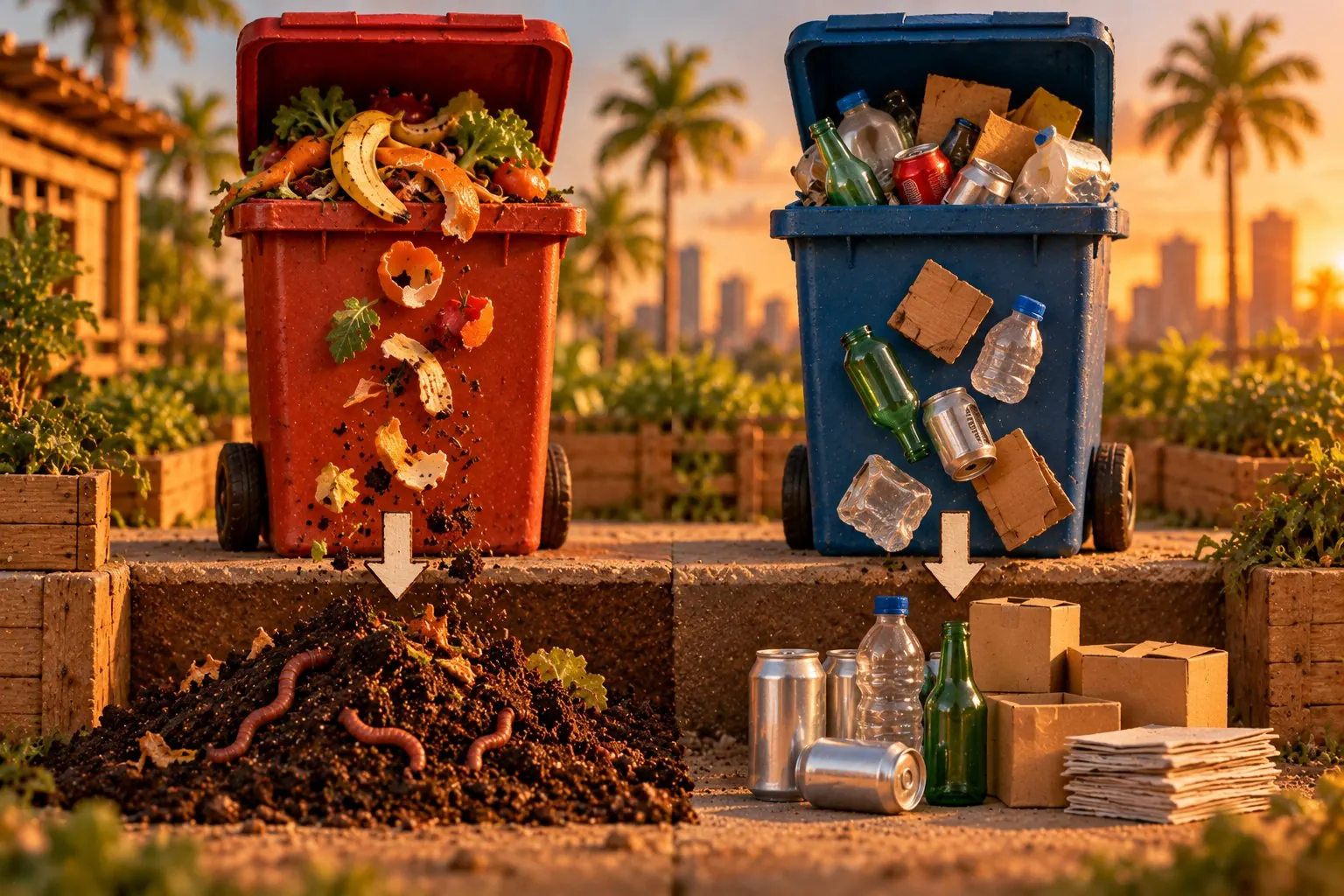
Composting vs. Recycling: What's the Difference?
Recycling remakes materials. Composting turns food back into soil. Here is how they differ, what goes in each bin, and why a business needs both.