COP31 Calls Food Waste a Climate Fix. Miami Can Act Now
At COP31, food waste moved up the climate agenda. Miami does not need to wait for a global deal. Its landfills are filling, and its food scraps can be compost.
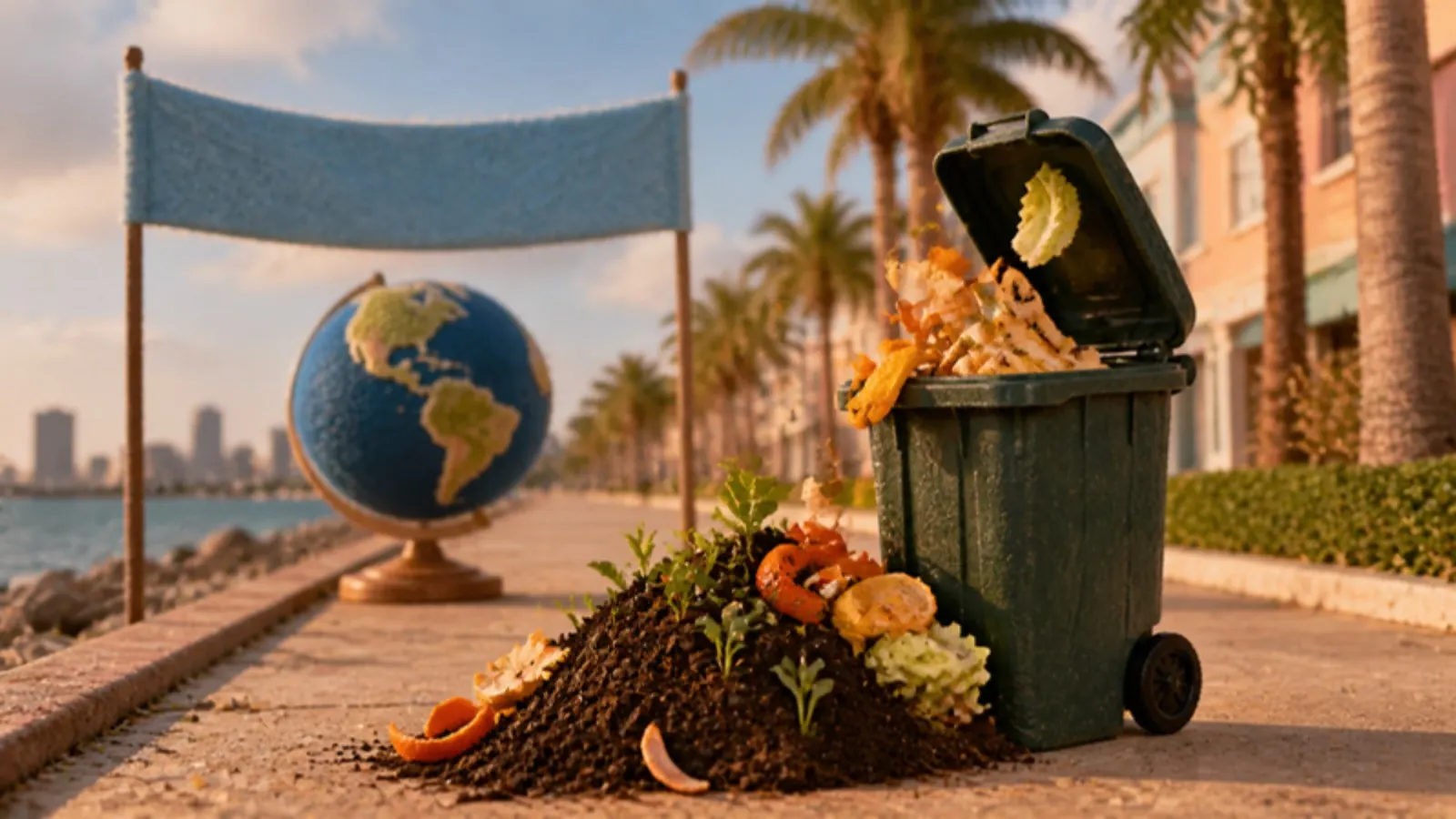
This month, world leaders met in Antalya, Türkiye, for COP31, the United Nations climate summit. One of the topics that kept coming up was not cars or power plants. It was food waste.
That might sound far away from Miami. It isn't. The same food scraps that worry climate scientists are sitting in our trash cans, riding trains to faraway landfills, and filling up the space we have left.
Here is what happened at COP31, why food waste and climate change are so closely linked, and what Miami businesses can do now.
What happened at COP31
COP31 opened on November 9. Before it started, a group of food waste organizations, including the World Resources Institute, WWF, WRAP and the Global FoodBanking Network, released a package of proposals. They asked the summit to formally recognize reducing food loss and waste as a climate solution that also helps fight hunger.
The same report notes that nearly a third of all food in the world is lost or wasted. That waste is linked to as much as 10% of global greenhouse gas emissions.
Waste had its own spotlight too. The summit set aside a Zero Waste Day, and a group of countries in the Global Methane Pledge signed a declaration urging governments to keep organic waste out of landfills. Campaigners at the summit asked governments to put sorting, composting and recycling ahead of burning trash.
UN Secretary General António Guterres put it simply: "The era of pledges is over. The world needs action."
Why food waste is a climate problem
Food in a landfill gets buried under more trash. With no air, it breaks down slowly and gives off methane. We explain the science in more detail in our post on food waste, methane and landfills.
Methane is a strong gas. Over 20 years, it traps about 80 times more heat than carbon dioxide. A 2026 United Nations report linked up to 14% of global methane emissions to food waste.
The numbers in the United States tell the same story. According to the EPA, food is about 24% of the trash that goes into U.S. landfills. Landfills are the third largest human source of methane in the country, and landfilled food waste causes an estimated 58% of the methane that escapes from them.
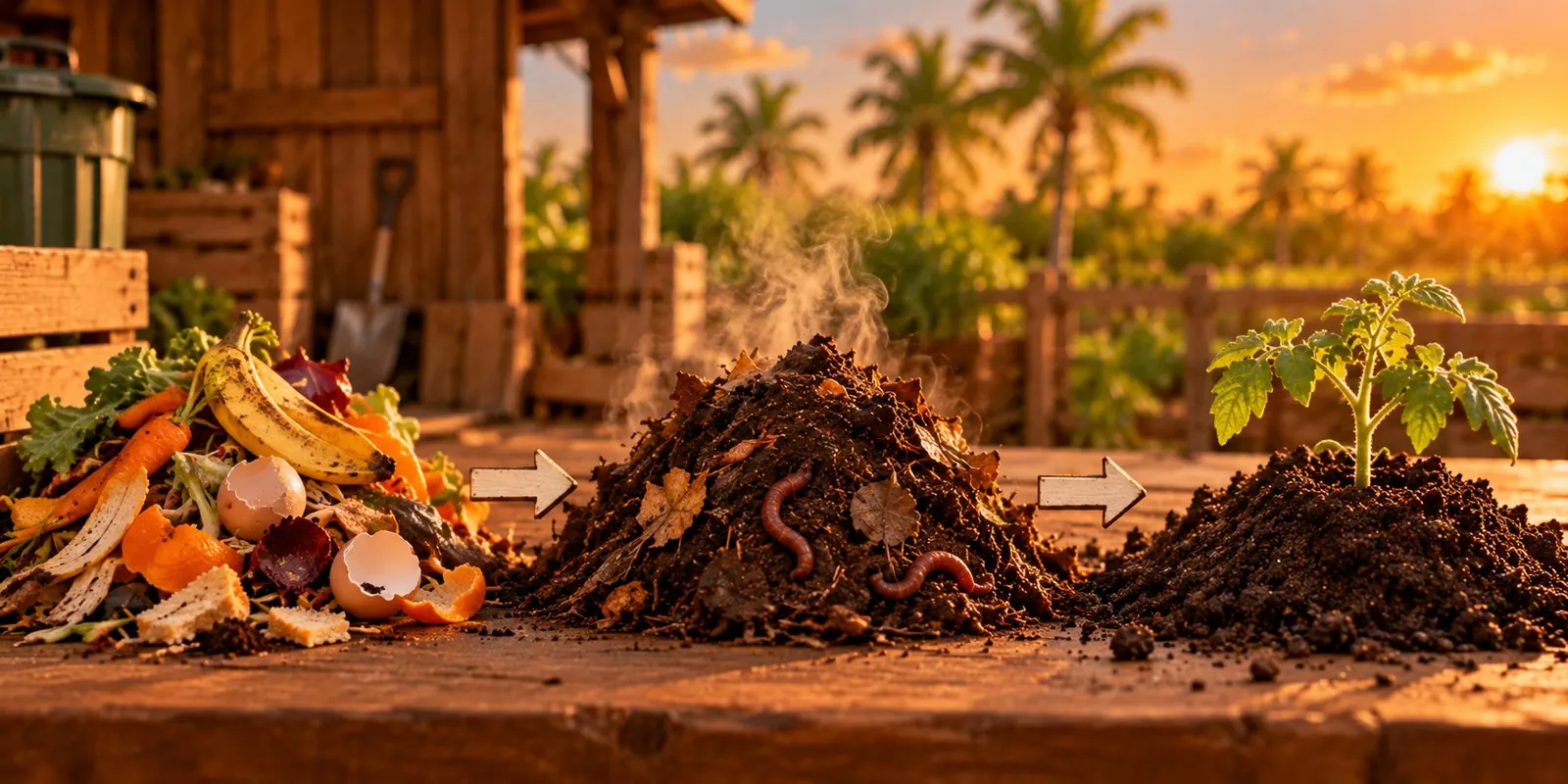
Compost works differently. When food scraps are turned and given air, microbes break them down into rich soil instead of methane. The food goes back into the ground that grows more food.
Miami's trash problem makes this local
Miami-Dade creates more than 5 million tons of waste a year. Mayor Daniella Levine Cava says that is double the national average.
The county lost its Doral waste to energy plant to a fire in February 2023. Since then, it has shipped trash by truck and rail to landfills elsewhere in Florida, and the bill for hauling it has climbed to an estimated 65 million dollars a year. We covered that in Miami's trash takes the train.
The space at home is running out too. County legislation earlier this year projected that the North Dade landfill would reach capacity in 2026 and the South Dade landfill in 2030.
There is a plan. The county's Zero Waste Master Plan, unveiled on July 31, aims to raise recycling and diversion from 32% to 77% by 2039. Food is a big part of that math. A county waste study found that food scraps make up about one fifth of what single family homes throw away.
What Miami businesses can do now
World leaders can take years to agree on a sentence. A Miami kitchen can change what goes in its trash next week. Researchers agree the solutions already exist. As one Loughborough University expert wrote during COP31, preventing waste "is one of our most promising opportunities."
Here is a simple order to follow:
- Waste less first. Weigh what you throw out for a week. Our guide to running a food waste audit in your Miami kitchen shows how.
- Donate good food. Food that was made but never served can feed people instead of a landfill.
- Compost the rest. Peels, trimmings, coffee grounds and plate scrapings belong in a compost bin, not a garbage truck.
- Plan your bins. Use your audit numbers to decide how many bins and pickups you need.
Melly's Recycling picks up food scraps across Miami-Dade and southern Broward. Restaurants, hotels, apartment buildings, grocers, schools and events get 55-gallon bins, picked up one to three times a week. The scraps become compost for South Florida farms, nurseries and landscapers.
If you want to be ready on day one, you can get a compost bin quote now.
Frequently asked questions
What is COP31?
COP31 is the 2026 United Nations climate change conference. It opened on November 9, 2026, in Antalya, Türkiye. Countries meet there each year to work on plans to slow climate change.
How does food waste cause climate change?
Food buried in a landfill breaks down without air and gives off methane, a gas that traps far more heat than carbon dioxide in the short term. The EPA estimates landfilled food waste causes about 58% of the methane that escapes from U.S. landfills.
Is composting better than sending food to a landfill?
Yes. Composting breaks food down with air, so it does not make methane the way a landfill does. It also turns the scraps into soil that can help grow more food. In Miami, it also keeps waste out of landfills that are running short on space.
Sources
- CodeBlue: COP31 Food Waste Action: Leading NGOs Drive Action On Methane And Food Security (Nov 10, 2026)
- IPS: Zero-Waste Advocates Say at COP31 (Nov 13, 2026)
- Loughborough University: Could reducing food waste be the climate solution we already have? (Nov 11, 2026)
- EPA: Quantifying Methane Emissions from Landfilled Food Waste
- Islander News: Miami-Dade's trash crisis mirrors New York's landfill squeeze (Oct 12, 2026)
- Miami Today: As landfills near an overflow, waste advisory board sought (Feb 18, 2026)
Related posts
-
 For everyone
What Is Composting?
Composting is controlled rotting. Microbes, air and water turn scraps into dark, crumbly soil. Here is how it works and why it matters.
-
 For everyone
What Is the Loop? How Food Scraps Become Local Food
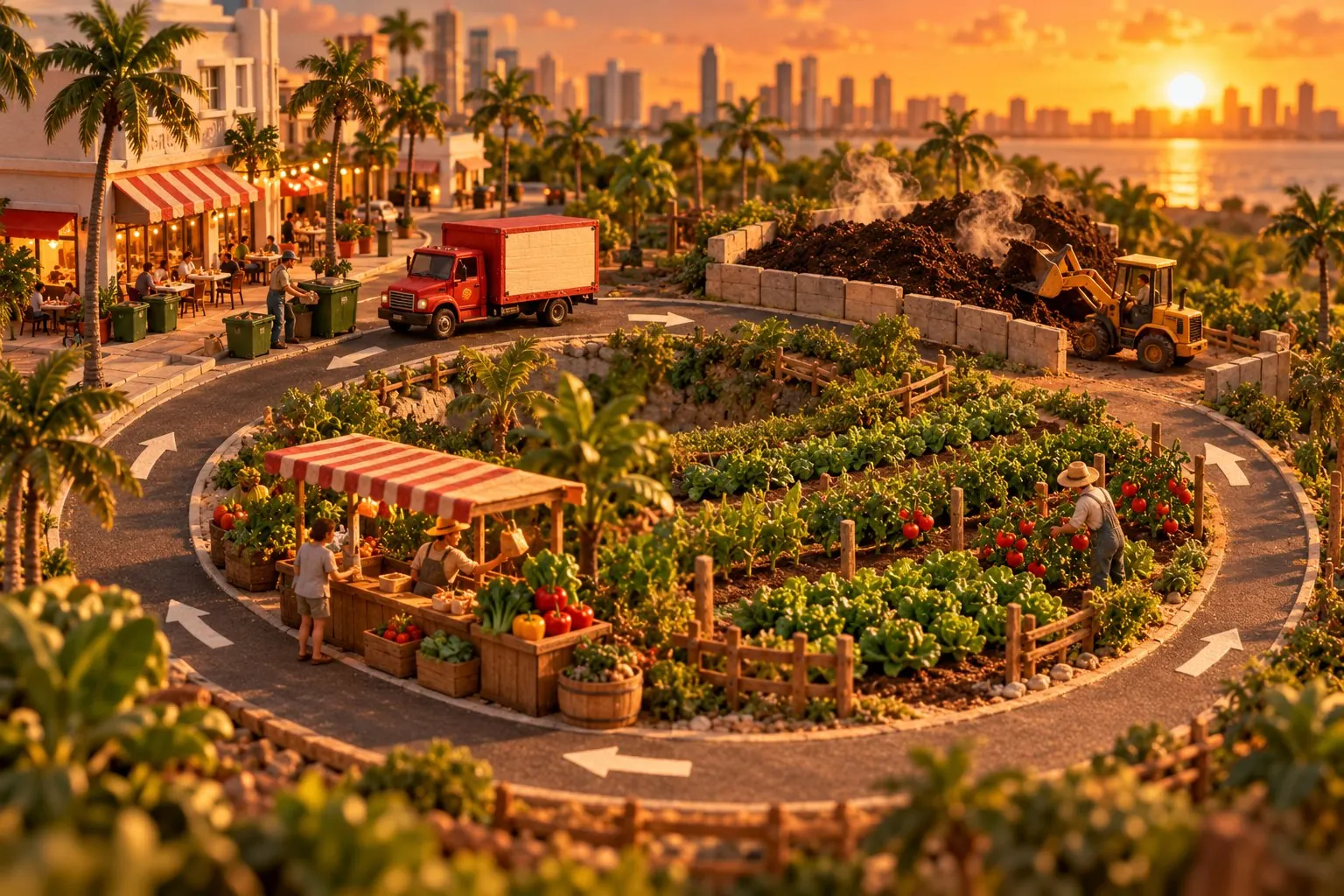
Food scraps don't have to end in a landfill. Here is how the loop turns kitchen waste into compost, compost into crops, and crops back into dinner in Miami-Dade.