
What Is Composting?
Composting is controlled rotting. Microbes, air and water turn scraps into dark, crumbly soil. Here is how it works and why it matters.
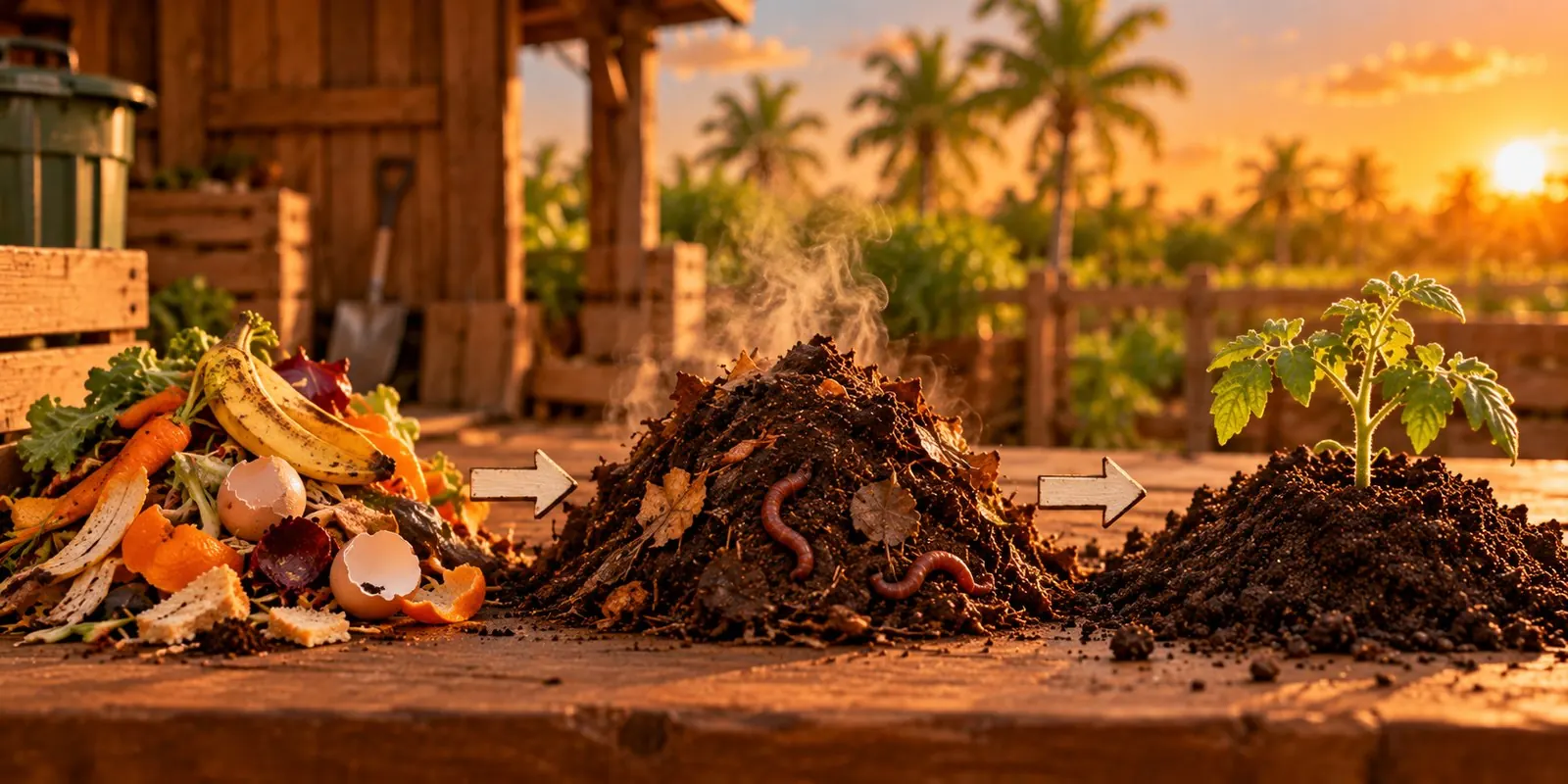
Composting is controlled rotting. Microbes break down food scraps, leaves and other organic material with air and water, and what's left is compost: dark, crumbly, earthy stuff that makes soil healthier. Done right, it doesn't smell bad, and it turns something you'd throw away into something a farmer wants.
What is composting, exactly?
Everything that was once alive breaks down eventually. Leave an apple on the counter long enough and you'll see it happen. Composting takes that natural process and steers it.
Bacteria and fungi do most of the work. They eat the organic material and break it into simpler pieces. Bigger helpers like worms, beetles and mites chew things up and mix them around. As long as the pile has air, the microbes give off heat, carbon dioxide and water, and leave behind a stable, soil-like material called compost.
The key word is air. Rotting without oxygen is a different process, and it's the one that happens in landfills. That's where methane comes from. More on that in a minute.
What do you need to make compost?
Four things. The EPA lays out the same basics for home composting (EPA):
- Greens. Wet, nitrogen-rich material. Fruit and vegetable scraps, coffee grounds, grass clippings.
- Browns. Dry, carbon-rich material. Dead leaves, wood chips, shredded cardboard, branches.
- Water. The pile should feel about like a wrung-out sponge. Too dry and the microbes stall. Too wet and you squeeze out the air.
- Air. Turning the pile or blowing air through it keeps oxygen moving so the right microbes stay in charge.
Get the balance right and the pile heats up and breaks down fast. Get it wrong and it either sits there doing nothing or starts to stink. A smelly pile almost always means too many greens, too much water, or not enough air.
What's the difference between backyard and commercial composting?
Mostly heat and scale.
A backyard pile is small. It might warm up, but it usually won't stay hot all the way through. That's why the EPA says home systems generally leave out meat, bones and dairy (EPA). Those materials need real heat to break down safely without pests and odor.
Commercial composting works with tons of material at once, built into big piles or rows. Big piles hold heat. They get managed with thermometers, moisture checks and regular turning. The EPA describes a few main methods at this scale, including turned windrows (long rows that get flipped) and in-vessel systems (enclosed containers with controlled air and temperature) (EPA).
At Melly's we hot-compost to EPA standards: 131 F or higher for the required time. That's the federal benchmark for knocking out pathogens. For a turned windrow, the rule is at least 15 days at that temperature with at least five turnings (eCFR via Cornell LII). The heat is the whole point. If you want the details, read hot composting, explained.
Why is composting better than throwing food away?
Because food in a landfill makes methane.
Buried under other trash with no oxygen, food rots the wrong way. The EPA estimates that 58 percent of the methane escaping from municipal landfills comes from food waste (EPA). Methane has about 28 times the warming impact of carbon dioxide over 100 years (EPA).
Composting the same scraps keeps oxygen in the process, and you end up with something useful instead of a gas leak. That's a pretty good trade for putting scraps in a different bin.
What is compost used for?
Soil. Mostly farm and garden soil, plus landscaping, nurseries and potting mixes.
Compost adds organic matter, and organic matter is what lets soil hold water and nutrients and support the microbes that help roots feed. It isn't a fertilizer replacement. It makes the soil better at holding onto everything else.
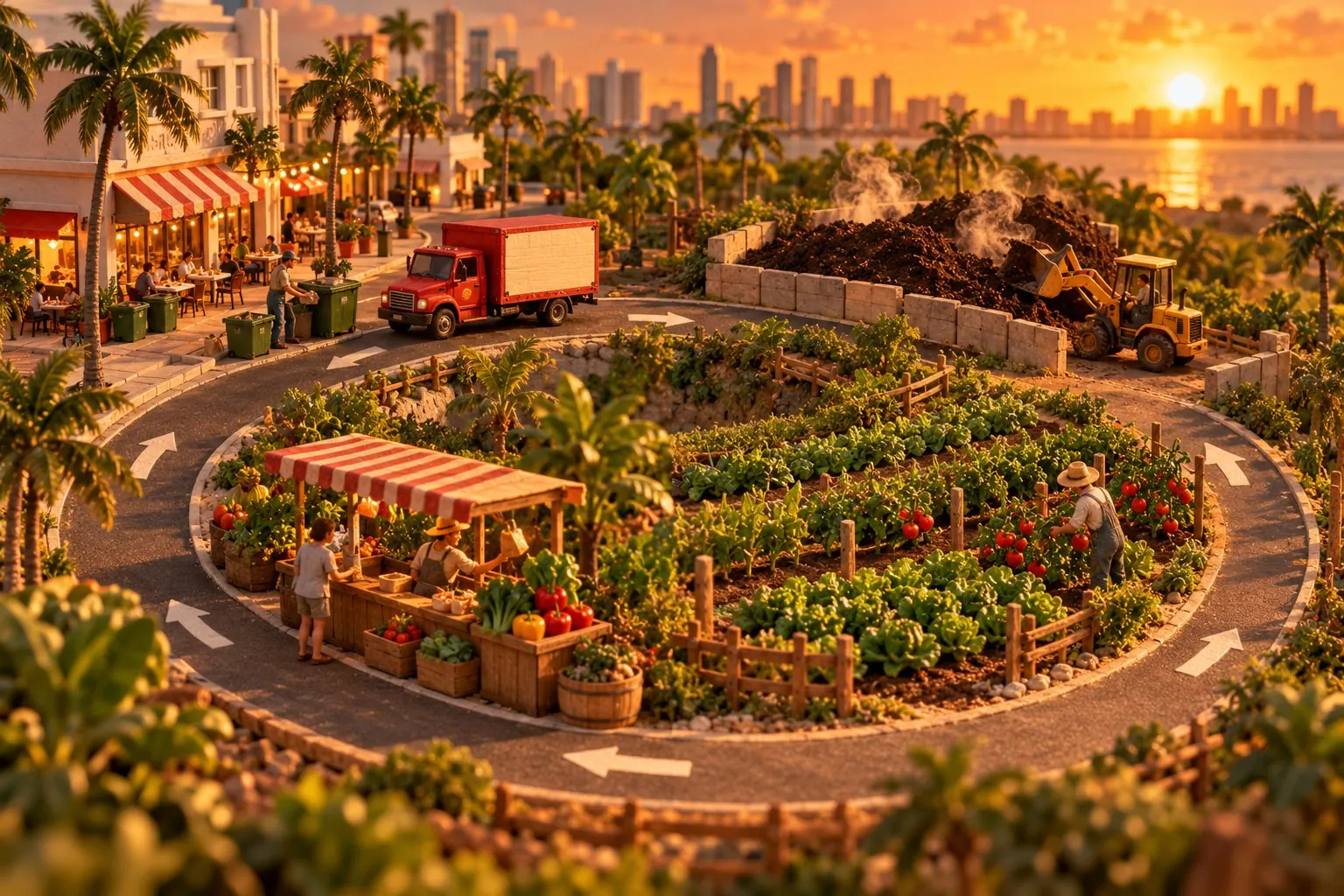
That's the reason composting is the middle step of the loop: scraps from kitchens become compost, compost goes to local farms, and those farms grow the food that comes back to the kitchens.
How does composting work in Miami-Dade?
South Florida changes the math in a few ways.
It's hot. Food breaks down fast here, which is good inside a managed pile and bad in a dumpster. That's why we pick up 1 to 3 times a week, never less than weekly, and swap in a clean bin every time.
Our soil needs it. UF/IFAS Extension notes that subtropical soils typically hold about 1 percent organic matter or less, and that warm weather keeps microbes eating it up all year. Their advice is to add compost every year (UF/IFAS Extension). Between the sandy ground and the limestone in the Redland, local growers can use all the organic matter they can get.
The county is pushing for it. Miami-Dade's Zero Waste Master Plan names organic waste processing and composting as a key area, with a long-term goal of diverting 90 percent or more of waste from disposal (Miami-Dade County).
There's a lot of food here. Restaurants, hotels, events, cruise traffic. Plenty of scraps that could be soil instead of trash.
Frequently asked questions
Does composting smell?
A well-managed pile smells earthy, not rotten. Bad smells usually mean too much wet material or not enough air, and both are fixable. Commercial operations manage moisture and air on purpose to keep odor down.
How long does composting take?
It depends on the method, the materials and the heat. A managed hot pile moves much faster than a backyard heap that nobody turns, and finished compost also needs time to cure after the hot phase.
Can I compost meat and dairy?
Not in most backyard bins. Commercial hot composting can handle them, which is why Melly's bins take meat, bones and dairy along with everything else.
Is compost the same as fertilizer?
No. Fertilizer delivers nutrients to plants. Compost improves the soil itself, adding organic matter that holds water and nutrients. Many growers use both.
If your business makes food scraps, get a quote. We'll start with a free waste audit, set you up with 64-gallon red bins, and turn your scraps into compost for local farms. Growers can get wholesale pricing on finished compost by the cubic yard.
Sources
- EPA: Composting at Home
- EPA: Approaches to Composting
- Cornell LII: 40 CFR Appendix B to Part 503, Pathogen Treatment Processes
- EPA: Quantifying Methane Emissions from Landfilled Food Waste
- EPA: Methane Emissions
- UF/IFAS Extension Sarasota County: How to Use Compost
- Miami-Dade County: Zero Waste Master Plan
Related posts
-
 For everyone
Hot Composting, Explained
A good compost pile runs hot enough to steam on a cool morning. Here is where the heat comes from, why 131 F matters, and how hot composting turns scraps into safe soil.
-
 For everyone
What Is the Loop? How Food Scraps Become Local Food
Food scraps don't have to end in a landfill. Here is how the loop turns kitchen waste into compost, compost into crops, and crops back into dinner in Miami-Dade.