Why Miami's Old Pumpkins Belong in Compost
Miami-Dade schools just composted thousands of pounds of pumpkins. Here's how to compost pumpkins and fall decor at your Miami business too.
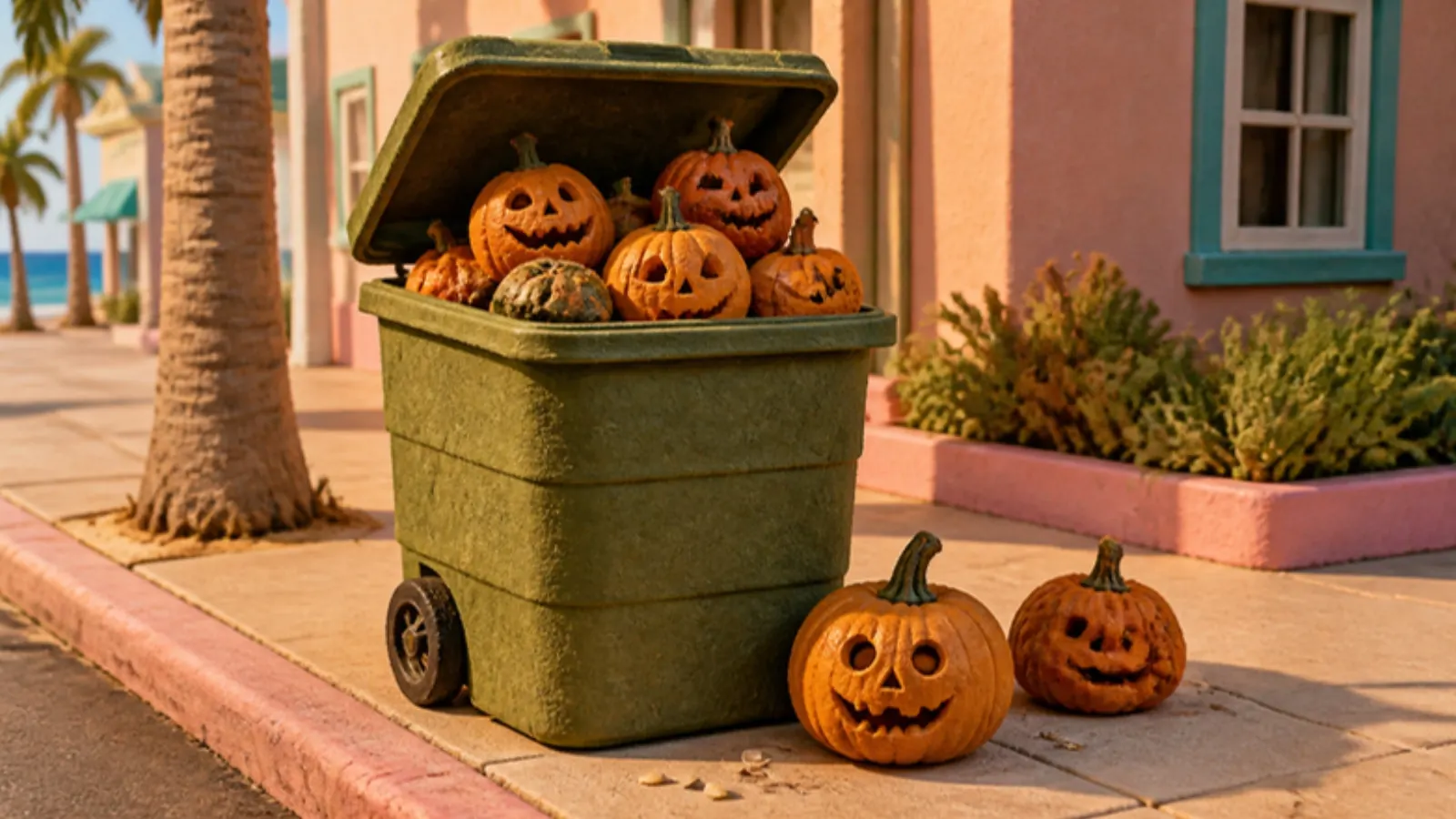
Old pumpkins don't have to be trash. Miami-Dade students just proved it, one jack-o'-lantern at a time.
From November 2 to November 5, 12 Miami-Dade County Public Schools collected leftover pumpkins for Pumpkin Smash 2026, a challenge run with Fertile Earth, a local composter. Last year's first round kept 6,850 pounds of pumpkins out of the landfill. This year the schools want to double it. If kids can do it in a school week, any Miami business with a pumpkin display can too.
What is Pumpkin Smash in Miami-Dade?
Pumpkin Smash is a friendly contest between Miami-Dade public schools. Students bring in their old pumpkins. Fertile Earth weighs them with specially equipped trucks. Then the pumpkins get a second life.
Some go to local farms as animal feed. The rest are composted and go back into the soil. The final collection happened on November 6 at George Washington Carver Elementary, the reigning Golden Pumpkin Award winner. The winners will be announced on November 12.
There is a new prize this year, too: a 100% Clean Collection Certificate. It goes to schools that remove candles, glitter, paint, plastic decorations and other junk before the pumpkins go in the bin. We love that one. Clean bins are the whole game in composting.
Pumpkin Smash is part of something bigger: an 18-month school composting pilot between the school district and Fertile Earth, focused on recovering food scraps. Miami-Dade public schools also received a USDA grant to compost kitchen prep leftovers and uneaten food at seven elementary schools. We wrote about why campuses are such a good fit in our guide to school campus composting.
Why a pumpkin in the trash is a problem
A pumpkin is mostly water and soft flesh. That makes it great compost food and bad landfill filler.
When food gets buried in a landfill, it is cut off from air. It rots the wrong way and gives off methane, a strong greenhouse gas. The EPA estimates that food makes up about 24 percent of the trash that goes into U.S. landfills. It also estimates that 58 percent of the methane that escapes from those landfills comes from food waste. We explain the science in why food in landfills creates methane.
Pumpkins are a big part of that seasonal pile. NPR reported that only about 15 percent of pumpkins grown in the U.S. are processed for food. Most of the rest are grown for decoration. So when the season ends, a lot of them head straight for the trash.
Why this matters even more in Miami
Miami-Dade is short on places to put trash. The county's incinerator burned down in 2023, and the debate over what replaces it is still going. Food scraps and yard trimmings make up close to 30 percent of the county's household and business trash, according to the county's own composting pilot announcement.
That is a lot of material that could be soil instead. The county is starting to make room for it. In October 2025, county commissioners passed rules that made it easier for local composters to grow. This year the county also tested a covered composting system with Fertile Earth at the South Dade Landfill.
Every pumpkin that goes to compost instead of the landfill is a tiny bit of breathing room for Miami-Dade.
How to compost pumpkins at your Miami business
Think about how many pumpkins live at Miami businesses this time of year. Hotel lobbies. Restaurant host stands. Condo entryways. Grocery store displays. Event venues dressed up for fall parties. Many of those stay out through Thanksgiving, then all go out at once.
Here is how to keep them out of the landfill:
- Strip the decor. Take off candles, wax, stickers, glitter, ribbon and any plastic. Painted pumpkins should stay out of the compost bin.
- Break them up. Smaller pieces break down faster. A cracked or chopped pumpkin also packs into a bin better.
- Check for mold and pests. A little softness is fine for compost. Just don't let pumpkins sit for weeks in the heat first.
- Add the rest of your fall decor that is plant based. Gourds, corn stalks and plain hay bales are organic too. Fake leaves, foam and wire are not.
- Use a commercial compost bin, not the trash. If you aren't sure what else can go in, our guide to what goes in a commercial compost bin covers it.
Kitchens get a pumpkin wave too. Fall menus mean peels, seeds and pulp from pies, soups and lattes. All of that is compostable food waste, the same as any other prep scrap.
What happens to a pumpkin in the loop
With Melly's, a pumpkin follows the same path as every other food scrap we collect. It goes in a 55-gallon bin at your business. We pick it up. It gets turned into compost with other food scraps. Then that compost goes to local farms, nurseries and landscapers around South Florida.
That is the loop. Your lobby pumpkin this fall could be part of the soil that grows next year's squash at a farm in South Dade.
Frequently asked questions
Can you compost pumpkins?
Yes. Pumpkins are food, and they break down well in compost. Remove candles, wax, paint, stickers, glitter and plastic first, and break the pumpkin into pieces so it breaks down faster.
Can you compost painted pumpkins?
Keep painted pumpkins out of the compost bin. Paint and glitter don't break down and can end up in the finished soil. Miami-Dade schools even get a special certificate this year for sending in clean pumpkins with the decorations removed.
What should a Miami business do with old pumpkins?
Strip off the decor, then put the pumpkins in a commercial compost bin with your other food scraps instead of the trash. Plant-based fall decor like gourds and plain hay can go too.
Where do Miami pumpkins go when they are composted?
In Pumpkin Smash, Fertile Earth takes the school pumpkins. Some go to local farms as animal feed and the rest are composted back into soil. With Melly's, food scraps from Miami businesses are turned into compost for local farms, nurseries and landscapers.
Ready to give your business's food scraps a better ending? Get a compost bin and we'll add you to the route.
Sources
- Pumpkin Smash 2026, Coconut Grove Magazine (Nov 6, 2026)
- Pinecrest students transform pumpkins into compost at inaugural event, Pinecrest Tribune (Nov 20, 2025)
- Rotting pumpkins stink for the climate. Miami schools teach kids how to reduce impact, WLRN / Miami Herald (Nov 6, 2025)
- Quantifying Methane Emissions from Landfilled Food Waste, U.S. EPA
- Hungry pigs are a solution to keeping pumpkins out of landfills, NPR
- Miami-Dade County Launches Composting Pilot to Evaluate Organics Diversion Opportunities, BioCycle (June 16, 2026)
- Facing growing waste crisis, Miami-Dade finally clears way for large-scale composting, Miami Herald via AOL (Oct 16, 2025)
- How to Dispose of Halloween Pumpkins, Mississippi State University Extension
Related posts
-
 For businesses
Miami Beach Food Waste Pilot: Donate First, Then Compost
Miami Beach wants its grocers and restaurants to donate good food instead of tossing it. Here is how the new pilot works, and where composting fits in.
-
 For businesses
Thanksgiving Food Waste in Miami: A Simple Plan
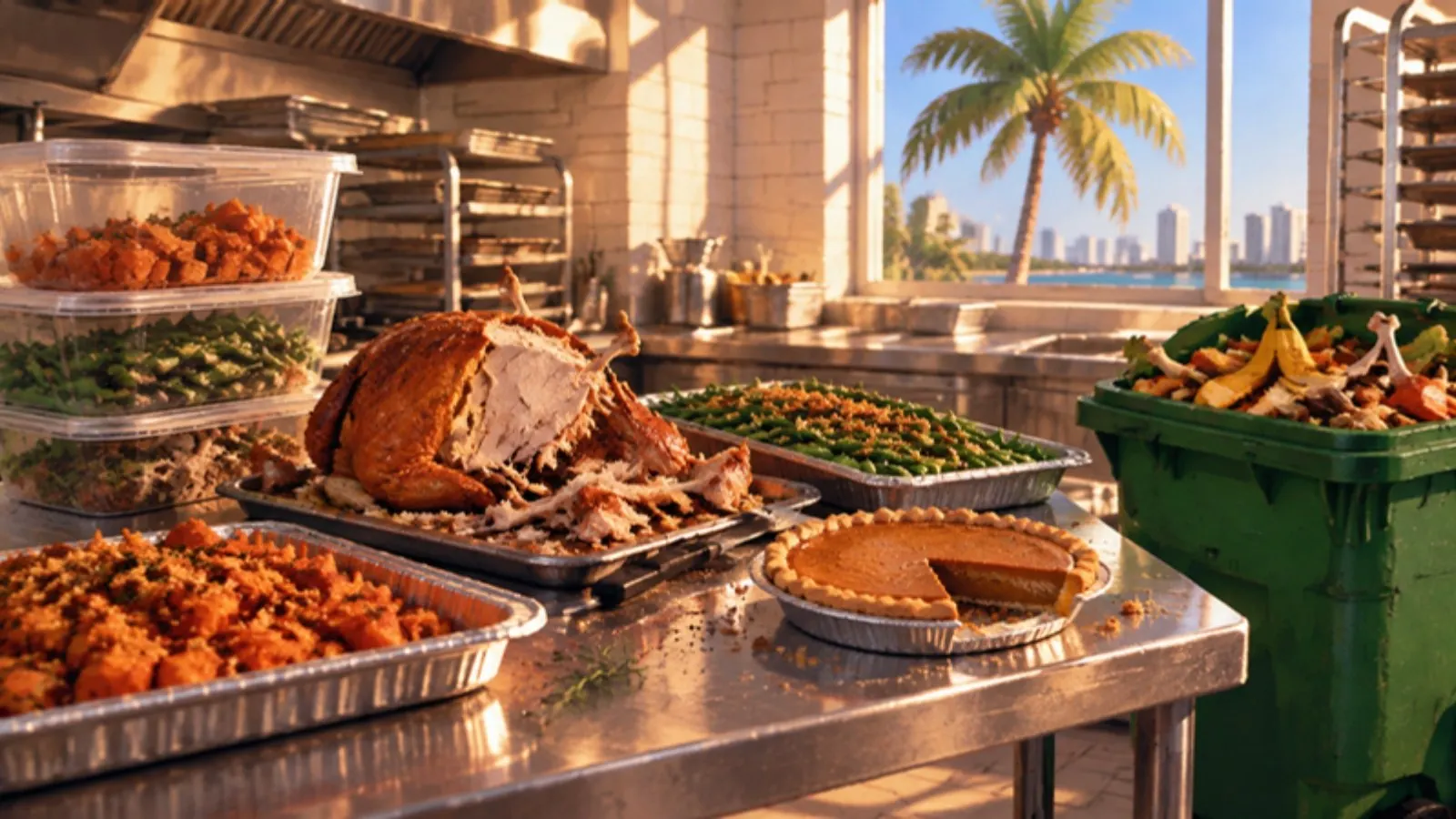
Thanksgiving is the biggest food waste day of the year. Here's a simple plan for Miami restaurants, hotels and caterers to plan, donate and compost.