
Starting a School or Campus Composting Program
Cafeterias throw away more food than almost anyone. A good composting program fixes that and teaches kids something real along the way.

To start a school composting program, measure what the cafeteria throws away, set up a share table for food that is still good, then put in a simple sorting line where students scrape plates into a lidded compost bin. Get the kitchen, the custodial staff and a few student leaders on board first, and line up a hauler who picks up at least weekly. Start with one lunch period, get it clean, then expand.
How much food do schools actually waste?
A lot. World Wildlife Fund audited cafeteria plate waste in 46 schools across nine US cities and estimated that school food waste nationwide could reach about 530,000 tons a year, not counting milk (WWF). The schools in that study produced about 39.2 pounds of food waste per student per year.
That food mostly ends up in a landfill. EPA counts food as the single largest material landfilled in the US, at 24.1 percent of the total in 2018 (EPA). A school cafeteria is one of the easiest places to change that, because the same students eat in the same room at the same time every day.
How do you start a school composting program step by step?
- Build a small team. A teacher or sponsor, the cafeteria manager, the head custodian, and two or three student leaders. Without the custodian, the program dies in a week.
- Do a waste audit. For one week, weigh what goes in the trash at lunch. Separate milk, food and packaging if you can. This is your baseline.
- Set up a share table. Unopened milk, whole fruit and sealed snacks go on the table for other kids to take. Check your district and local health rules on what is allowed.
- Build the sorting line. Liquids bucket, compost bin, landfill bin, recycling if you have it. Same order every day.
- Pick a hauler and a schedule. Lunch scraps can't sit in a hot dumpster enclosure for a week.
- Teach it, then track it. Weigh again after a month and share the number with the students.
If you want to explain the science to the kids first, our post on what composting is is a good starting point for a classroom.
Why put a share table before the compost bin?
Because uneaten food that is still good should be eaten. EPA's Wasted Food Scale ranks prevention and donation above composting (EPA). The New Jersey school food waste guidelines, built on EPA's recovery hierarchy, include guidance on setting up share tables in cafeterias (New Jersey State Library).
Share tables also make the compost cleaner. When the unopened milk and the sealed cheese stick go to the table, the compost bin gets actual scraps: peels, crusts, half sandwiches. That is what a composter wants.
How do you get students to sort correctly?
Make it a job, not a sign. Students listen to students. Put two volunteers at the sorting line each lunch, wearing gloves, pointing and helping. Rotate the job so everyone takes a turn.
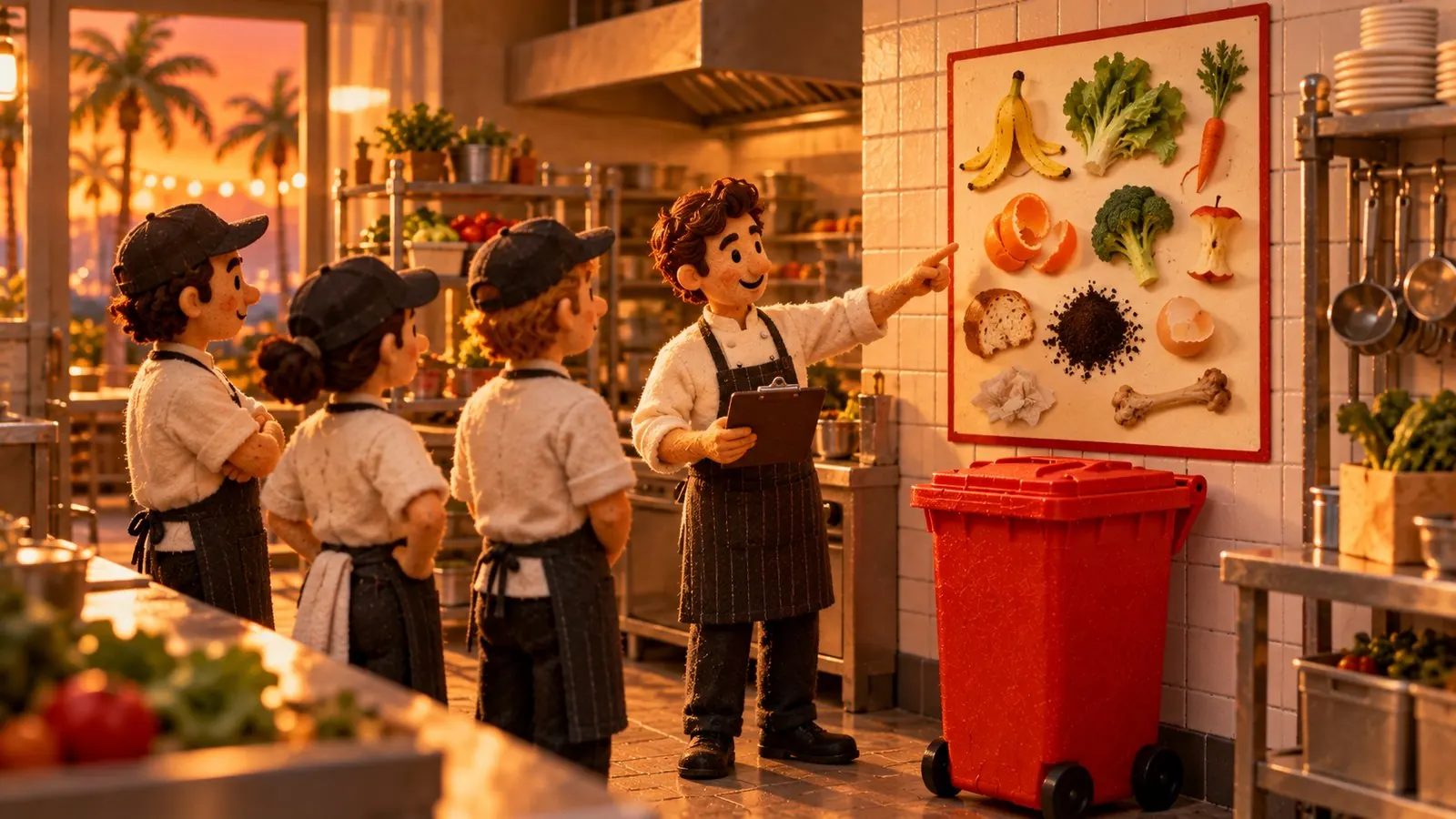
Keep the choices few. "Food in red, everything else in black" works better than a chart with twelve pictures. The same principles we use to train restaurant crews apply in a cafeteria, and we wrote them up in how to train kitchen staff to sort food scraps.
And show results. A whiteboard by the cafeteria door with "pounds kept out of the landfill this week" does more than any assembly.
What about colleges and university campuses?
Campuses are bigger, but simpler in one way: the dining halls run like commercial kitchens. Start back of house, where trained staff handle prep scraps and leftovers. That stream is clean from day one. Then add front of house in one dining hall, using the same staffed station approach.
Colleges are also covered when they donate. Since 2023 the federal Good Samaritan food donation law lists institutions of higher education and school food authorities among the qualified direct donors (USDA). Florida's donor protection statute also covers food donated in good faith to nonprofits (Florida Senate).
How does school composting work in Miami-Dade?
Scale is the story here. Miami-Dade County Public Schools ranked as the third largest school district in the country in 2023 (M-DCPS). That is a lot of lunches, every school day.
Heat is the other story. Food scraps in a South Florida dumpster enclosure in September attract flies and smell fast. That's why lidded bins and frequent pickup matter more here than up north. We pick up 1 to 3 times a week, never less than weekly, and swap in a clean bin every time.
The county is moving this way too. Miami-Dade's Zero Waste Master Plan focuses on organics and food recovery, and food scraps and yard trimmings make up close to 30 percent of the county's waste stream (Waste Dive). A school program is a good way for a community to get ahead of it.
Frequently asked questions
Can schools compost meat and dairy from lunch?
With a commercial composter, usually yes. Melly's takes food scraps including meat, bones and dairy, and we hot-compost to EPA standards at 131 F or higher for the required time, which handles what a backyard pile can't.
What about milk cartons?
Pour the liquid out first in a bucket at the start of the sorting line. Whether the empty cartons can go in the compost depends on the composter, so check before you add them.
How big a bin does a school need?
It depends on enrollment and how many lunch periods you run. We use one size, a 64-gallon bin, and set the number of bins and pickups after a free waste audit.
Is it hard to keep going after the first month?
The programs that last have a custodian on the team and students with real jobs. Weigh the scraps every month and share the number, and it keeps people invested.
Run a school, a college dining hall or a campus kitchen in Miami-Dade? Get a quote and start with a free waste audit. Service is month-to-month and pricing depends on volume. Want the big picture first? Read our guide to commercial composting in Miami.
Sources
- WWF: Plate Waste in US Cafeterias Could Total 530,000 Tons per Year
- EPA: Food: Material-Specific Data
- EPA: Wasted Food Scale
- New Jersey State Library: School Food Waste Guidelines
- USDA: Donating Food
- Florida Senate: Florida Statutes 768.136
- Miami-Dade County Public Schools: M-DCPS becomes third largest school district in the nation
- Waste Dive: Miami-Dade unveils zero waste plan
Related posts
-
 For businesses
How to Train Kitchen Staff to Sort Food Scraps
Your crew is slammed, multilingual and turning over. Here is how to get clean food scraps anyway.
-
 For everyone
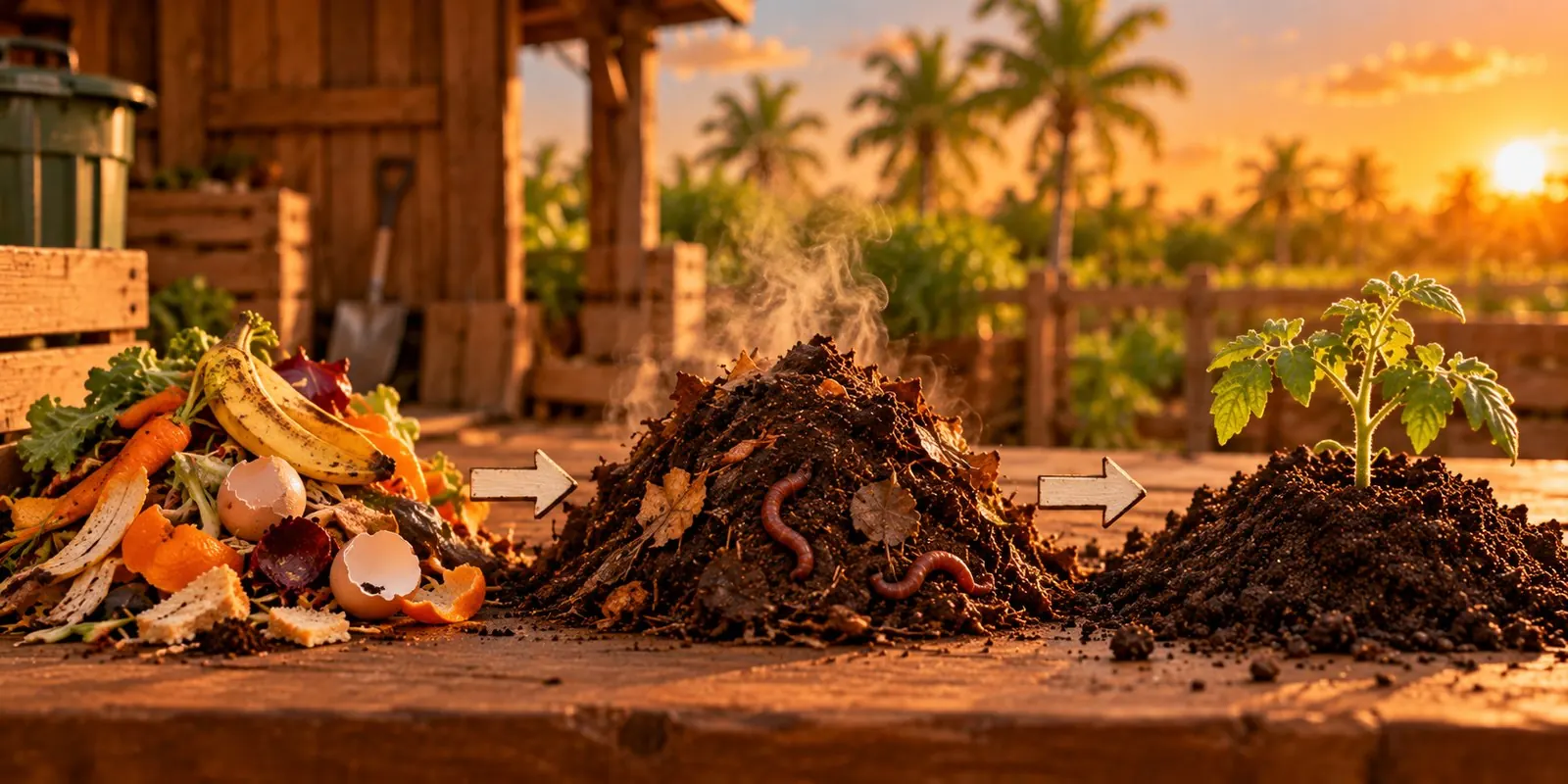
What Is Composting?
Composting is controlled rotting. Microbes, air and water turn scraps into dark, crumbly soil. Here is how it works and why it matters.