
Why Local Farming Matters in Miami
Miami-Dade still farms, and it grows things almost nobody else in the country can. Here is why that matters, what is putting pressure on it, and how a food scrap can help.
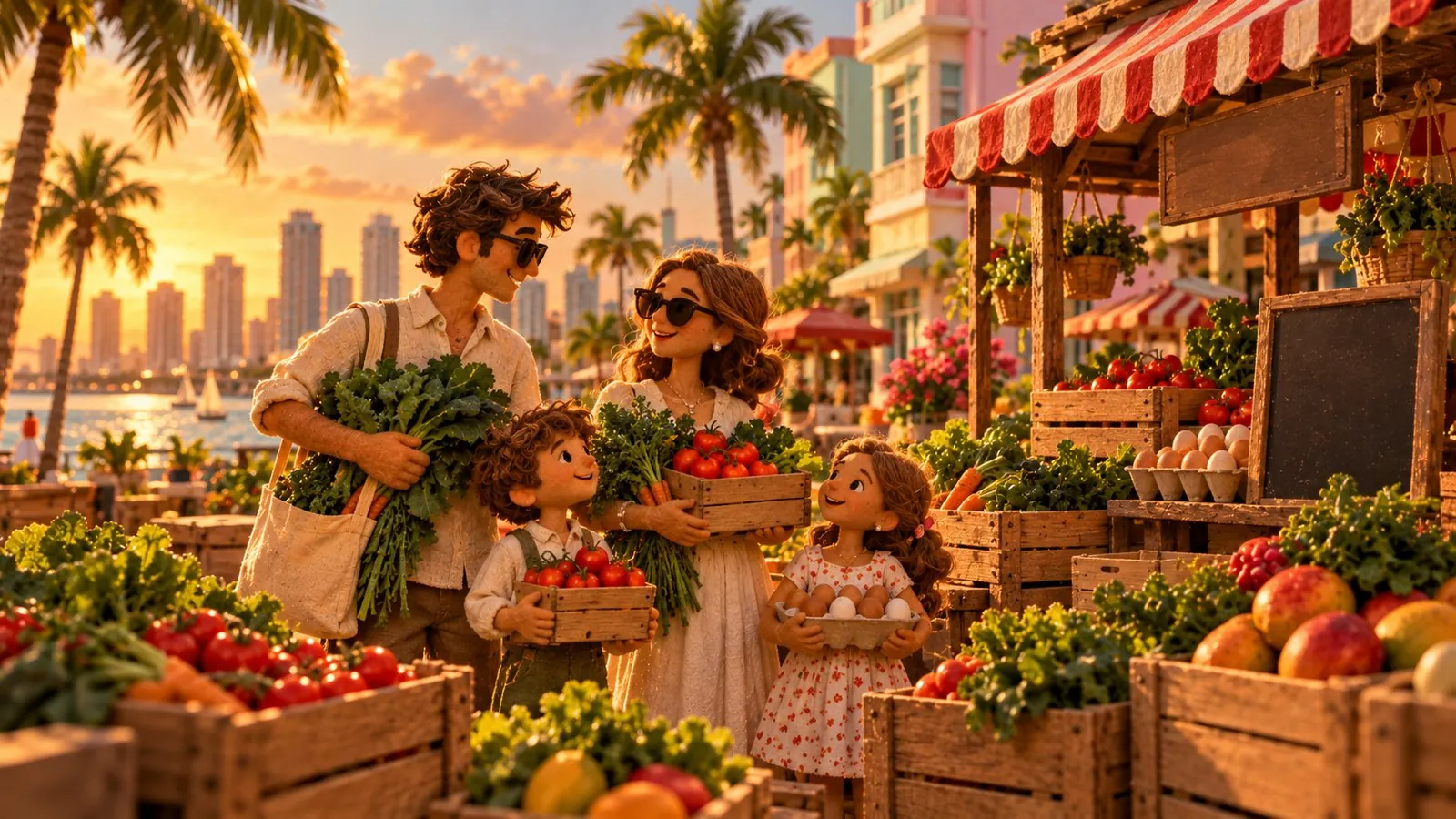
Local farming matters in Miami because Miami-Dade grows food and plants that very few places in the United States can, right next to millions of people who eat it. The county leads Florida in tropical fruit, tropical vegetables and ornamental nursery plants, and ranks near the top for winter vegetables. Keeping those farms healthy keeps fresh food close, keeps jobs local, and gives the city's food scraps somewhere useful to go.
Does Miami-Dade actually have farms?
Plenty of people are surprised by this. Drive south past Kendall and the city thins out into the Redland and Homestead: groves of mango and avocado, rows of vegetables, acres of shade houses full of palms and tropical plants.
According to Miami-Dade County, the county leads the state in tropical vegetables, tropical fruits and ornamental nurseries, and ranks second in winter vegetables. The county's Fruit & Spice Park in the Redland grows more than 500 varieties of fruits, herbs, spices and nuts, and it sits in the middle of thousands of acres of tropical farmland.
What do farms in Miami-Dade grow?
Mostly plants, then vegetables, then tropical fruit. A 2023 county and UF/IFAS study found that nursery and floriculture products make up about 83 percent of the value of Miami-Dade agriculture, vegetables about 11 percent, and tropical fruits about 5 percent (Miami-Dade County).
That tropical fruit slice is small in dollars and huge in character. Mamey, lychee, longan, jackfruit, mango, avocado: this is one of the few spots in the continental U.S. where they grow outdoors. And while the rest of the country is in winter, South Dade is harvesting tomatoes, beans, squash and greens.
Why does buying from local farms matter?
A few plain reasons.
It is fresher. Food picked down the road can be picked riper and eaten sooner.
The money stays here. When you buy from a farm in Homestead, that money pays people who live in Miami-Dade.
It keeps the land in farming. A farm that makes money stays a farm. A farm that does not gets sold. Farming is a business, and the best thing anyone can do for a local farm is be a paying customer.
It keeps us connected to where food comes from. Kids who have picked a strawberry at a u-pick farm look at food differently for the rest of their lives.
None of this means local is the only food worth eating. Grocery stores and big farms across the country feed this city every day, and they do it well. Local farms add something on top: variety, freshness, and a food supply with deep roots right here.
Why is farmland in Miami-Dade shrinking?
Land is valuable, and Miami keeps growing. The same 2023 county study found that agricultural land in Miami-Dade shrank by more than 10 percent in six years, and counted 52,630 acres of agriculture-classified land as of September 2023 (Miami-Dade County). The study also looked at how much land the county needs to keep farming viable in 2030, 2040 and 2050.
Growers told the researchers about rising production costs, labor challenges and tough competition. FIU's Caplin News has reported on families in the Redland weighing whether to keep farming or sell to developers. When a field becomes a subdivision, it does not come back.
How does compost connect to local farming?
This is the part we care about most. South Florida farm soil is tough. Much of the Redland sits on rocky limestone, and other parts of the region are sandy. Both lose water and nutrients fast. Organic matter helps soil hold water and feed plants, and good compost is one of the most practical ways to add it.
Now look at the other end of the city. Restaurants, hotels and apartments throw away food every day. If those scraps go to a landfill, they rot and make methane. If they get hot-composted, they turn into soil that can go back to the farms that grew the food in the first place.
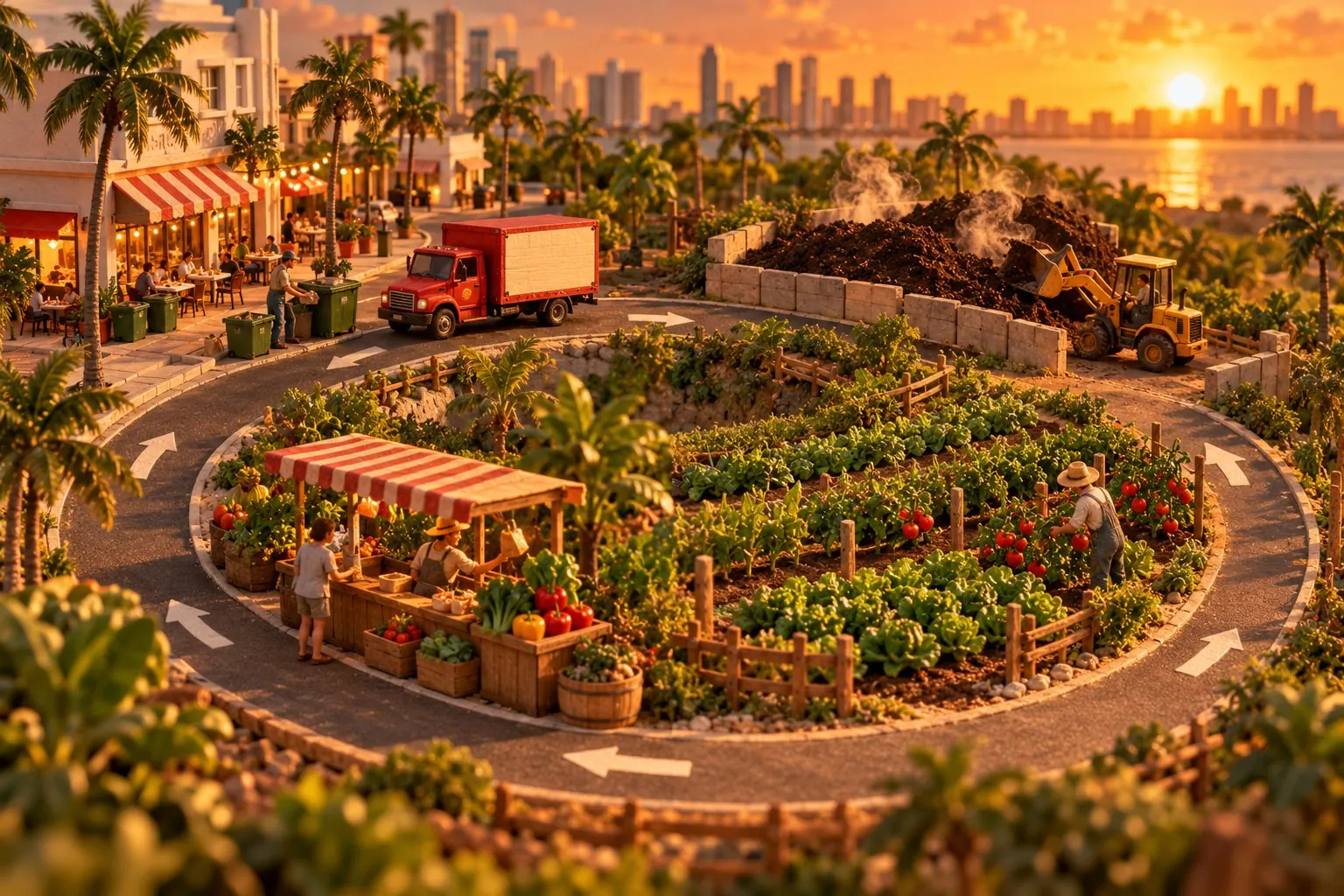
That is the loop. Food comes in from the farm, scraps go back out as compost, and the farm grows more food. It is also a big piece of the county's plan to send less to landfill, which we explain in Miami-Dade's zero waste goals.
What makes farming in Miami-Dade different?
Heat, water and rock. Our growing season runs opposite to most of the country, with the busy season in the cooler months. Summer brings heavy rain and heat that is hard on many vegetable crops. Limestone ground has to be scarified or rock-plowed before planting in many fields, and sandy ground drains so fast that fertilizer can wash right through.
Then there is the neighbor next door: one of the biggest tourism and restaurant economies in the country. A huge number of meals, served close to the farms. That is a problem if all the scraps go to landfill. It is an opportunity if they become compost for the fields a short drive south.
How can you support local farms in Miami?
- Buy direct. Farm stands, u-pick farms and farmers markets put the most money in a grower's pocket. Our find local farms map is a good place to start.
- Ask your restaurant. Chefs who buy local love telling you about it.
- Compost your scraps. If you run a business, separate your food scraps and get them picked up. They come back as soil instead of methane.
- Show up in the off season. Farms need customers all year, not just in strawberry season.
For businesses, that third one is where Melly's comes in. We pick up food scraps 1 to 3 times a week in 64-gallon red bins, swap in a clean bin every time, and hot-compost everything to EPA standards. You can see how it works on our compost bin page.
Frequently asked questions
What crops are grown in Miami-Dade County?
Nursery and ornamental plants are the biggest by value, followed by vegetables and tropical fruit. The county is known for avocados, mangoes and other tropical fruit, plus winter vegetables like tomatoes, beans and squash.
Where are the farms in Miami?
Most are in South Dade, in and around the Redland and Homestead. That is where the county's agricultural land is concentrated, south and west of the urban area.
Is local food better for the environment?
It depends on the food and how it is grown, so there is no one-line answer. What local farms clearly do is keep land in agriculture, keep money in the community, and make it easy to send compost back to the fields that grew the food.
How does composting help farmers?
Compost adds organic matter, which helps sandy and rocky soils hold water and nutrients. Hot composting at 131 F or higher for the required time also kills pathogens and weed seeds, so the finished compost is safe to spread.
Want your food scraps to end up back on a South Dade farm instead of in a landfill? Get a quote for food scrap pickup. We start with a free waste audit, service is month to month, and pricing depends on your volume.
Sources
Related posts
-
 For everyone
What Is the Loop? How Food Scraps Become Local Food
Food scraps don't have to end in a landfill. Here is how the loop turns kitchen waste into compost, compost into crops, and crops back into dinner in Miami-Dade.
-
 For everyone
Miami-Dade's Zero Waste Goals, Explained
The county wants to keep most of its trash out of the landfill. Here is what the plan says, why food scraps sit at the center of it, and what you can do now.