
How to Buy Compost in Bulk
Buying compost by the yard is simple once you know four things: how much you need, what is in it, how it was made, and how it gets to your field.
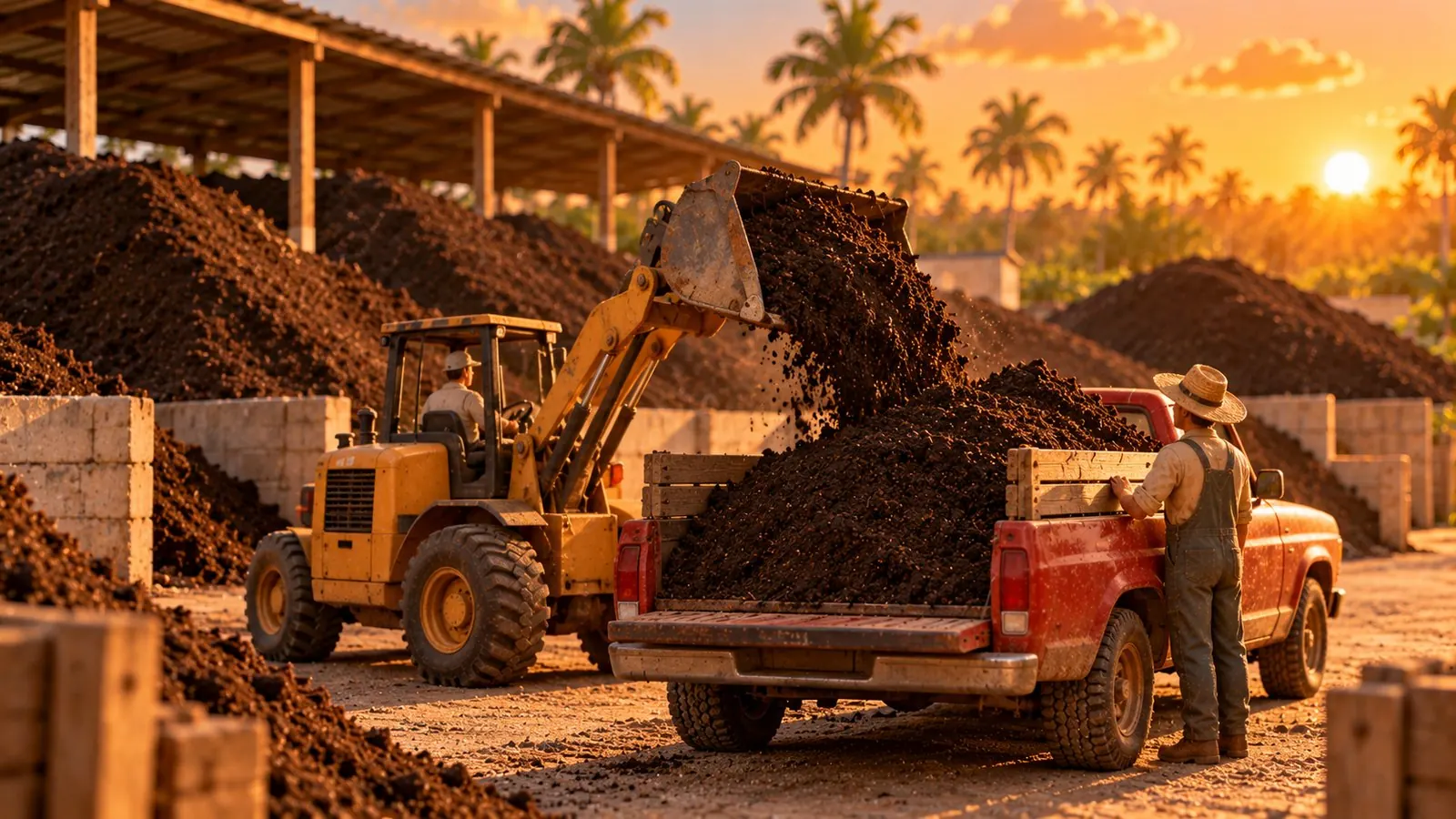
To buy bulk compost, work out how many cubic yards you need, ask the supplier for a recent lab report and how the compost was made, then arrange pickup or delivery. Bulk compost is sold by the cubic yard, which is 27 cubic feet. Pricing depends on volume, so get a wholesale quote once you know your number.
How much bulk compost do I need?
Start with the area and the depth. A cubic yard is 27 cubic feet. Spread 1 inch deep, that is about 324 square feet. Spread half an inch, about 648 square feet. Two inches, about 162.
The math for a bed is simple: length in feet times width in feet times depth in inches, divided by 324. That gives you cubic yards. For field scale numbers by the acre, and how rates change with soil and crop, see how much compost per acre.
Round up a little. Compost settles, and you will always find one more row that needs it.
What should I ask a compost supplier before buying in bulk?
This is the part most first time buyers skip. Ask:
- What goes into it? Food scraps, yard waste, manure, biosolids? Feedstock affects nutrients, salts and how you can use it.
- How was it made? Look for hot composting with temperature records. The federal produce rule's example for turned piles is 131 F or higher for 15 days with at least five turnings, followed by curing.
- Is it finished? Ask about maturity and stability results. Unfinished compost can tie up nitrogen and stunt young plants.
- Can I see a recent lab report? The US Composting Council encourages buyers to use test data to match compost to the job. Check pH, soluble salts, organic matter, moisture and the pathogen screen.
- Is it screened? Ask what screen size, and how much plastic or glass is left in it.
- How is it sold and moved? Loose by the cubic yard? Pickup or delivery? What hours?
If a supplier cannot answer these, keep looking.
How do I compare bulk compost from different suppliers?
Compare like with like. Moisture is the first trap: wet compost weighs more and packs differently, so a yard of soggy material is not the same as a yard of finished, crumbly compost. Clemson's lab lists 40 to 50 percent moisture as the usual range for finished compost.
Next, check soluble salts and pH against your crop and soil. Then look at organic matter, since that is a big part of what you are buying compost for. And make sure both reports used the same lab methods, or the numbers will not line up. The Council's TMECC methods are the common benchmark.
Price is part of it too, but a cheaper yard of compost with high salts can cost you a crop. Pricing depends on volume, so ask for a wholesale quote for your real number.
Should I pick up bulk compost or get it delivered?
Both work. It comes down to your equipment and your schedule.
- Pickup suits growers with a dump trailer or pickup and a short drive. You choose the time and see the material before it is loaded.
- Delivery suits bigger orders and growers who cannot spare a truck or a day.
Whichever you pick, get the pile site ready. Choose firm, well drained ground close to where you will spread it, away from wells and ditches. Cover it if heavy rain is coming, or use it soon. Our compost is pickup at our yard by appointment right now, with delivery coming soon.
When is the best time to buy compost in bulk?
Buy ahead of planting, not on planting day. Compost works best worked into the soil before crops go in, and you want time to spread it without rushing. For orchards and perennials, plan around your top-dressing schedule.
It also pays to set up a standing order if you know you will use compost every season. You get a steady supply, and your supplier can plan around you.
Buying compost in bulk in Miami-Dade
In South Florida, the compost you buy has to earn its keep on sandy soil or thin rocky limestone, through heavy summer rain and hot, fast breakdown. That means you will likely apply more often than growers up north, so a local supplier with steady volume makes life easier.
Our growing season also runs through the winter, when much of the country is buying nothing. Plan your orders for late summer and early fall, before the busy planting window. Buying local has another plus: the compost is made from food scraps from Miami-Dade restaurants and kitchens, and goes back onto Miami-Dade farms. Shorter trips, and a story your customers will like. For the full guide to how compost fits a South Florida operation, read the grower's guide to compost for South Florida farms.
Frequently asked questions
How much does a cubic yard of compost weigh?
It depends mostly on moisture and how fine it is screened. Wet compost is heavier than dry. Ask your supplier what their finished compost runs, and check your truck or trailer rating before you load.
Can I buy compost by the ton instead of the yard?
Some suppliers sell by weight, many sell by volume. We sell by the cubic yard. If you are comparing a ton price with a yard price, ask for the bulk weight so you can convert.
Do I need a soil test before buying compost?
It helps a lot. A soil test tells you your pH and nutrient levels, so you can choose compost and set a rate that fits. Pair it with the compost lab report and you are making a real decision, not a guess.
Does Melly's deliver compost?
Not yet. Right now compost is pickup at our yard by appointment, and delivery is coming soon. Tell us your volume and location when you ask for pricing.
Ready to buy compost in bulk for your farm or nursery? We sell Melly's compost wholesale by the cubic yard, made from Miami-Dade food scraps and hot-composted to EPA standards. Get wholesale pricing and tell us how many yards you need.
Sources
- Cornell Law School LII: 21 CFR 112.54, treatment processes for biological soil amendments of animal origin
- US Composting Council: Using STA Certified Compost
- US Composting Council: Test Methods for the Examination of Compost and Composting
- Clemson University Agricultural Service Laboratory: Compost Interpretations
Related posts
-
 For farmers
How Much Compost Per Acre?
One inch of compost over an acre is about 134 cubic yards. Here is the math for any depth, how to convert to tons, and how to let your soil test set the number.
-
 For farmers
Compost for South Florida Farms: The Grower's Guide
Sandy ground, rock-plowed limestone, hard sun. Here is how compost earns its place on a South Florida farm, how much to use, and how to buy it by the yard.