
Grocery Store Food Waste: Where It Should Go
Grocers already work hard to sell every apple. For the produce that can't be sold or donated, here is the best place for it to go.
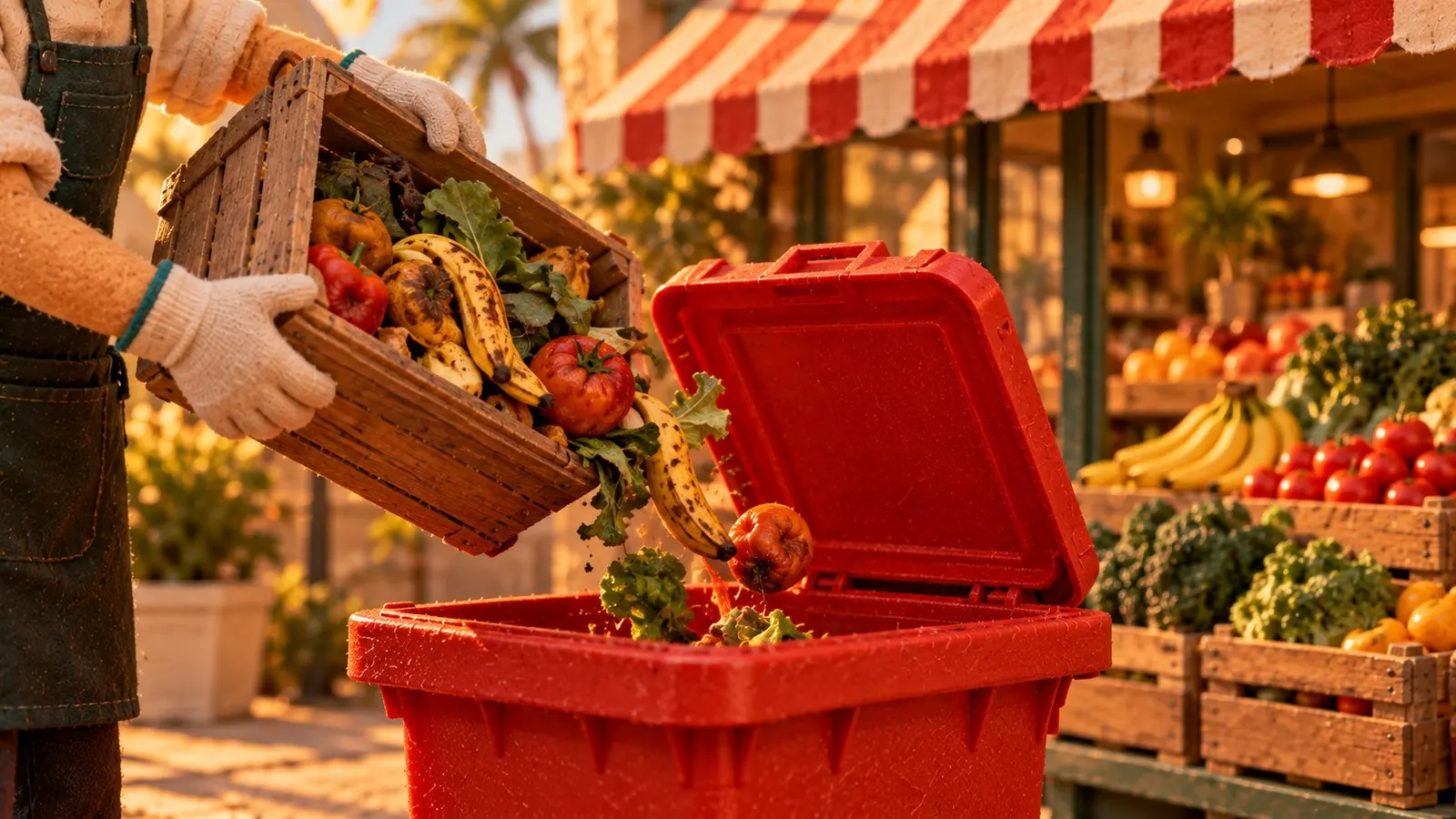
Grocery store food waste should go in this order: sell it, donate what is still safe to eat, and compost the rest. Composting is the right home for bruised produce, trim from the deli and meat counters, and spoiled product once it's out of its packaging. The landfill should be the last stop, not the default.
How much food waste do grocery stores produce?
Less than most people think, compared to the whole food system. ReFED estimates that the US retail sector generated about 3.98 million tons of surplus food in 2024, roughly 5.7 percent of all surplus food in the country (ReFED). Most surplus happens at home and in other parts of the chain. If you want the full national picture, we broke it down in how much food America wastes.
Grocers keep that number low because margins are tight and every unsold item hurts. Still, some product won't sell no matter how good the operation is. Produce gets bruised in transit. Bread hits its date. A cooler fails overnight.
What kinds of food do grocery stores throw away?
According to ReFED, the biggest categories of retail surplus in 2024 were produce at about 902,000 tons, fresh meat and seafood at about 369,000 tons, and prepared foods at about 347,000 tons (ReFED). That lines up with what we see at the back door: crates of soft tomatoes, wilted greens, trim from the meat counter, and hot bar pans at closing.
All three are great compost material. Produce is easy. Meat, seafood and prepared foods are harder for a backyard pile but no problem for a hot commercial process. At Melly's we accept food scraps including meat, bones and dairy, and we hot-compost to EPA standards, at 131 F or higher for the required time.
Where should unsold grocery food go first?
To people, if it's still good. EPA's Wasted Food Scale ranks prevention, donation and upcycling at the top, with composting next and landfilling near the bottom (EPA). Day-old bread, cosmetically imperfect produce and dented cans can feed a lot of families through a local food bank or pantry.
Grocers are protected when they donate. The federal Bill Emerson Good Samaritan Food Donation Act covers good faith donations of apparently wholesome food, and since 2023 retail grocers are among the qualified direct donors who can give directly to individuals free of charge (USDA). Florida adds its own protection for good faith donors to nonprofits in statute 768.136 (Florida Senate).
Why compost grocery food waste instead of landfilling it?
Because food in a landfill makes methane. EPA estimates that about 58 percent of the methane escaping municipal landfills comes from landfilled food waste (EPA). ReFED's data shows about 36.3 percent of food wasted in the retail sector still went to landfill in 2024 (ReFED).
Composting turns that same material into soil that goes back to farms. The produce came off a farm; the compost goes back to one. That's the loop.
There's also a practical side. Food is heavy and wet. Pulling it out of the dumpster can mean fewer or smaller trash pickups, which is a conversation worth having with your hauler. We cover that in can composting lower your trash bill.
How does grocery store food waste recycling work day to day?
It fits into the routine you already have.
- Pull and sort. When staff pull product, anything donatable goes to a donation shelf in the back room.
- Unpackage the rest. Food goes into the compost bin; plastic clamshells, trays and wrap go elsewhere.
- Keep bins near the work. One by produce receiving, one near the meat and deli prep area.
- Swap, don't wash. We bring a clean, lidded 64-gallon bin at every pickup and take the full one away.
- Set the schedule to volume. Pickups run 1 to 3 times a week, never less than weekly, month-to-month.
Depackaging is the hardest part for grocers.
Grocery store food waste in Miami-Dade
Miami's markets have a few things working against them. Heat and humidity shorten shelf life for produce and turn a dumpster rank fast. A lot of produce arrives from long distances, and the ride takes a toll. And Miami's neighborhood markets, bodegas and specialty grocers often have small back rooms with little space for extra bins.
That's why lids and frequent pickup matter here. A red, lidded bin picked up a few times a week keeps flies and smell down, even in August.
The county is heading this direction too. Miami-Dade's Zero Waste Master Plan puts organics and food recovery at its center, and food scraps and yard trimmings make up close to 30 percent of the county's waste stream (Waste Dive). Grocers who set up donation and composting now will be ready for whatever programs follow.
Frequently asked questions
Can grocery stores compost meat and seafood?
Yes, with a commercial composter. Melly's takes food scraps including meat, bones and dairy, because we hot-compost at 131 F or higher for the required time.
Should we donate or compost unsold food?
Donate first if it's safe to eat, then compost what isn't. EPA ranks donation above composting, and donors have liability protection under federal and Florida law.
Do we have to remove packaging before composting?
Yes. Food goes in the bin; plastic trays, clamshells and wrap stay out, because plastic ruins compost.
How often would you pick up from a grocery store?
Between 1 and 3 times a week, never less than weekly, depending on your volume. We set the schedule after a free waste audit.
Run a grocery store or market in Miami-Dade? Get a quote and we'll start with a free waste audit of your back room. Pricing depends on volume, and service is month-to-month. For the full overview of how commercial pickup works, read our guide to commercial composting in Miami.
Sources
Related posts
-
 For businesses
Can Composting Lower Your Trash Bill?
Food is the heaviest, wettest thing in your dumpster. Pull it out and you can often shrink the rest of your trash service. Here is how to tell if it works for you.
-
 For everyone
How Much Food Does America Waste?
America ends up with tens of millions of tons of surplus food every year. Here is where it comes from, where it goes, and the part businesses can fix fastest.