
How Much Food Does America Waste?
America ends up with tens of millions of tons of surplus food every year. Here is where it comes from, where it goes, and the part businesses can fix fastest.
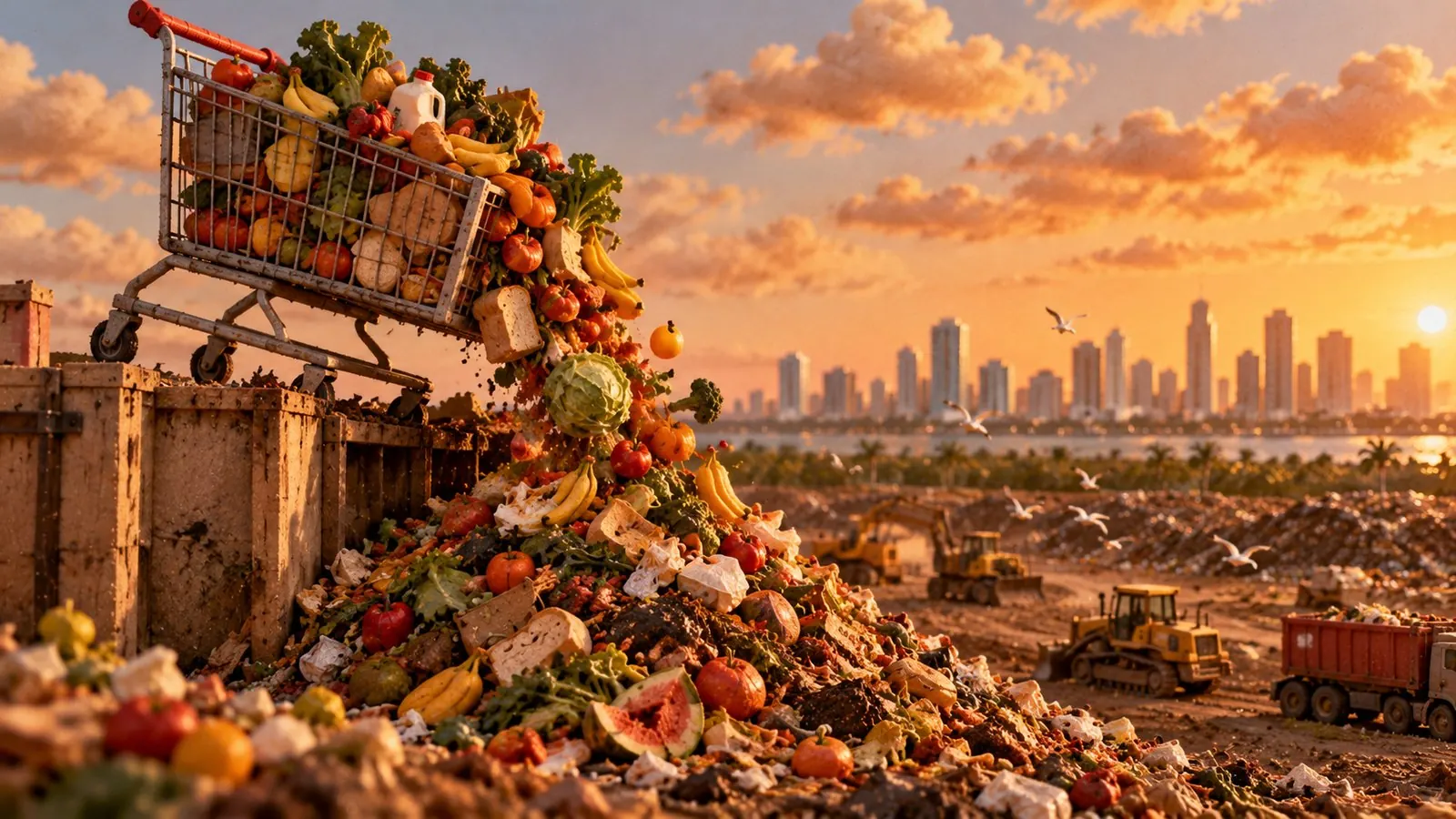
America wastes a huge amount of food: ReFED estimates the U.S. had about 70 million tons of surplus food in 2024, roughly 29 percent of the food supply. USDA has long put food loss and waste at 30 to 40 percent of the supply. Most of that surplus ends up wasted, and a lot of it goes to landfills, where it rots and makes methane.
How much food is wasted in the United States each year?
It depends on who is counting and what they count, but every serious estimate lands in the same neighborhood.
ReFED, a national nonprofit that tracks food waste, estimates the U.S. had about 70 million tons of surplus food in 2024. That is food that went unsold or uneaten, roughly 29 percent of everything grown, made and sold. ReFED counts surplus from farms all the way to households.
USDA puts food loss and waste at 30 to 40 percent of the food supply. Its estimate for the retail and consumer level alone, based on 2010 data, was about 133 billion pounds, or 31 percent of the food available at those levels.
The EPA looks at a narrower slice: food retail, food service and homes. It estimated those sectors generated 66.2 million tons of wasted food in 2019, and that 59.8 percent of it was landfilled.
Different methods, same picture: close to a third of our food does not get eaten.
Is food waste in America going down?
A little, finally. ReFED's 2026 report found surplus food fell 2.2 percent from 2023 to 2024, which it called the first meaningful drop since the pandemic. Households drove most of that, with residential food waste falling by nearly 950,000 tons (ReFED).
That is good news. It is also a small dent in a very big number. The national goal, set by USDA and EPA in 2015, is to cut food loss and waste in half by 2030 (EPA).
Where does America's wasted food come from?
Everywhere food is. Some is lost on farms, when crops are not harvested or do not meet a buyer's standards. Some is lost in processing and manufacturing. Then there is restaurants and food service, grocery and retail, and the biggest piece in most counts: our own kitchens at home.
ReFED's numbers show food service accounting for about 17.9 percent of surplus and retail about 5.7 percent (Waste360). Grocery stores, in fact, are a small share, and many already donate food and send scraps to better places. We cover where that food should go in grocery store food waste.
Restaurants, hotels and cafeterias are a different story. Prep trim, plate scrapings, buffet leftovers, expired product: it adds up every single day, and almost all of it is gone from the business's hands within hours.
Where does wasted food end up?
Mostly in the trash. The EPA says food is the single largest material in U.S. landfills, about 24 percent of municipal solid waste landfilled (EPA).
That is a problem, because food in a landfill does not just sit there. It rots without air and makes methane. The EPA found landfilled food waste is responsible for about 58 percent of the methane that escapes from municipal landfills. We explain how that happens in why food in landfills creates methane.
What is the best thing to do with wasted food?
The EPA ranks the options in its Wasted Food Scale. At the top: do not waste it in the first place, then donate good food to people who need it. Down at the bottom: landfill, incineration and sending food down the drain.
Composting sits in between. It is not as good as eating the food, but it is far better than burying it. It turns scraps into a product that farms can use to grow more food. That is the whole idea behind the loop.
For a business, the practical order looks like this:
- Buy and prep smarter. Track what you throw out. It is usually the same few items.
- Donate what is still good. Unserved, safely held food can feed people.
- Compost the rest. Trim, plate waste, spoiled product, meat, bones and dairy.
- Landfill only what has nowhere else to go.
How much food is wasted in Miami-Dade?
We have no single clean number for Miami-Dade alone. What we do know: a county planner told Local10 that about 30 percent of what goes into the county landfill is organic material, meaning yard debris and food scraps.
Our economy makes it worse. Miami-Dade runs on tourism and hospitality: hotels, restaurants, cruise traffic, festivals. That is a lot of buffets and a lot of plate scrapings. Our heat means food in a dumpster turns fast, so it smells and draws pests if it sits. And the county's new Zero Waste Master Plan puts a big focus on organics and food recovery, so food scraps are going to get more attention here, not less.
The upside is real too. South Dade farms grow on sandy and limestone soil that badly needs organic matter. Food scraps from Miami's kitchens, hot-composted, can go right back to them.
Frequently asked questions
What percentage of food is wasted in America?
Roughly 30 to 40 percent, depending on the source. USDA uses 30 to 40 percent of the food supply, and ReFED estimated about 29 percent of the U.S. food supply went unsold or uneaten in 2024.
Who wastes the most food in America?
Households are the biggest single source in most estimates. Farms, manufacturers and food service are also large contributors, while grocery retail is a smaller share.
Why is food waste bad for the environment?
When food ends up in a landfill, it breaks down without oxygen and releases methane, a powerful greenhouse gas. The EPA found landfilled food waste accounts for about 58 percent of fugitive methane emissions from municipal landfills.
What can businesses do about food waste?
Measure it, donate good surplus food, and compost the scraps. A regular food scrap pickup also keeps heavy, wet food out of your dumpster.
Want to get the food out of your trash? Melly's picks up food scraps 1 to 3 times a week in 64-gallon red bins, swaps in a clean bin every time, and takes meat, bones and dairy. Get a quote and we will start with a free waste audit. Service is month to month, and pricing depends on your volume.
Sources
- ReFED: The 2026 ReFED U.S. Food Waste Report
- ReFED: New Report: Nationwide Reduction in Food Waste Driven by Households
- Waste360: ReFED Report Shows First Meaningful Drop in U.S. Food Waste Since Pandemic
- USDA: Food Waste FAQs
- EPA: 2019 Wasted Food Report
- EPA: Quantifying Methane Emissions from Landfilled Food Waste
- EPA: Wasted Food Scale
- EPA: Federal Interagency Collaboration to Reduce Food Loss and Waste
- Local10: Miami-Dade taking steps to sustainably deal with solid waste issue
Related posts
-
 For everyone
Why Food in Landfills Creates Methane
Buried food rots without air, and that makes methane. Here is why landfills and food scraps are a bad mix, and what to do instead.
-
 For businesses
Grocery Store Food Waste: Where It Should Go
Grocers already work hard to sell every apple. For the produce that can't be sold or donated, here is the best place for it to go.