
Are "Compostable" Plates Really Compostable?
The plate says compostable. Whether it actually becomes compost depends on what it is made of, how it is certified, and who picks it up. Here is how to tell.

"Compostable" plates are only really compostable if two things are true: the plate is certified to break down in a commercial composting facility, and your hauler's composting facility actually accepts it. Plenty of certified plates are perfectly compostable on paper and still end up in a landfill because the local composter does not take them. Check the certification, then check with your hauler before you buy.
What does "compostable" on a plate actually mean?
In the U.S., the Federal Trade Commission's Green Guides set the rule for marketing claims. A company calling something compostable needs solid evidence that it will break down into usable compost in a timely way, meaning about as fast as the material it is composted with, in an appropriate facility or home pile (16 CFR 260.7). If composting facilities for that item are not available to a substantial majority of the people buying it, the claim is supposed to be qualified.
Most compostable plates, cups and forks are designed for commercial composting. That means a big, managed pile that runs hot. Put the same fork in a backyard bin and it may sit there for a very long time.
What standards should compostable plates meet?
Two ASTM standards do most of the work. ASTM D6400 covers plastics designed to compost in municipal or industrial facilities. ASTM D6868 covers paper and fiber products with compostable coatings. These standards test whether the item breaks apart, actually biodegrades, and does not harm the finished compost.
The Biodegradable Products Institute runs the best-known certification program in North America. Products are tested against those standards at approved labs before they can carry the BPI mark. If a plate just says "eco-friendly" or "biodegradable" with no certification, treat it as trash.
Are fiber plates and bagasse plates safe to compost?
Fiber plates made from sugarcane (bagasse), bamboo or wood pulp are the closest thing to food in the disposables world. The concern for years was PFAS, the "forever chemicals" sometimes added to make fiber resist grease and water. Those chemicals do not break down in a compost pile, they end up in the finished compost and then in the soil.
The industry has moved. BPI has not certified products with intentionally added fluorinated chemicals since 2020, and requires lab testing to show total organic fluorine at or below 100 parts per million. In February 2024, the FDA announced that PFAS grease-proofing agents for food packaging were no longer being sold in the U.S.
That is good news, and it is why you should buy certified.
Why do some composters refuse compostable plates?
Because of what comes with them. When a guest at an event sees a bin for "compostables," they throw in the compostable plate, and also the regular plastic fork, the chip bag and the plastic cup that looks just like the compostable one.
A study by the Composting Consortium of ten U.S. composting facilities found conventional plastic made up an average of 85 percent of the contamination composters receive, by volume, and that composters spent an average of 21 percent of their operating costs dealing with contamination. The study also found contamination was common whether or not a facility accepted compostable packaging. The problem is not the certified plate. It is everything that looks like it.
Clear PLA cups are the classic example: they look exactly like plastic cups. Staff on a sorting line cannot tell them apart, so many composters treat all clear cups as contamination.
How can you tell if a plate will really get composted?
Ask four questions:
- Is it certified? Look for the BPI mark or a similar third-party certification on the product or the case.
- What is it made of? Plain fiber is the easiest. Plastic-looking items like PLA cups and bioplastic cutlery are where things go wrong.
- Does my hauler accept it? This is the big one. Call and ask about the exact item.
- Can my guests and staff tell it apart? If compostable and regular plastic items both show up at your event, you will get mixed bins.
For the full list of what usually belongs in a food scrap bin, see what can go in a commercial compost bin.
What is the simplest way to cut disposable waste at an event?
Use fewer disposables, and keep the compost bin for food. Reusable plates and cutlery at a sit-down event mean nothing to sort. At a festival or stadium, one consistent type of certified fiber plate, no lookalike plastics on site, and someone standing at the bins to help guests sort will do more than any label. We go deeper on that in event and stadium composting in Miami.
What about compostable plates in Miami-Dade?
South Florida runs on outdoor events: festivals, beach weddings, sports, food trucks, rooftop parties. That means a lot of plates, cups and forks every weekend. Our heat makes things worse in a hurry, because food stuck to a plate starts to smell fast in a bin left in the sun.
Miami-Dade's new Zero Waste Master Plan puts a big focus on organics and food recovery, so expect more businesses and venues to look at composting. Before your venue switches its whole supply order to "compostable," check what local composting will actually take.
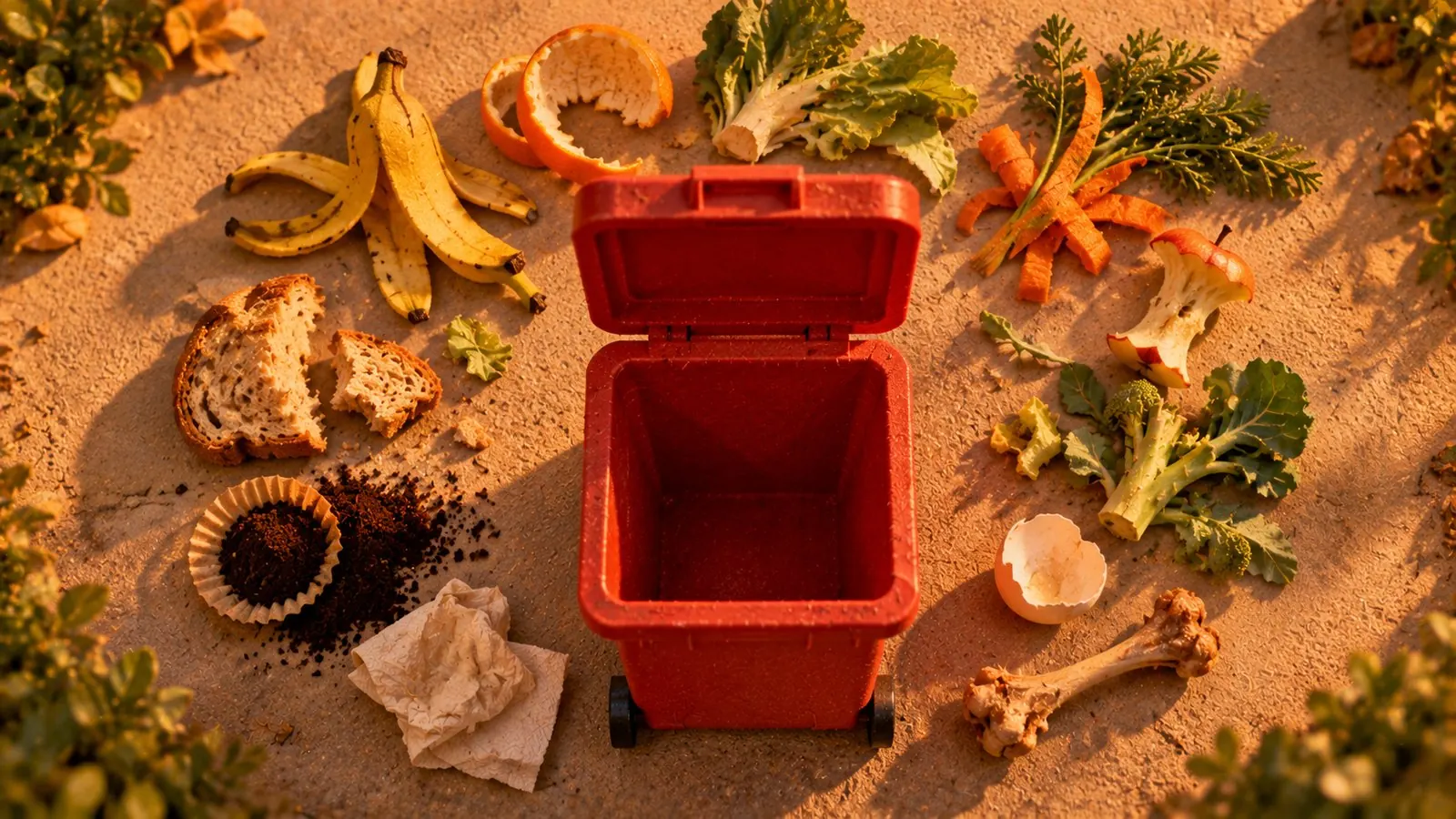
At Melly's, our red bins are for food. All food scraps, including meat, bones and dairy, plus napkins and paper towels. We do not take plastic, foil, gloves or "biodegradable" plastics. Certified fiber plates are something we look at case by case, so ask us first. You can read the full list on our compost bin page. It all feeds the loop: clean scraps in, clean compost out.
Frequently asked questions
Can I put compostable plates in my backyard compost?
Usually not. Most compostable plates and cutlery are certified for commercial composting, which runs much hotter and is managed more closely than a backyard pile. Plain uncoated fiber may break down at home over time, but certified items are tested for commercial facilities.
Is "biodegradable" the same as "compostable"?
No. "Biodegradable" has no set timeline or facility attached, and many composters treat it as a red flag. "Compostable" with a third-party certification is the label that actually means something.
Do compostable plates contain PFAS?
BPI-certified products cannot contain intentionally added fluorinated chemicals, and the FDA announced in 2024 that PFAS grease-proofing agents were no longer sold for U.S. food packaging. Uncertified products are harder to judge, so buy certified.
Will Melly's take compostable plates?
Our bins are for food scraps, napkins and paper towels. Certified fiber plates may be accepted case by case, so ask us before you buy. Plastic-looking "compostables" stay out.
Running an event, restaurant or venue in Miami-Dade and want to get the food out of your trash? Get a quote and we will start with a free waste audit and tell you exactly what can go in the red bin. Pricing depends on your volume.
Sources
- Cornell LII: 16 CFR 260.7, Compostable Claims (FTC Green Guides)
- ASTM: D6400 Standard Specification for Labeling of Plastics Designed to be Aerobically Composted
- BPI: Commercial Compostability Certification
- BPI: Fluorinated Chemicals
- FDA: FDA Announces PFAS Used in Grease-Proofing Agents for Food Packaging No Longer Being Sold in the U.S.
- Closed Loop Partners: First-of-Its-Kind Study by the Composting Consortium Analyzes Contamination Rates Across U.S. Composting Facilities
- Waste Dive: How Miami-Dade County plans to tackle zero waste by 2040
Related posts
-
 For businesses
What Can Go in a Commercial Compost Bin?
Commercial compost takes a lot more than banana peels. Here is what goes in the red bin, what stays out, and why.
-
 For businesses
Event and Stadium Composting in Miami
A festival can fill a dumpster with food in one night. Here is how Miami venues and event teams keep it out of the landfill.