
Compost for Rocky and Limestone Soils
Rock-plowed limestone gives roots a few inches to work with. Compost will not turn rock into loam, but it makes those inches count.
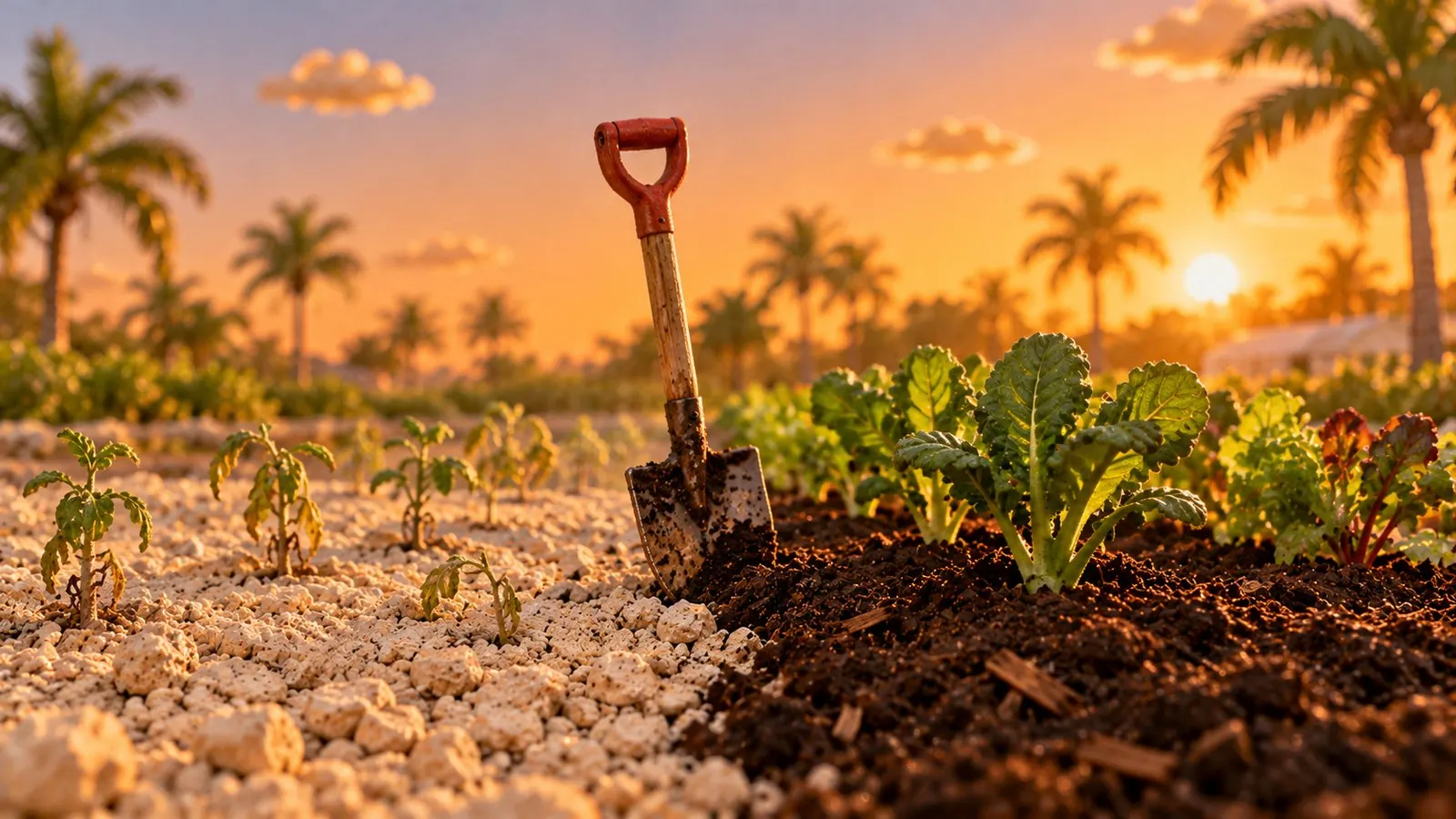
Compost helps rocky and limestone soil by adding organic matter to a thin layer of ground that has almost none. That organic matter holds water and nutrients between the stones and feeds soil life, so the few inches your roots have work harder. It will not change the rock, but it changes what grows on top of it.
What makes rocky limestone soil so hard to farm?
Three things: depth, drainage and chemistry.
Depth. In the Redland, much of the ground is Krome soil. USDA describes Krome as very shallow soil over limestone, found only in Dade County, with tomatoes, beans, avocados and limes as its main crops (USDA NRCS). UF/IFAS reports that these gravelly soils are rock-plowed on a regular basis, which creates 6 to 12 inches of soil above consolidated bedrock (UF/IFAS Extension). That is all the root zone you get.
Drainage. Crushed rock and gravel drain fast. UF/IFAS notes that potassium is readily leached in sandy or gravelly soils, and recommends splitting applications for that reason (UF/IFAS Extension).
Chemistry. The rock is limestone. UF/IFAS says calcareous soils in Miami-Dade come from Miami limestone, usually contain 30% to 94% calcium carbonate, and typically run a pH of 7.4 to 8.4. Iron chlorosis is the most frequent nutritional disorder in crops grown on them (UF/IFAS Extension). UF/IFAS citrus specialists add that zinc and manganese deficiencies are not uncommon on highly alkaline soils (UF/IFAS Extension).
How does compost help rocky soil?
Rock-plowed ground is mostly mineral. Compost brings the missing piece.
- It holds water. In the UF/IFAS study that mixed organic matter into Florida limerock, every 1% increase in organic matter raised water holding capacity by 1.3% (UF/IFAS Extension). Smaller than the gain in sand, but on ground that drains this fast, it counts.
- It holds nutrients. Organic matter grabs nutrients that would otherwise wash through the gravel.
- It feeds soil life. The US EPA lists more beneficial soil organisms and better soil structure among the benefits of compost (US EPA). On rock, soil life is what turns crushed stone and organic matter into something that behaves like soil.
Will compost lower the pH of limestone soil?
Do not count on it. When your soil is mostly calcium carbonate, there is a huge amount of lime buffering the pH, and a layer of compost will not shift it much for long. Manage iron, zinc and manganese the way your extension agent and soil test recommend.
What compost can do is support the root zone around the plant. Healthy roots and active soil life help plants make the most of the micronutrients that are there. Think of compost as part of the answer, alongside your fertilizer program, not the whole answer.
How should you apply compost on rock-plowed ground?
Work it in when you rock-plow or bed up, so the compost mixes into the crushed layer instead of sitting on top. For row crops, banding compost where the beds will sit puts every yard under the crop. For avocado, mango and other groves, spread it under the canopy out to the drip line, keeping it a few inches off the trunk.
Keep rates moderate. One inch over an acre is about 134 cubic yards, and you only have 6 to 12 inches of root zone to begin with, so the soil test and the compost analysis should set your number. We run the math in how much compost per acre.
Is rocky soil different from sandy soil for compost?
Some of the same rules apply: both are low in organic matter and drain fast, and both reward regular compost. The differences are depth and chemistry. Rock-plowed limestone gives you only a few inches, and it is alkaline. If your farm is on sand, read how compost fixes sandy Florida soil.
Rocky soil in Miami-Dade: the Redland and Homestead
This is home ground for us. The Redland and Homestead area is one of the few places in the country where farmers grow on crushed limestone, and the Miami-Dade Extension office has a good plain overview of how those soils formed (UF/IFAS Extension Miami-Dade). UF/IFAS's newer nutrient recommendations for these soils report a carbonate equivalent anywhere from 3% to 94%, and a pH range of 7.3 to 8.2 (UF/IFAS Extension). In other words, two fields a mile apart can test very differently. Test yours.
Snap beans, by acreage, are the most commonly grown vegetable in Miami-Dade County (UF/IFAS Extension), alongside tomatoes, tropical fruit and nursery crops. All of them grow in that thin rock-plowed layer, through a long hot summer and heavy rain. That is why building organic matter here is ongoing work.
For soils, timing, quality and buying in one place, read our grower's guide to compost for South Florida farms.
Frequently asked questions
Can you grow vegetables in rocky limestone soil?
Yes. Miami-Dade growers do it every season by rock-plowing to create a shallow root zone, then managing water and nutrients carefully. Adding organic matter like compost helps that thin layer hold more.
Does compost help with iron chlorosis?
Not directly. Iron chlorosis on limestone comes from high pH and carbonates locking up iron. Compost supports root health and soil life, but follow your soil test and extension guidance for iron.
How deep should I mix compost into rocky soil?
Into the rock-plowed layer, usually the top several inches, when you plow or bed up. Mixing it in keeps it from drying out or washing off the surface.
Is compost good for avocado and mango trees on rock?
Yes, as a topdressing under the canopy out to the drip line. Keep it off the trunk and refresh it regularly, since heat and rain break it down.
If you farm the Redland or anywhere on South Florida rock and want local compost made from Miami-Dade food scraps, get wholesale pricing. We sell by the cubic yard, pickup at our yard by appointment, with delivery coming soon. See what we make on our soil page.
Sources
- USDA NRCS: Krome Series Official Soil Description
- UF/IFAS Extension: Tomato production in Miami-Dade County
- UF/IFAS Extension: Calcareous Soils in Miami-Dade County
- UF/IFAS Extension: Citrus nutrition on alkaline soils (CH086)
- UF/IFAS Extension: Raising Soil Organic Matter Content to Improve Water Holding Capacity
- US EPA: Benefits of Using Compost
- UF/IFAS Extension Miami-Dade: South Florida Soils
- UF/IFAS Extension: Nutrient Management Recommendations Based on Mehlich-3 Extractant for Calcareous Soils in Miami-Dade County
- UF/IFAS Extension: Snap Bean Soil Fertility Program in Miami-Dade County
Related posts
-
 For farmers
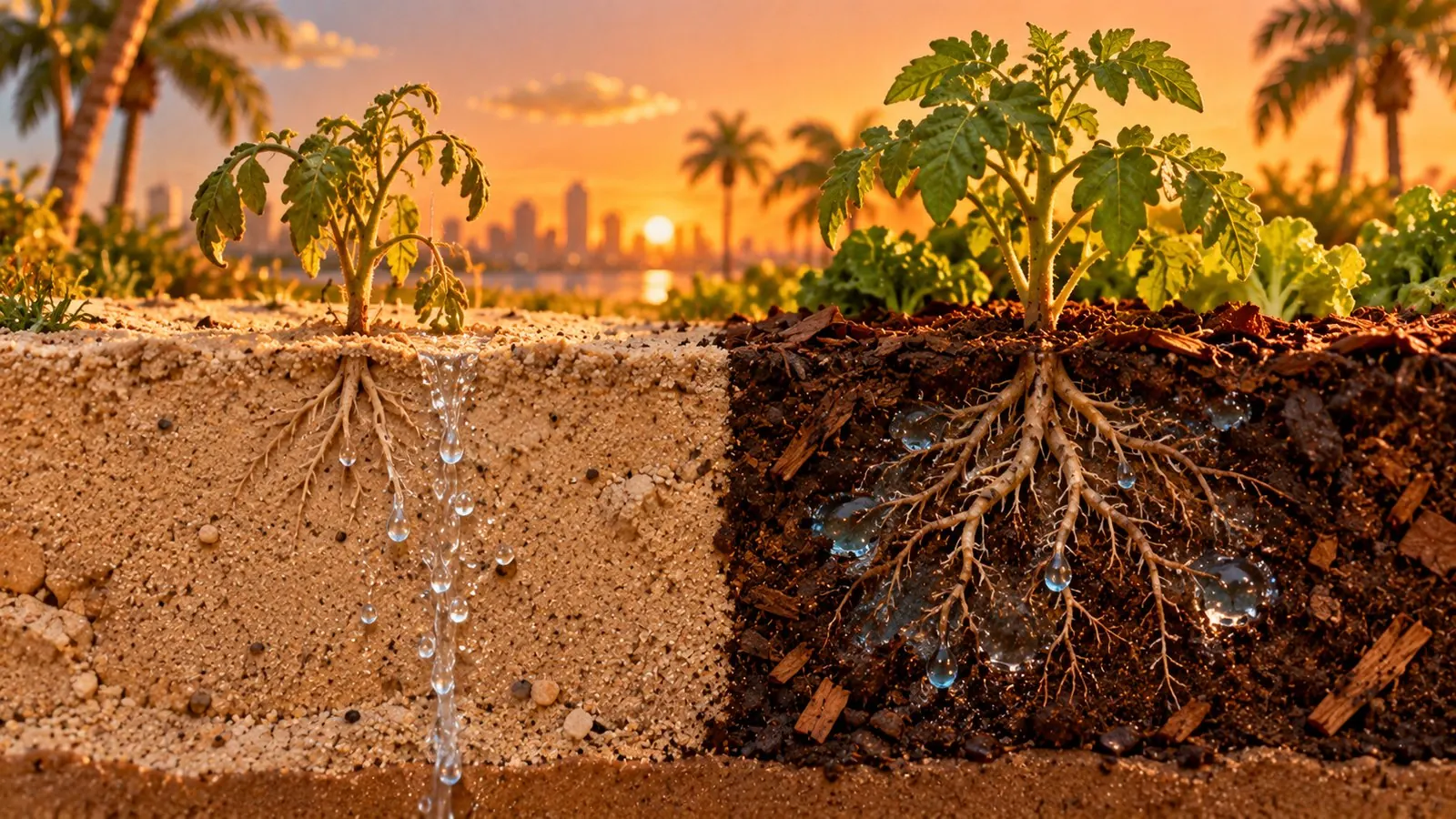
How Compost Fixes Sandy Florida Soil
Florida sand lets water and fertilizer run straight through. Compost gives it something to hold on with. Here is how, and how much to use.
-
 For farmers
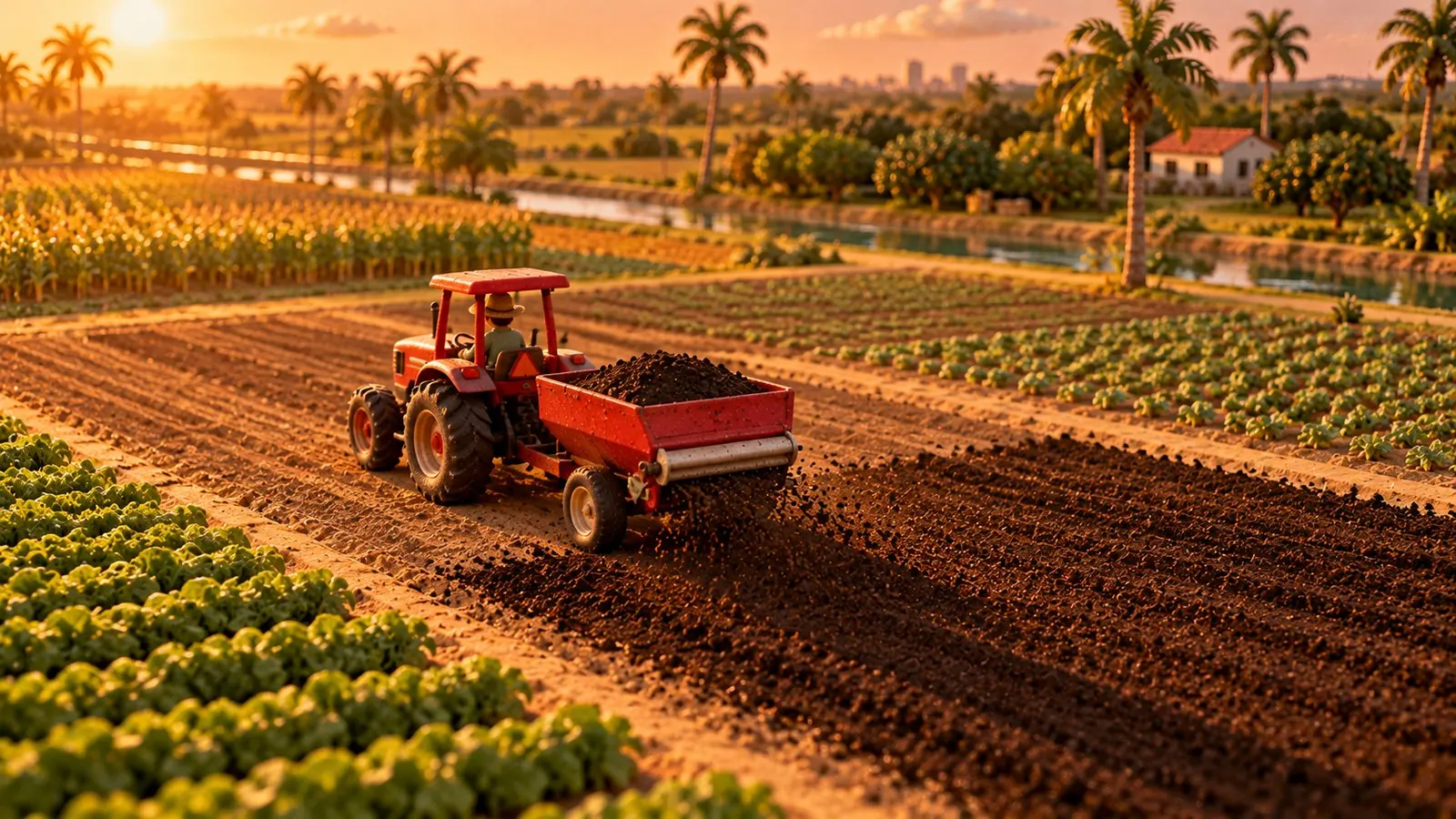
How Much Compost Per Acre?
One inch of compost over an acre is about 134 cubic yards. Here is the math for any depth, how to convert to tons, and how to let your soil test set the number.