
Does Compost Reduce Irrigation?
Compost will not make it rain. It does help your soil hold on to the water you already paid to pump. Here is what the research says and how it plays out in Miami-Dade.
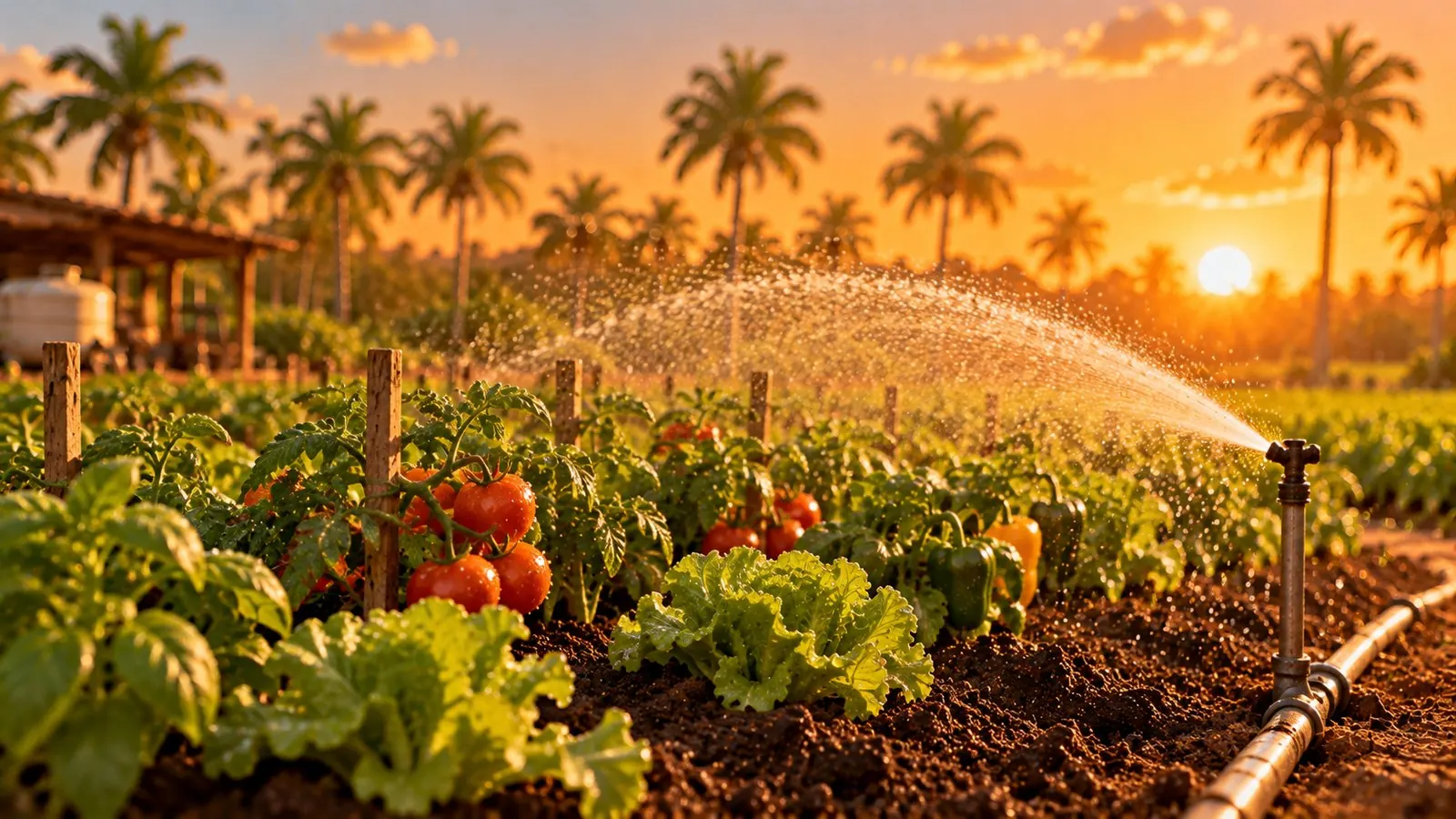
Yes, compost can reduce irrigation, because it raises soil organic matter and organic matter holds water. Soil with more organic matter keeps moisture in the root zone longer, so crops go longer between waterings. The effect is biggest on the kind of ground we farm in South Florida: sandy, rocky and low in organic matter.
How does compost help soil hold water?
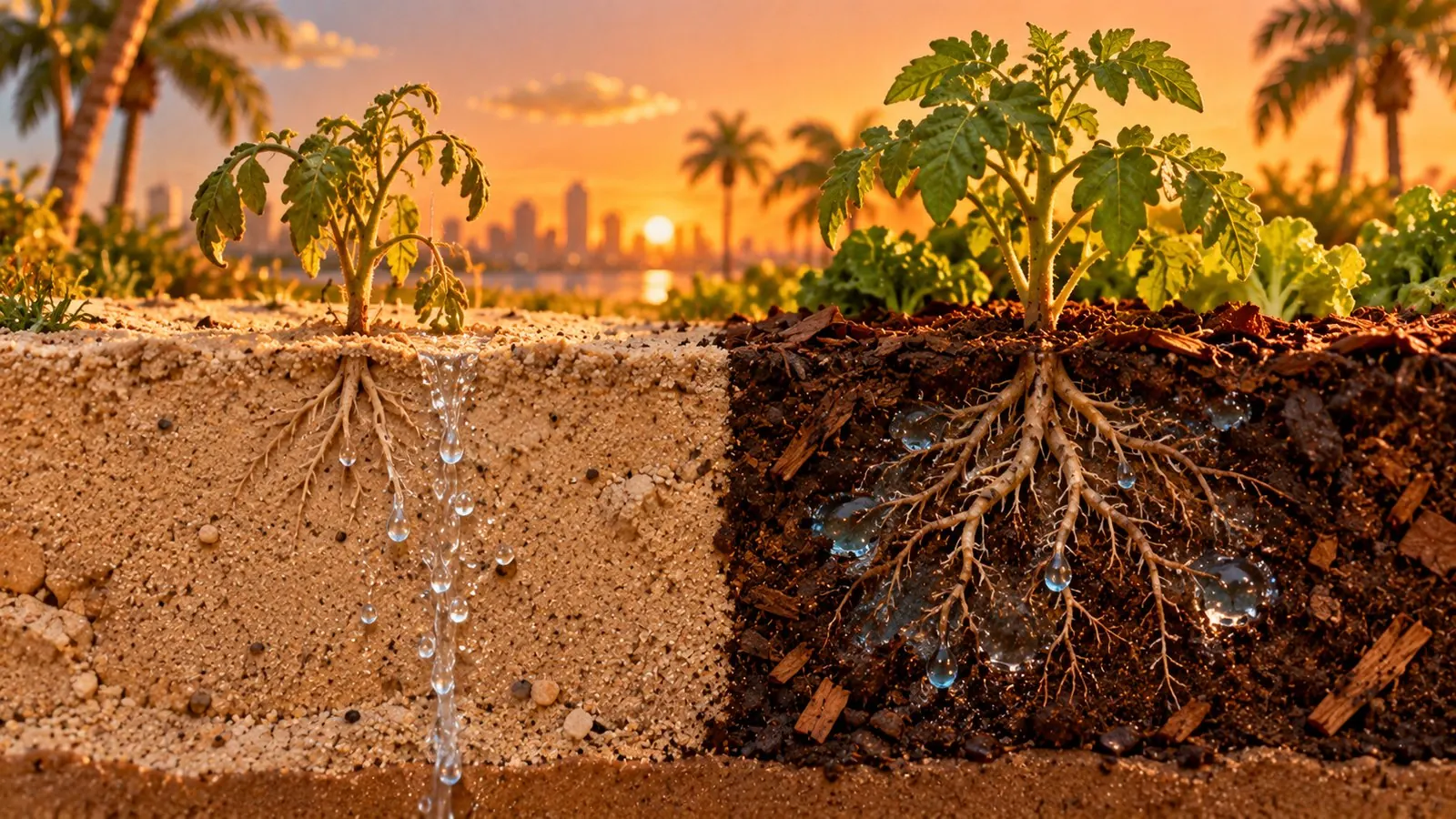
Water in soil sits in the spaces between particles and clings to their surfaces. Sand has big gaps and little surface, so water runs right through. Organic matter changes that. It soaks up water itself and glues small particles into crumbs, creating pore spaces that hold moisture instead of letting it drain away.
The EPA says compost enhances the soil's ability to absorb and retain water, which helps farmers by reducing the need for irrigation.
How much water can compost save?
Here is the number you will see quoted. According to UF/IFAS, USDA NRCS's most conservative estimates suggest every 1 percent increase in soil organic matter can help soils hold up to 20,000 gallons more water per acre.
Treat that as a rough guide, not a promise. The NRDC walked through the math with a soil scientist and found it holds up, but only under assumptions about how much water organic matter holds and how deep you measure. Real results depend on soil type, how dense the soil is, and how much organic matter you start with.
Also keep in mind that raising organic matter by a full point takes time. One application of compost will not do it. Steady applications over several seasons will move the needle. For how much to put down, see how much compost per acre.
Does compost reduce irrigation on sandy soil?
Sandy soil is where compost earns its keep. UF/IFAS describes south Florida mineral soils as generally sandy and low in organic matter, which reduces how much water they can hold. Researchers there list raising organic matter as a way to improve water holding capacity.
On sand, you often irrigate a little and often, because the water does not stay. Adding organic matter stretches the time between waterings. The deeper version of this story is in how compost fixes sandy Florida soil.
Does compost help with nutrient loss from irrigation?
Yes, and this is the part people miss. When water drains straight through sandy soil, it takes dissolved nutrients with it. UF/IFAS work on Florida crops notes that sandy soils have low water and nutrient holding capacity, and that leached nitrogen can end up in groundwater.
Soil that holds water longer also holds the nutrients dissolved in that water longer. So compost can help your fertilizer go further, not just your water. We cover that partnership in compost vs. synthetic fertilizer.
How should I apply compost to cut irrigation?
- Work it into the root zone. Water holding happens where the roots are. Incorporate compost into beds before planting.
- Top-dress perennials and orchards. A layer of compost around trees helps hold moisture at the surface and feeds the soil below.
- Pair it with mulch. Compost holds water in the soil. Mulch slows evaporation from the top. Together they work better than either alone.
- Keep at it. Organic matter breaks down. Plan regular applications instead of one big one.
- Watch the soil, not the calendar. As organic matter rises, check soil moisture before you run the system. You may be able to stretch your schedule.
Irrigation, compost and Miami-Dade soils
Water matters a lot in Florida farming. USGS found that agricultural self-supply made up 39 percent of Florida's freshwater withdrawals in 2012, the largest share of any use. Every gallon your soil holds is one you do not have to pump.
Much of the Redland farms on rocky limestone soils like Krome. The USDA soil survey describes it as very shallow soil over limestone, with bedrock as close as 2 to 10 inches down, and notes it is usually rock plowed or scarified. Thin soil over rock dries out fast. Building organic matter in that shallow layer gives roots more water to work with between rains.
Then there is the weather. We get heavy summer rain that runs off or drains straight through, and dry winter months right in the middle of our main growing season. Soil that can bank water helps on both ends. For the full local picture, read the grower's guide to compost for South Florida farms.
Frequently asked questions
How long does it take for compost to reduce irrigation?
You may notice better moisture holding in the first season, especially in sand. Bigger changes come as organic matter builds over several seasons. In our heat, organic matter breaks down faster, so regular applications matter.
Can too much compost hold too much water?
On well drained sandy and rocky soils, that is rarely the problem. It can be an issue in containers or heavy, poorly drained soils. Match your rate to your soil and crop.
Does compost work better than mulch for saving water?
They do different jobs. Compost improves how the soil itself holds water. Mulch cuts evaporation from the surface. Using both is usually the best approach.
Is compost from food scraps good for water holding?
Yes. Finished food scrap compost is rich in organic matter, which is the part that holds water. Ask for a lab report to check organic matter, moisture and salts before you buy.
If you farm in Miami-Dade and want to get more out of every gallon, start with organic matter. We sell compost made from local food scraps wholesale by the cubic yard, with pickup at our yard by appointment and delivery coming soon. Get wholesale pricing and tell us about your ground.
Sources
- UF/IFAS EDIS: Raising Soil Organic Matter Content to Improve Water Holding Capacity (SS661)
- NRDC: Organic Matter Can Improve Your Soil's Water Holding Capacity
- US EPA: Environmental Value of Applying Compost
- UF/IFAS EDIS: Sweet corn nitrogen guidance for Florida sandy soils (SS643)
- USGS: Water Withdrawals in Florida, 2012
- USDA NRCS Official Soil Series Description: Krome Series
Related posts
-
 For farmers
How Compost Fixes Sandy Florida Soil
Florida sand lets water and fertilizer run straight through. Compost gives it something to hold on with. Here is how, and how much to use.
-
 For farmers
Compost vs. Synthetic Fertilizer
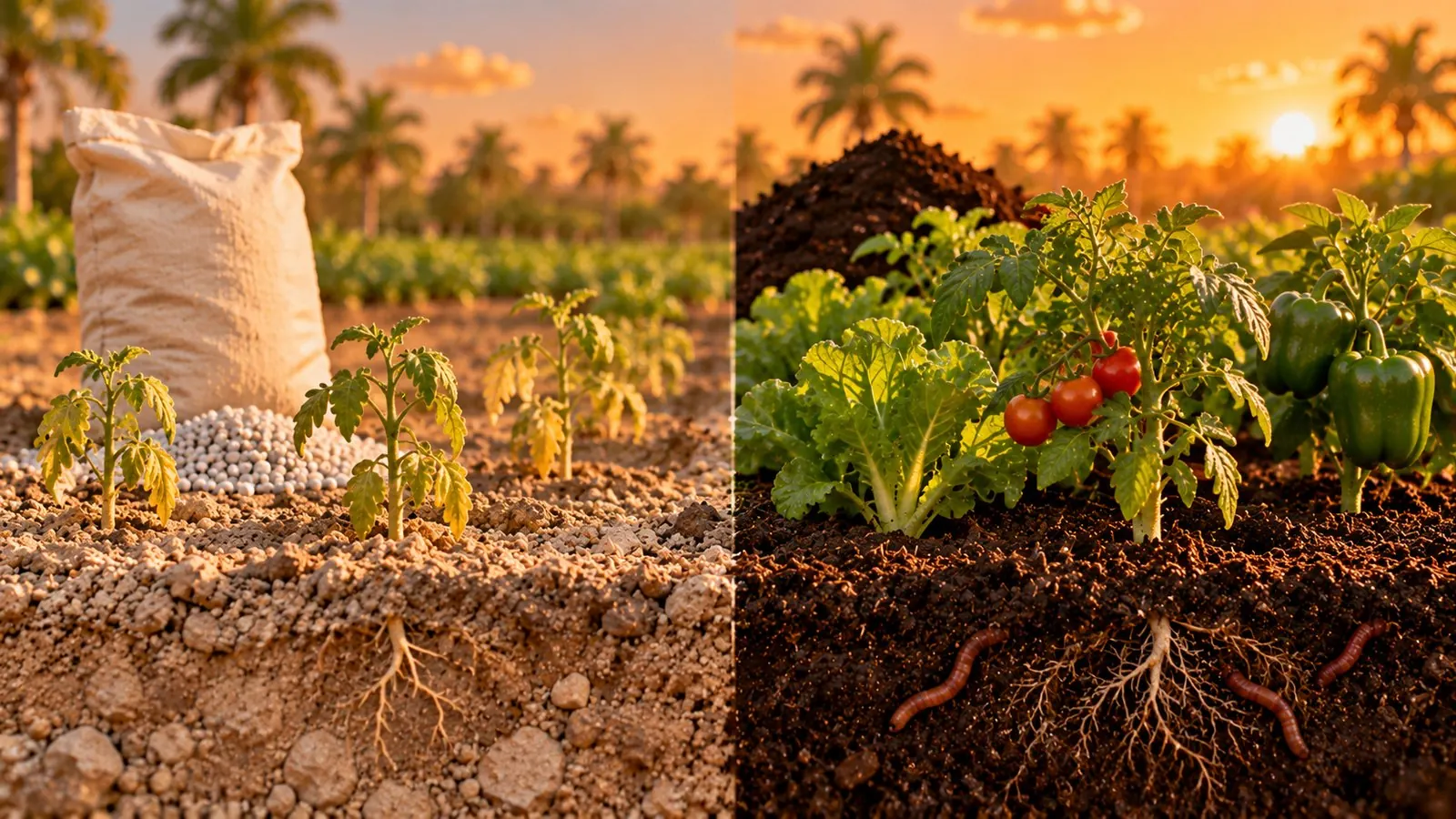
Fertilizer feeds the crop. Compost feeds the ground the crop lives in. Most good farms use both, and on sandy Florida soil the combination matters more than ever.