
Composting vs. Recycling: What's the Difference?
Recycling remakes materials. Composting turns food back into soil. Here is how they differ, what goes in each bin, and why a business needs both.
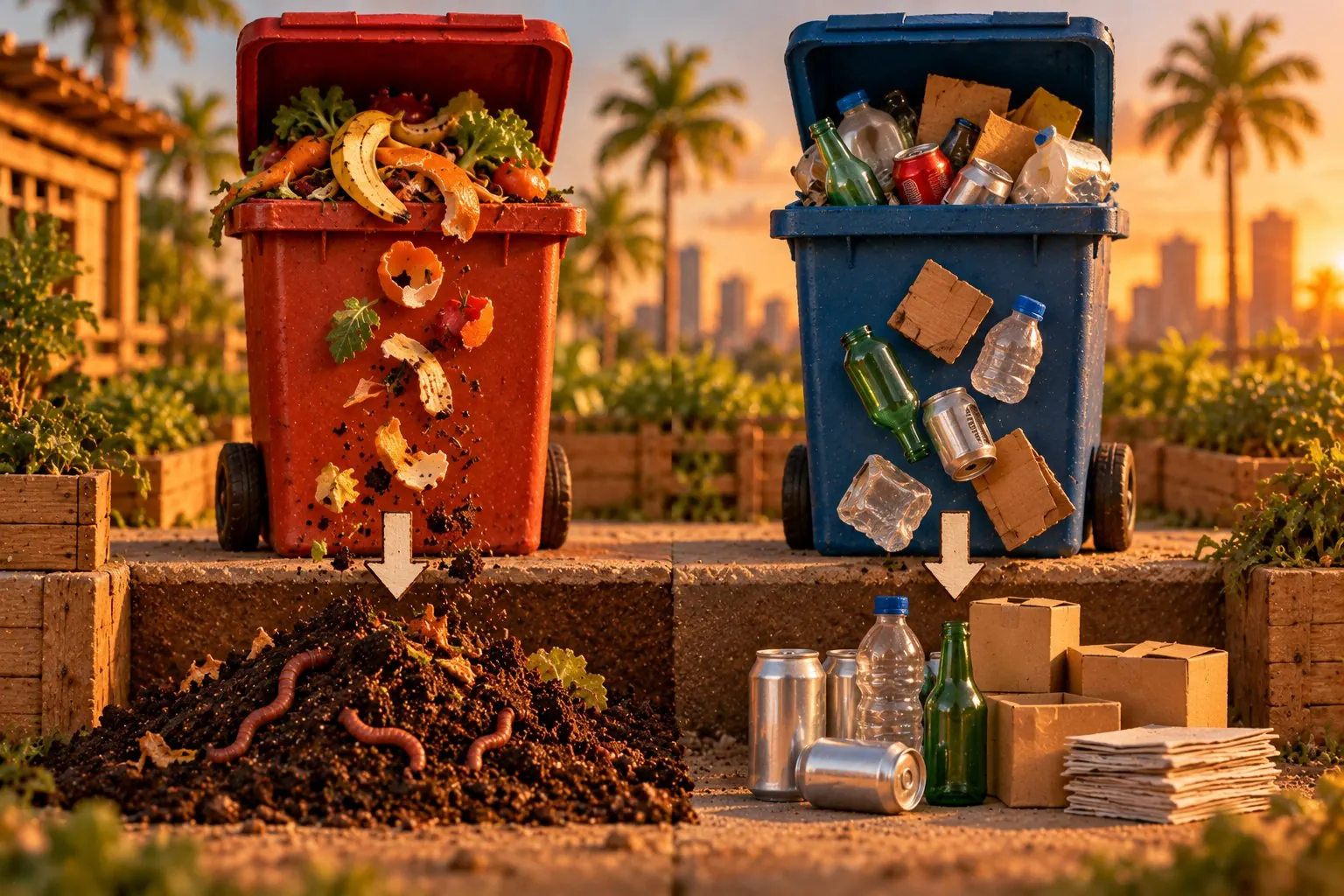
Recycling takes manufactured materials like aluminum, glass, paper and certain plastics and turns them back into new products. Composting takes organic material like food scraps and yard waste and lets microbes turn it into soil. Both keep waste out of the landfill, but they handle completely different stuff, and mixing them up ruins both streams.
What's the difference between composting and recycling?
Think about what happens to the material.
Recycling is mechanical and industrial. A can gets sorted, shredded, melted and made into another can. Cardboard gets pulped and pressed into new boxes. The material stays the same kind of material. It just gets a new shape.
Composting is biological. Food scraps, leaves and other organics get eaten by microbes. The material doesn't come back as more food. It comes back as something different: compost, a dark soil amendment that helps farms grow the next crop.
So recycling closes the loop on products. Composting closes the loop on food. If you want the full rundown on how a pile actually works, start with what composting is.
What goes in the compost bin vs the recycling bin?
Here's the short version.
Compost bin (organics):
- Fruit and vegetable scraps
- Meat, bones and dairy (at commercial facilities like ours)
- Bread, rice, pasta and plate scrapings
- Coffee grounds and filters
- Eggshells
Recycling bin (check your hauler's list):
- Aluminum and steel cans
- Glass bottles and jars
- Clean cardboard and paper
- Plastic bottles and containers your program accepts
Things like greasy pizza boxes, napkins and "compostable" packaging are where it gets fuzzy. It depends on what your hauler and their processing facility actually accept. For the full list of what we take, see what can go in a commercial compost bin.
Is composting a type of recycling?
Sort of. The EPA counts composting alongside recycling in its national waste numbers, and you'll often see "recycling and composting" reported as one rate. In 2018, Americans recycled about 69 million tons of municipal solid waste and composted about 25 million tons, for a combined rate of 32.1 percent (EPA).
So in the big-picture sense, yes, composting is recycling for organic material. In the day-to-day sense, they're separate bins, separate trucks and separate facilities. Treat them as two different jobs.
Why can't food go in the recycling bin?
Because food contaminates recycling.
Wet food soaks into paper and cardboard and makes them hard or impossible to recycle. Grease does the same. Sticky residue gums up sorting equipment. A load with too much food in it can end up sent to the landfill instead.
And here's the bigger issue: food that gets thrown out with regular trash goes to the landfill, where it rots without oxygen and makes methane. The EPA estimates 58 percent of the methane that escapes from municipal landfills comes from food waste (EPA). Recycling can't fix that. Composting can.
Why do businesses need both?
Because they handle different parts of your waste.
Food made up about 24 percent of all the municipal solid waste landfilled in 2018, more than any other single material (EPA). For a restaurant or hotel kitchen, the share can be a lot higher. Recycling alone leaves that whole category in the dumpster.
Food scraps are also the heaviest and wettest part of most kitchen trash, and the part that smells. Pull them out and your dumpster gets lighter, cleaner and less of a problem. Pricing for composting depends on your volume, so we start with a free waste audit to see what you actually throw out.
Doing both is how you get close to zero waste. Recycling takes the cans, bottles and boxes. Composting takes the food. What's left in the dumpster is a lot smaller.
How do composting and recycling work in Miami-Dade?
Most businesses here already have a hauler for trash and recycling. Food scraps are the newer piece of the puzzle.
The county's Zero Waste Master Plan sets a long-term target of diverting 90 percent or more of solid waste from disposal, and it names organic waste processing and composting as a key focus area alongside expanded recycling (Miami-Dade County). Florida also has a statewide recycling goal of 75 percent in state law (Florida DEP). You can't hit numbers like that with cans and cardboard alone. Food has to come out of the trash too.
The heat makes it practical, not just good policy. Food rots fast here. That's why Melly's picks up 1 to 3 times a week, never less than weekly, and swaps in a clean red bin every time.
And the compost doesn't leave town. It goes to local growers, which is the whole idea behind the loop.
Frequently asked questions
Can compostable plates go in recycling?
No. Compostable plates and cutlery are made to break down, not to be remade, and they contaminate recycling. Whether they can go in a compost bin depends on what your composter accepts, so ask first.
Is composting better than recycling?
They aren't competing. Recycling is the right answer for cans, glass and paper, and composting is the right answer for food. A business that does both keeps the most out of the landfill.
Does composting count toward recycling goals?
In most reporting, yes. EPA reports recycling and composting together as a combined rate, and local zero waste plans include organics. Check your local program for how it tracks diversion.
Do I need separate pickups for compost and recycling?
Usually, yes. They go to different facilities. Melly's handles the food scraps side with its own pickups, and your current hauler keeps doing recycling and trash.
Got food scraps in your dumpster? Get a quote and we'll start with a free waste audit, then set you up with 64-gallon red bins on a month-to-month plan. Growers can get wholesale pricing on the compost those scraps turn into.
Sources
Related posts
-
 For everyone
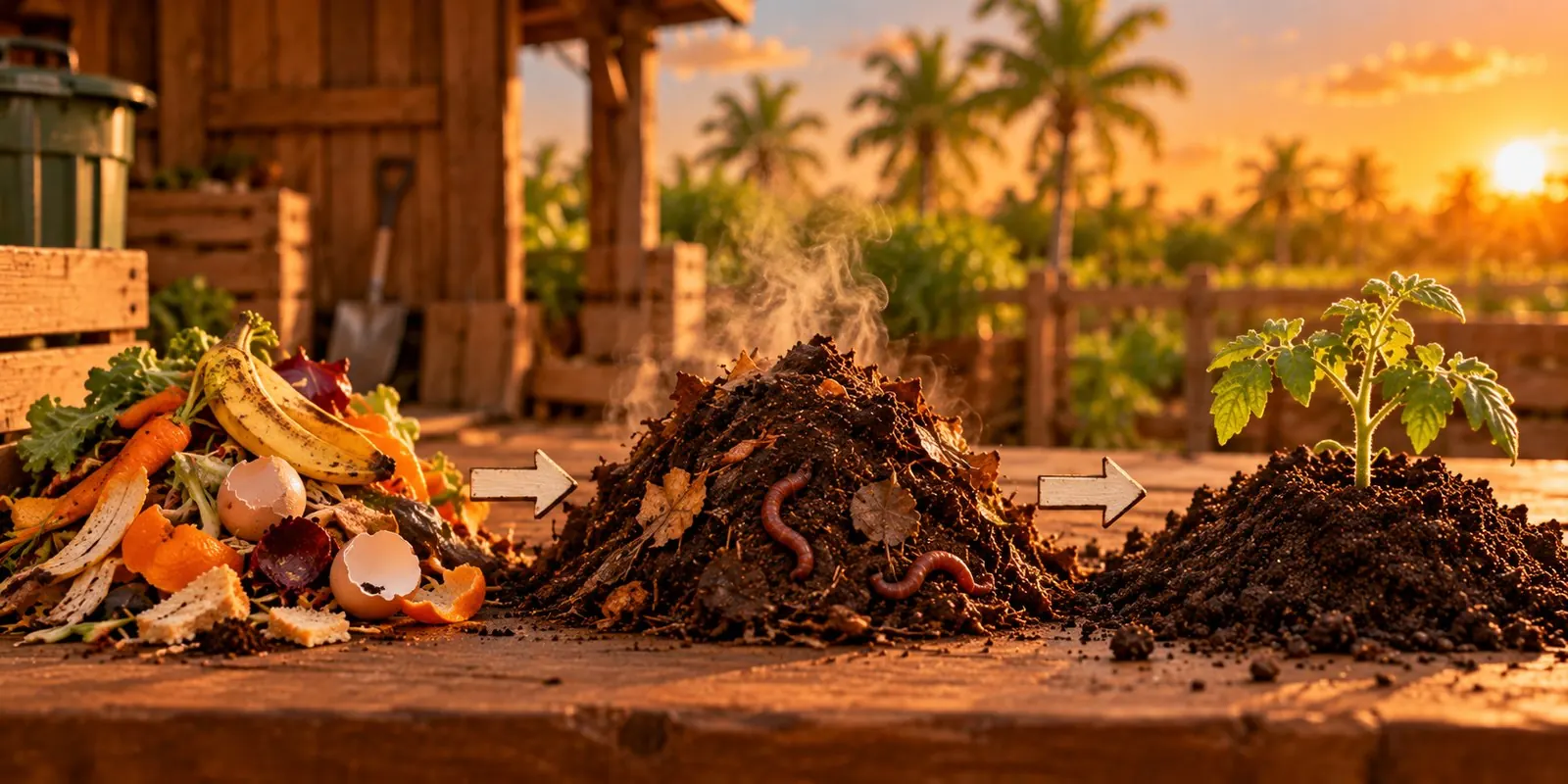
What Is Composting?
Composting is controlled rotting. Microbes, air and water turn scraps into dark, crumbly soil. Here is how it works and why it matters.
-
 For businesses
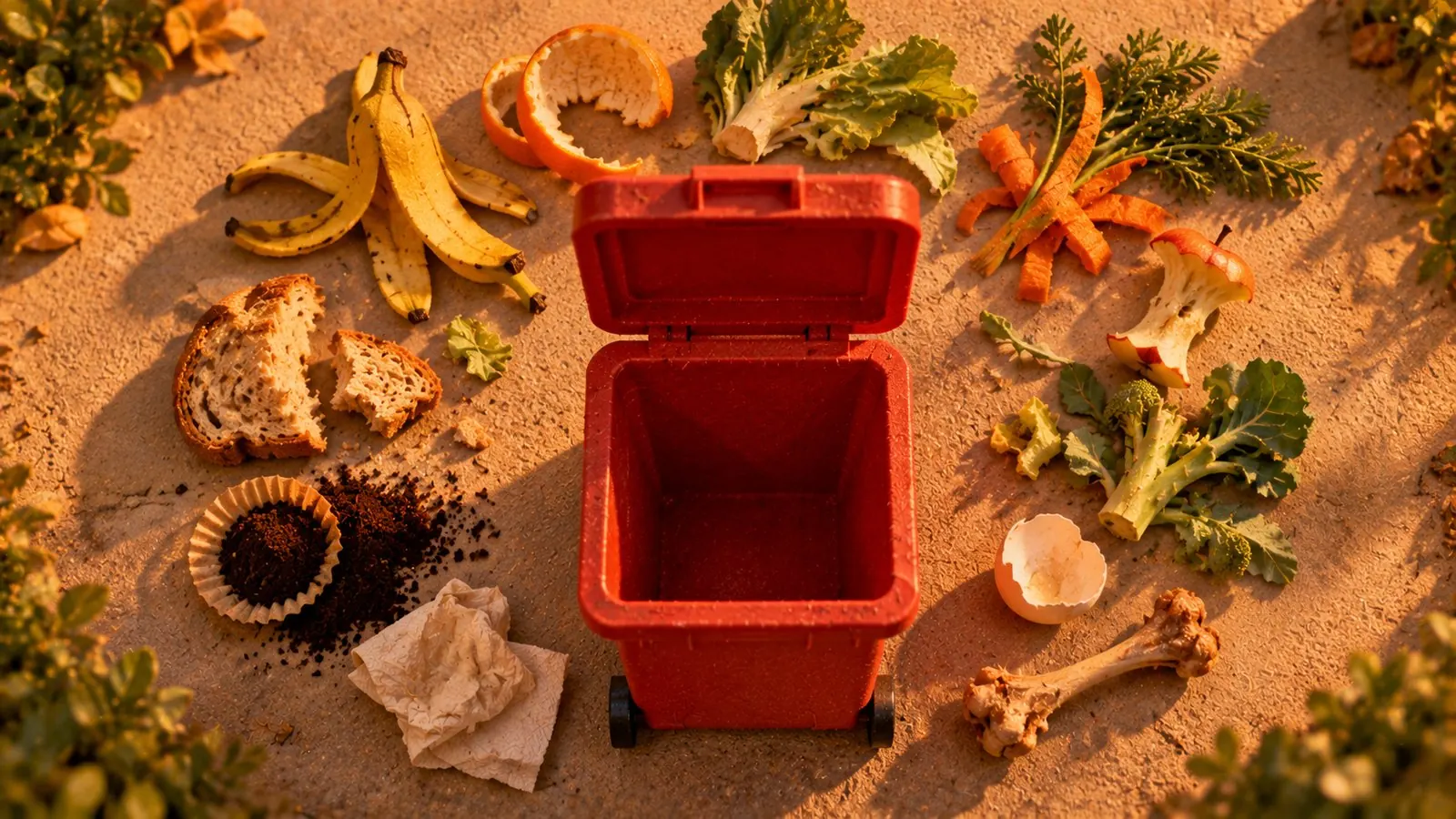
What Can Go in a Commercial Compost Bin?
Commercial compost takes a lot more than banana peels. Here is what goes in the red bin, what stays out, and why.