
Can Composting Lower Your Trash Bill?
Food is the heaviest, wettest thing in your dumpster. Pull it out and you can often shrink the rest of your trash service. Here is how to tell if it works for you.

Often, yes. Commercial trash service is usually priced around how big your dumpster is and how often it gets emptied, and food scraps are the heaviest, wettest, fastest-filling part of what goes in it. Take the food out and many businesses can drop to a smaller container or fewer trash pickups, which is where the savings come from.
How does composting reduce commercial trash costs?
Think about what actually fills your dumpster. Cardboard gets broken down and recycled. Plastic is light. Food is the stuff that is heavy, wet, and takes up room fast. The EPA estimates food makes up about 24 percent of the municipal solid waste that goes into landfills nationwide. In a kitchen or a grocery, the share in your own dumpster is usually higher.
Most commercial trash service in Miami-Dade comes from private haulers, and what you pay generally tracks the size of your container and how often it gets emptied. When food goes into its own compost bins instead, the trash dumpster fills slower. That opens the door to:
- A smaller trash container
- Fewer trash pickups per week
- Fewer overflow calls and extra pickups during busy season
The compost service itself isn't free, so this is a swap. Whether you come out ahead depends on your volume, your current trash contract, and your hauler. That's why we start with an audit and not a promise.
What does a commercial waste audit look at?
A waste audit is just looking honestly at what you throw away. The EPA's guide for food services and restaurants says the first step in reducing waste is to measure and track the amount, the type, and the reason food and packaging get thrown out.
At Melly's the audit is free. Here's what we look at:
- What's in the dumpster. Roughly how much of it is food, cardboard, plastic, everything else.
- Where food waste happens. Prep, the dish pit, the buffet line, expired product on the shelf.
- How fast it fills. How often you're emptying, and whether you're paying for overflow.
- Your current service. Container size and pickup frequency on your trash contract.
From there we can tell you how many 64-gallon bins you'd need, how often we'd pick up (1 to 3 times a week, never less than weekly), and what you might be able to cut from your trash side. You take that to your trash hauler and have the conversation.
Does composting help you waste less food in the first place?
Yes, and that's where some of the biggest savings hide. The EPA's restaurant guide notes that 4 to 10 percent of the food food service operations buy gets thrown out before it ever reaches a plate. The same guide says cutting wasted food saves money on more than disposal: it cuts over-purchasing, labor and energy too.
A separate compost bin makes that waste visible. When scraps go in the general trash, nobody sees them. When they go in their own red bin, a chef notices the same tray of over-prepped rice in there three nights in a row. That turns into a smaller prep order. We've watched it happen.
The EPA's Wasted Food Scale puts preventing waste at the top, then donating food that's still good, then composting. Composting is not a license to waste. It's the right home for what's left after you've done the rest.
Which businesses save the most by composting?
The ones where food is a big share of the trash:
- Restaurants, especially full-service kitchens with a lot of prep and plate waste
- Hotels and resorts with buffets, banquets and several kitchens
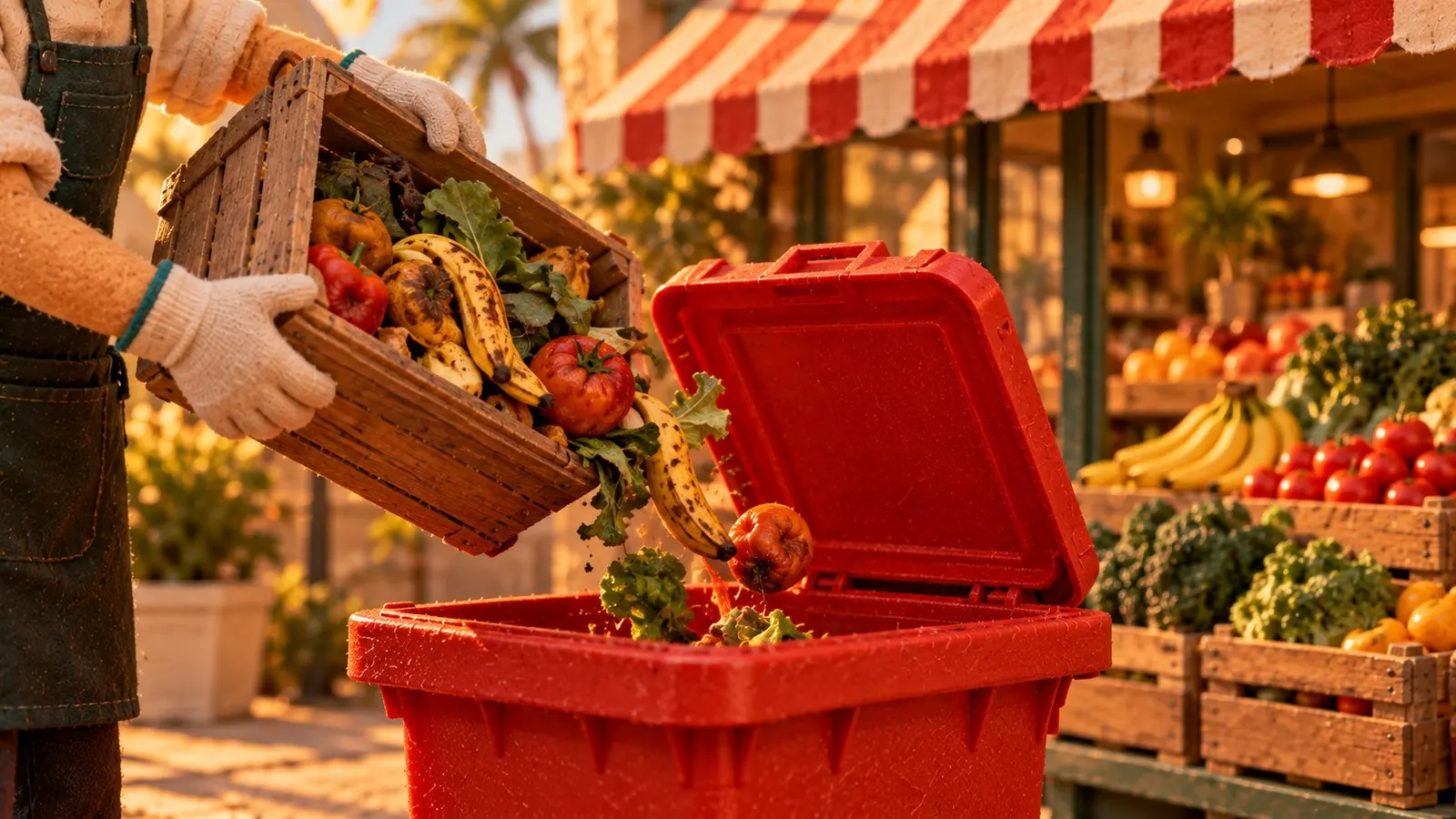
- Grocery stores and markets with produce, bakery and deli departments. More on that in grocery store food waste: where it should go.
- Schools, hospitals and corporate cafeterias
- Event venues that get hit with big bursts of food waste
An office with a small breakroom probably won't move the needle on its trash bill. A busy kitchen often can.
What are the hidden costs of food in the dumpster?
Some don't show up on the trash invoice at all.
Pests. Rotting food in an open dumpster brings flies, roaches and rats. Pest control is a cost, and a failed inspection is a bigger one.
Smell and complaints. Neighbors, guests and residents notice. A closed, lidded compost bin swapped for a clean one at every pickup cuts that down a lot.
Overflow. A dumpster overflowing on a Saturday night means an extra pickup or a mess. Taking food out gives you slack.
Cleaning. Leaking dumpsters and stained pads need pressure washing. With Melly's you never wash a compost bin. We swap in a clean one every time.
Composting and trash costs in Miami-Dade
The heat speeds everything up. In South Florida, food in a dumpster starts to smell within a day or two. That's why so many businesses here pay for more frequent trash pickups than they'd need anywhere cooler. Pull the food out and that pressure drops.
Businesses contract their own haulers. In the City of Miami, for example, commercial properties and buildings with more than four units arrange service with a private, city-approved hauler. That means your trash contract is negotiable, and changing what's in your dumpster is a fair reason to revisit it.
Disposal capacity is tight. The county's waste-to-energy plant in Doral has been shut since a fire in 2023, and the county's Zero Waste Master Plan says Miami-Dade generates more than 5 million tons of waste a year while landfill space keeps shrinking. Nobody can promise where disposal rates go from here, but less waste in your dumpster means less exposure to whatever happens. For the full local picture, read our complete guide to commercial composting in Miami.
Frequently asked questions
Will composting definitely lower my trash bill?
Not always. It depends on how much of your trash is food and whether your hauler will let you shrink your container or pickup frequency. A free waste audit is the fastest way to find out.
How much does commercial composting cost?
Pricing depends on your volume and how often you need pickups, so there's no one number. We give you a quote after the free audit. Service is month-to-month.
Can I cancel my trash service if I compost?
No. You'll still have packaging, plastic and other trash. Composting takes the food out so the rest of your trash service can usually be smaller.
What if my volume changes with the season?
That's normal in Miami. Melly's is month-to-month, so you can add pickups for season and cut back after. We go 1 to 3 times a week and never less than weekly.
Want to find out if composting would shrink your trash service? Start with a free waste audit. We'll look at your dumpster, your volume and your current pickups and give you a straight answer. Get a quote to book it.
Sources
- U.S. EPA: Quantifying Methane Emissions from Landfilled Food Waste
- U.S. EPA: Reducing Wasted Food and Packaging, A Guide for Food Services and Restaurants
- U.S. EPA: Wasted Food Scale
- City of Miami: Garbage and Recycling
- Miami-Dade County: Mayor Daniella Levine Cava unveils county's Zero Waste Master Plan
- NBC Miami: Miami-Dade releases proposals for new waste management site months after Doral fire
Related posts
-
 For businesses
Commercial Composting in Miami: The Complete Guide
Everything a Miami restaurant, hotel, school or building manager needs to know about commercial composting, from the first bin to the finished soil.
-
 For businesses
Grocery Store Food Waste: Where It Should Go
Grocers already work hard to sell every apple. For the produce that can't be sold or donated, here is the best place for it to go.