
Can You Compost Meat, Bones, and Dairy?
Backyard piles can't safely handle meat, bones and dairy. Commercial hot composting can. Here is why, and how it works in Miami-Dade.
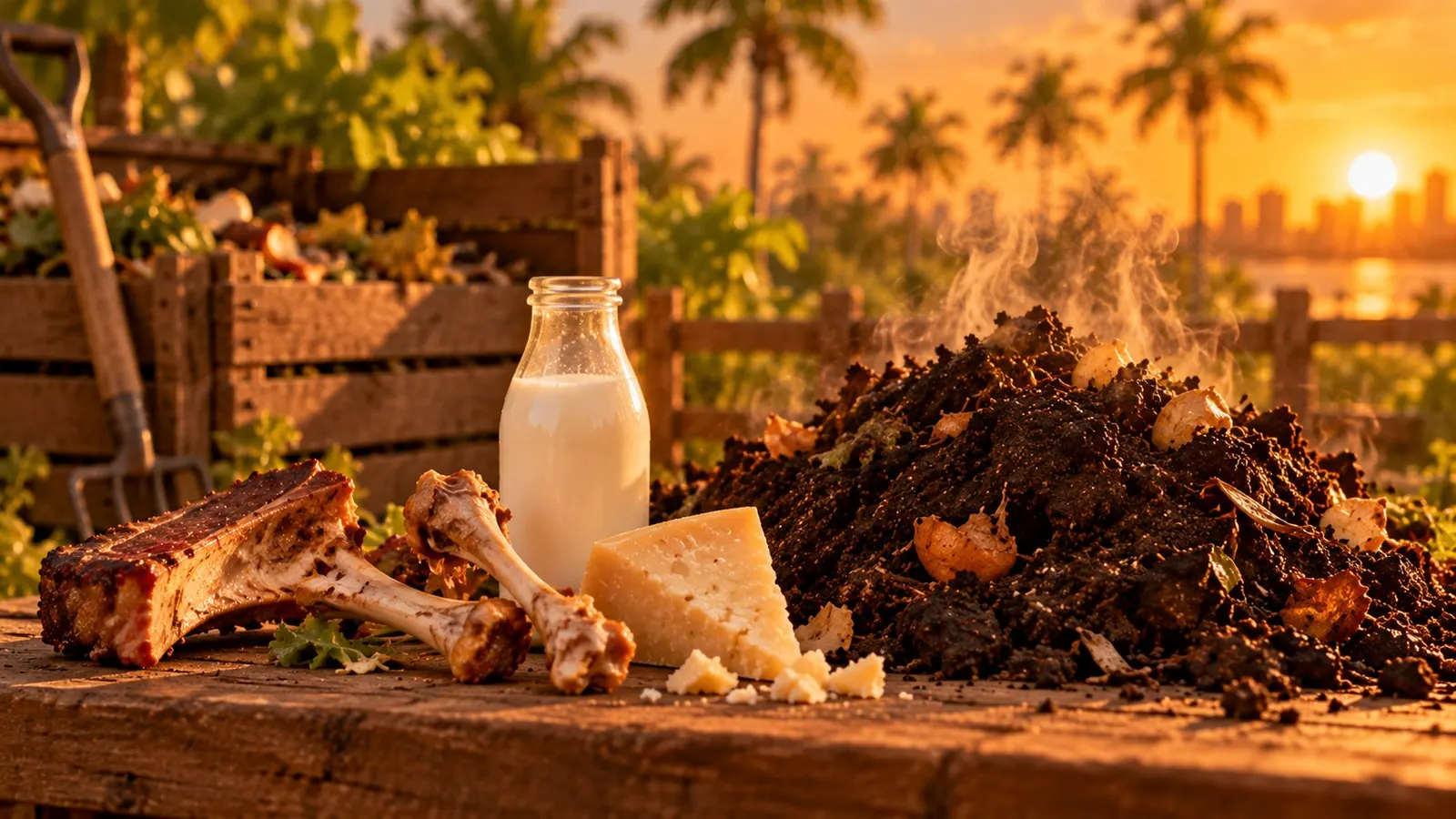
Yes, you can compost meat, bones and dairy, but not in most backyard bins. A home pile usually doesn't get hot enough, long enough, to break them down safely, so they attract pests and smell. A commercial hot-composting operation runs at 131 F or higher for the required time, which handles meat, bones and dairy along with the rest of your food scraps.
Can you compost meat at home?
Usually, no. And the reason isn't that meat can't break down. It's that a backyard pile isn't built for it.
The EPA's home composting guidance lists meat, fish, bones and dairy among the things to keep out of a backyard pile, because they cause odor problems and attract pests (EPA). The EPA also notes that home systems mostly handle food scraps except meat, bones and dairy (EPA).
Here's what goes wrong at home:
- Not enough heat. A small pile loses heat at the edges and rarely stays hot all the way through.
- Pests. Raccoons, rats, flies and neighborhood dogs can smell meat from a long way off.
- Odor. Fat and protein rotting in a cool pile smell bad, fast.
- Pathogens. Without sustained heat, harmful bacteria can survive in the finished product.
None of that means meat is "bad" for compost. It means the backyard is the wrong tool for the job.
Why can commercial composting handle meat and dairy?
Heat and management.
Commercial piles are big. Tons of material, mixed with wood chips or other carbon, built into long rows or contained systems. Big piles hold heat in the middle, and the microbes inside drive the temperature well above what a backyard bin reaches.
There's a federal standard for this. Under the EPA's rules for treating organic material, a turned windrow has to stay at 55 C (131 F) or higher for at least 15 days, turned at least five times during that period. In-vessel and static aerated pile systems need that same temperature for at least 3 days (eCFR via Cornell LII). That's the time and temperature that knocks out pathogens.
Larger, actively managed operations are built for exactly this. Temperature gets checked, moisture gets adjusted and piles get turned on a schedule.
At Melly's, we hot-compost to EPA standards: 131 F or higher for the required time. For more on how that heat works, read hot composting, explained.
Can you compost bones?
Yes, at commercial scale. Bones are slower than soft scraps because they're dense and mineral-heavy. In a hot, active pile, the meat and connective tissue come off quickly, and the bones themselves soften and break down over a longer stretch, especially as the pile gets turned and screened.
Any pieces that haven't broken down by the end can be screened out and sent back through. That's normal. It's the same thing that happens with a chunk of wood or a stubborn avocado pit.
Can you compost cheese, milk and other dairy?
Yes, commercially. Cheese, yogurt, butter, ice cream and spoiled milk all break down in a hot pile. The issue at home is the same as meat: dairy smells as it rots and draws pests, and a cool pile doesn't process it fast enough.
In a commercial bin, dairy goes in with everything else. Liquids are the one thing to be careful with. A splash of milk is fine. Pouring gallons of liquid into a bin makes it heavy, messy and harder to compost well, so keep liquids to a minimum.
Why does it matter if meat and dairy get composted?
Because if they don't, they go to the landfill.
Buried food rots without oxygen and makes methane, which has about 28 times the warming impact of carbon dioxide over 100 years (EPA). EPA estimates food waste is the source of 58 percent of the methane escaping from municipal landfills (EPA).
For a restaurant, butcher counter or hotel kitchen, meat trimmings, bones and dairy can be a big share of the scraps. If your composting program can't take them, they end up in the dumpster anyway, and your staff has to sort them out by hand. A program that takes everything is simpler and keeps more out of the landfill.
That's why our rule is easy: if it was food, it goes in the red bin. For the full list, check what can go in a commercial compost bin.
Composting meat and dairy in Miami-Dade
South Florida heat changes the stakes.
Meat goes bad fast here. A bag of bones in a dumpster in July is a pest magnet within a day. That's why Melly's picks up 1 to 3 times a week, never less than weekly, and swaps in a clean 64-gallon bin every pickup. Nothing sits.
Kitchens here throw out a lot of protein. Miami's restaurants, hotels and events serve seafood, steak, pork and chicken every day. Those trimmings and plate scrapings are exactly what a backyard-style program leaves behind.
The county wants organics out of the trash. Miami-Dade's Zero Waste Master Plan lists organic waste processing and composting as a key focus area, with a long-term target of diverting 90 percent or more of solid waste from disposal (Miami-Dade County).
Local soil can use it. Compost made from all those scraps goes back to growers who need organic matter in sandy and limestone soil. That's the loop doing its job.
Frequently asked questions
Can I put meat in my backyard compost?
Most guides, including the EPA's, say no. A backyard pile usually doesn't stay hot enough to break meat down safely, and it attracts pests. Send it to a commercial composter instead.
Can you compost fish and seafood shells?
At a commercial hot-composting operation, yes. Fish scraps break down quickly in a hot pile, and shells soften over time like bones. Ask your composter if they accept them. Melly's takes them with the rest of your food scraps.
Does composting meat make the compost unsafe?
Not when it's done right. Sustained heat at 131 F or higher for the required time is the standard for knocking out pathogens. That's why the temperature and time matter so much.
Can grease and cooking oil go in the compost bin?
Small amounts on food are fine. Large volumes of fryer oil or grease should go to a grease recycler, not a compost bin, because they coat everything and keep air from moving through the pile.
If your kitchen throws out meat, bones or dairy, it can all go in one bin. Get a quote and we'll start with a free waste audit, set up 64-gallon red bins and pick up 1 to 3 times a week on a month-to-month plan. Growers can get wholesale pricing on the finished compost.
Sources
Related posts
-
 For everyone
Hot Composting, Explained
A good compost pile runs hot enough to steam on a cool morning. Here is where the heat comes from, why 131 F matters, and how hot composting turns scraps into safe soil.
-
 For businesses
What Can Go in a Commercial Compost Bin?
Commercial compost takes a lot more than banana peels. Here is what goes in the red bin, what stays out, and why.